
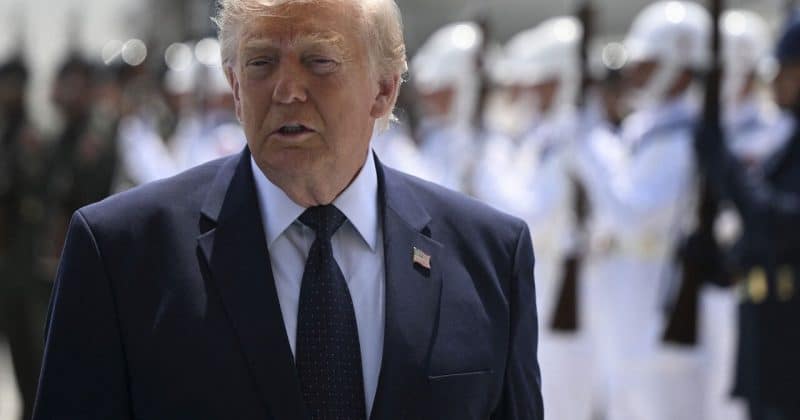
Trump orders full trade halt with Spain over NATO spending dispute, rattling European markets

Trump orders full trade halt with Spain over NATO spending dispute, rattling European markets

The directive to Treasury Secretary Scott Bessent marks the second time the administration has threatened to cut off commerce with a NATO ally, adding fresh geopolitical uncertainty to global risk markets.

President Trump told Treasury Secretary Scott Bessent to immediately halt all US trade with Spain on July 8, citing the country’s persistent underspending on NATO defense commitments. The move, announced during a NATO summit, escalates what has become one of the most aggressive uses of trade policy as a foreign policy weapon in modern alliance history.

Trump labeled Spain a “terrible partner” and a “wasted cause,” directing that the freeze cover all trade, visits, and business dealings.

What actually happened

The immediate trigger was twofold. Spain has long ranked among the lowest defense spenders in NATO, falling well short of even the traditional 2% of GDP guideline that most members have struggled to meet. Trump has pushed for a far more ambitious 5% target, a number that would require most European nations to essentially double or triple their military budgets.

Advertisement

On top of the spending shortfall, Spain reportedly refused to allow US aircraft to use Spanish bases for operations related to Iran. That combination, chronic underspending plus an active denial of military cooperation, apparently crossed a line for the administration.

NATO Secretary-General Mark Rutte was reportedly involved in the exchange, though his role in mediating or escalating the situation remains unclear. This marks the second time the administration has issued this kind of directive over NATO issues.

Spanish Prime Minister Pedro Sánchez has been openly critical of Trump’s broader policy agenda. The relationship between Washington and Madrid has been deteriorating for months.

The macro picture for risk assets

Spain is the eurozone’s fourth-largest economy. While bilateral US-Spain trade isn’t enormous relative to, say, US-China flows, the precedent matters far more than the dollar figures.

If the US can unilaterally freeze commerce with an allied nation over defense spending disagreements, every other NATO member with a below-target budget just got put on notice.

What crypto investors should watch

The direct crypto impact here is minimal in the short term. No digital assets or blockchain infrastructure were mentioned in the directive, and Spain, while home to a growing fintech sector, isn’t a critical node in global crypto infrastructure the way the US, Singapore, or the UAE are.

The bigger question is whether this directive actually gets implemented in a meaningful way. The legal and logistical ramifications remain unclear, which means markets may initially treat this as political theater before adjusting if enforcement details emerge.

Disclosure: This article was edited by Editorial Team. For more information on how we create and review content, see our Editorial Policy.

Trump orders full trade halt with Spain over NATO spending dispute, rattling European markets

Trump orders full trade halt with Spain over NATO spending dispute, rattling European markets

The directive to Treasury Secretary Scott Bessent marks the second time the administration has threatened to cut off commerce with a NATO ally, adding fresh geopolitical uncertainty to global risk markets.

President Trump told Treasury Secretary Scott Bessent to immediately halt all US trade with Spain on July 8, citing the country’s persistent underspending on NATO defense commitments. The move, announced during a NATO summit, escalates what has become one of the most aggressive uses of trade policy as a foreign policy weapon in modern alliance history.

Trump labeled Spain a “terrible partner” and a “wasted cause,” directing that the freeze cover all trade, visits, and business dealings.

What actually happened

The immediate trigger was twofold. Spain has long ranked among the lowest defense spenders in NATO, falling well short of even the traditional 2% of GDP guideline that most members have struggled to meet. Trump has pushed for a far more ambitious 5% target, a number that would require most European nations to essentially double or triple their military budgets.

Advertisement

On top of the spending shortfall, Spain reportedly refused to allow US aircraft to use Spanish bases for operations related to Iran. That combination, chronic underspending plus an active denial of military cooperation, apparently crossed a line for the administration.

NATO Secretary-General Mark Rutte was reportedly involved in the exchange, though his role in mediating or escalating the situation remains unclear. This marks the second time the administration has issued this kind of directive over NATO issues.

Spanish Prime Minister Pedro Sánchez has been openly critical of Trump’s broader policy agenda. The relationship between Washington and Madrid has been deteriorating for months.

The macro picture for risk assets

Spain is the eurozone’s fourth-largest economy. While bilateral US-Spain trade isn’t enormous relative to, say, US-China flows, the precedent matters far more than the dollar figures.

If the US can unilaterally freeze commerce with an allied nation over defense spending disagreements, every other NATO member with a below-target budget just got put on notice.

What crypto investors should watch

The direct crypto impact here is minimal in the short term. No digital assets or blockchain infrastructure were mentioned in the directive, and Spain, while home to a growing fintech sector, isn’t a critical node in global crypto infrastructure the way the US, Singapore, or the UAE are.

The bigger question is whether this directive actually gets implemented in a meaningful way. The legal and logistical ramifications remain unclear, which means markets may initially treat this as political theater before adjusting if enforcement details emerge.

Disclosure: This article was edited by Editorial Team. For more information on how we create and review content, see our Editorial Policy.