
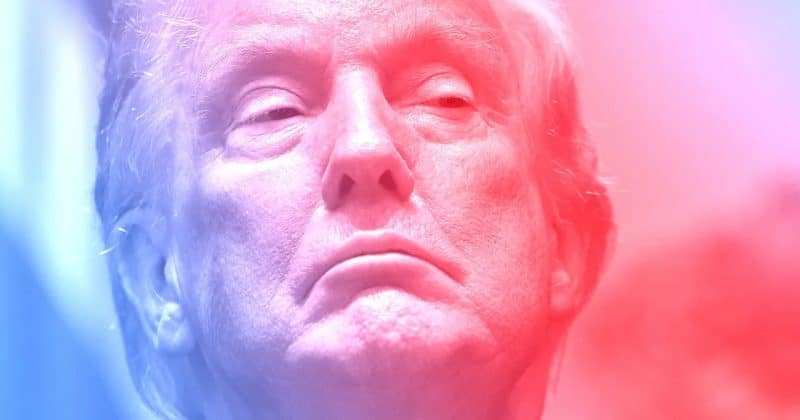
Trump warns Iran bombing could trigger global economic depression
The president's remarks at the G7 summit underscore how Middle East tensions continue to whipsaw oil prices, equities, and crypto markets alike.
President Donald Trump, speaking at the G7 summit in Evian-les-Bains, France, on June 17 stated that escalating military action against Iran could have triggered a “worldwide depression.”
The remarks came just two days after the announcement of an interim memorandum of understanding with Iran on June 15, with a formal signing reportedly scheduled for June 19. Trump made clear, however, that the MOU is not final, leaving the door open for renewed strikes if Iran doesn’t meet his terms.
The economic stakes Trump is referencing
The Strait of Hormuz, which Iran could threaten to close or disrupt in retaliation, handles roughly a fifth of the world’s daily oil supply. When military tensions in the region have escalated, oil prices have spiked toward $120 per barrel.
US and Israeli strikes during the broader conflict have resulted in projected GDP losses for Arab nations between $120 billion and $194 billion, according to available estimates.
Global stock markets have shown inversely correlated movements with threat levels in the region.
What this means for crypto markets
During prior escalation threats, Bitcoin dipped below $63,000. When de-escalation signals emerged, including the June 15 interim accord, it surged back above $66,000.
The MOU is not a done deal
Trump was characteristically blunt about the conditional nature of the agreement. The MOU is not final. Iran needs to behave. If it doesn’t, the implication is clear: strikes could resume.
The June 19 signing date becomes a critical inflection point. If the deal gets signed and both sides signal genuine commitment, expect risk assets including crypto to rally on the relief. If negotiations stall or collapse, the playbook from earlier escalations, oil spiking, stocks dropping, Bitcoin selling off, is likely to repeat.
Oil market volatility has historically been one of the strongest transmission mechanisms for geopolitical risk into broader financial markets. When oil prices swing dramatically, it changes inflation expectations, central bank calculus, and consumer confidence simultaneously.