
Trump declares ceasefire over after Iran attacks US bases in Kuwait and Bahrain

Trump declares ceasefire over after Iran attacks US bases in Kuwait and Bahrain

The breakdown of the June 2026 ceasefire sends shockwaves through risk markets as military escalation in the Middle East enters a new phase

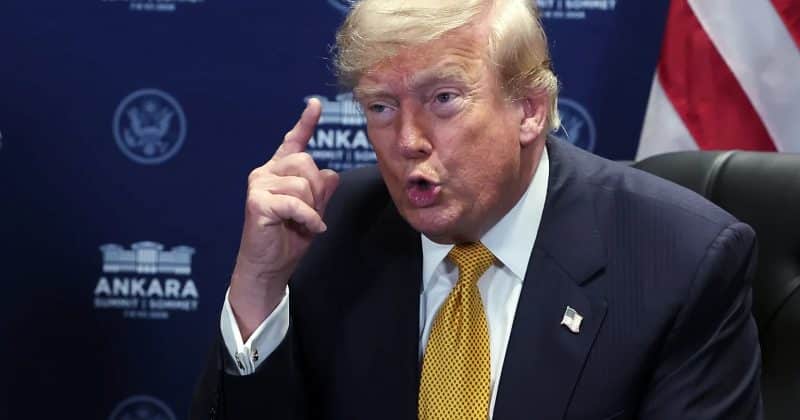
President Donald Trump announced the ceasefire with Iran is “over” on July 8, 2026, speaking from a NATO summit in Ankara, Turkey. The declaration came hours after Iran’s Revolutionary Guard Corps launched missile and drone attacks on roughly 85 US military installations across Bahrain and Kuwait.

The IRGC strikes targeted high-value US positions, including the Fifth Fleet headquarters at Isa Air Base and Ali Al Salem Air Base. Kuwait’s defense systems intercepted two ballistic missiles and 13 drones during the barrage, according to reports from the NATO summit.

Iran framed the attacks as retaliation for previous US airstrikes that had hit over 80 Iranian military and radar positions. Those US strikes, in turn, were a response to Iran’s alleged attacks on commercial vessels transiting the Strait of Hormuz.

Advertisement

Trump’s language at the NATO summit didn’t exactly suggest de-escalation was on the table. He reportedly referred to Iranian leaders as “scum” and “sick people,” rhetoric that marks a sharp departure from even the combative tone that characterized the original conflict’s early stages.

The ceasefire that just collapsed was established in mid-June 2026 through a memorandum aimed at curbing hostilities. It lasted roughly three weeks. Before that, an April 2026 agreement had also failed, making this at least the second major ceasefire breakdown since the conflict began.

Bitcoin has historically shown sensitivity to major geopolitical shocks, though the direction isn’t always predictable. Sometimes it trades as a risk-on asset, falling alongside equities when investors flee to cash and Treasuries. Other times it catches a bid as a “digital gold” hedge against chaos. The determining factor is usually whether the shock is sudden enough to trigger forced liquidations across leveraged positions, or slow enough to let the safe-haven narrative build.

Look at the pattern from prior Iran-related tensions. Every major flare-up, from the 2020 Soleimani strike to the April 2024 drone exchange, produced short-term volatility spikes in Bitcoin.

If sustained conflict disrupts oil flows through the Strait of Hormuz, energy prices spike. Energy price spikes feed into inflation expectations. And inflation expectations influence central bank policy, which is the single most important macro variable for risk asset pricing in 2026.

Disclosure: This article was edited by Editorial Team. For more information on how we create and review content, see our Editorial Policy.

Trump declares ceasefire over after Iran attacks US bases in Kuwait and Bahrain

Trump declares ceasefire over after Iran attacks US bases in Kuwait and Bahrain

The breakdown of the June 2026 ceasefire sends shockwaves through risk markets as military escalation in the Middle East enters a new phase

President Donald Trump announced the ceasefire with Iran is “over” on July 8, 2026, speaking from a NATO summit in Ankara, Turkey. The declaration came hours after Iran’s Revolutionary Guard Corps launched missile and drone attacks on roughly 85 US military installations across Bahrain and Kuwait.

The IRGC strikes targeted high-value US positions, including the Fifth Fleet headquarters at Isa Air Base and Ali Al Salem Air Base. Kuwait’s defense systems intercepted two ballistic missiles and 13 drones during the barrage, according to reports from the NATO summit.

Iran framed the attacks as retaliation for previous US airstrikes that had hit over 80 Iranian military and radar positions. Those US strikes, in turn, were a response to Iran’s alleged attacks on commercial vessels transiting the Strait of Hormuz.

Advertisement

Trump’s language at the NATO summit didn’t exactly suggest de-escalation was on the table. He reportedly referred to Iranian leaders as “scum” and “sick people,” rhetoric that marks a sharp departure from even the combative tone that characterized the original conflict’s early stages.

The ceasefire that just collapsed was established in mid-June 2026 through a memorandum aimed at curbing hostilities. It lasted roughly three weeks. Before that, an April 2026 agreement had also failed, making this at least the second major ceasefire breakdown since the conflict began.

Bitcoin has historically shown sensitivity to major geopolitical shocks, though the direction isn’t always predictable. Sometimes it trades as a risk-on asset, falling alongside equities when investors flee to cash and Treasuries. Other times it catches a bid as a “digital gold” hedge against chaos. The determining factor is usually whether the shock is sudden enough to trigger forced liquidations across leveraged positions, or slow enough to let the safe-haven narrative build.

Look at the pattern from prior Iran-related tensions. Every major flare-up, from the 2020 Soleimani strike to the April 2024 drone exchange, produced short-term volatility spikes in Bitcoin.

If sustained conflict disrupts oil flows through the Strait of Hormuz, energy prices spike. Energy price spikes feed into inflation expectations. And inflation expectations influence central bank policy, which is the single most important macro variable for risk asset pricing in 2026.

Disclosure: This article was edited by Editorial Team. For more information on how we create and review content, see our Editorial Policy.