
Nexo Earn with Nexo
Trump to release Iran agreement text, expects quick deal progress

Trump to release Iran agreement text, expects quick deal progress

The US-Iran memorandum of understanding establishes a 60-day ceasefire, lifts the naval blockade, and reopens the Strait of Hormuz, with Bitcoin jumping roughly 3% on the news.

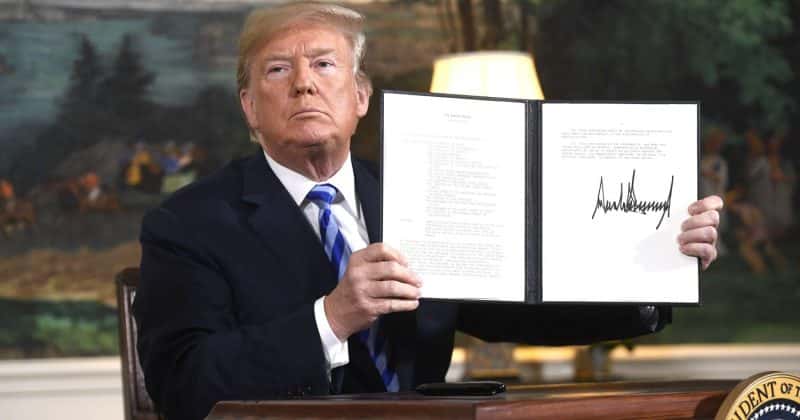
President Donald Trump announced that the text of a newly reached memorandum of understanding with Iran will be made public, calling it a “very powerful document” and signaling that the second stage of negotiations should move forward at pace. The MOU, digitally signed on June 15, sets the stage for a formal signing ceremony in Geneva scheduled for June 19-20.

For crypto markets, the deal landed like a pressure valve release. Bitcoin climbed approximately 3% following the announcement, riding a broader risk-on wave as traders recalibrated their geopolitical risk models downward. Oil prices moved in the opposite direction, falling roughly 5% to settle around $80 per barrel as the prospect of resumed energy flows through the Persian Gulf took shape.

What the deal actually says

The core of the agreement centers on three immediate provisions. First, a 60-day ceasefire in hostilities between the US and Iran. Second, a lifting of the US naval blockade that had been choking off Iranian trade. Third, a phased reopening of the Strait of Hormuz, the narrow waterway through which a massive share of global oil shipments pass.

Advertisement

The Strait was set to reach full operational status by Friday, June 17. The 60-day window is designed to create breathing room for negotiations covering Iran’s nuclear program, uranium enrichment activities, and the question of sanctions relief.

Trump framed the MOU as surpassing the Obama-era nuclear agreement in scope and strength. The formal signing ceremony in Geneva is expected to feature Vice President JD Vance alongside key Iranian officials.

Pakistan and Qatar served as mediators in reaching the breakthrough, a notable detail given that negotiations unfolded against a backdrop of active conflict in the region. US airstrikes on Iranian assets and Israeli military operations had pushed tensions to elevated levels in the months preceding the deal.

Why crypto moved on a geopolitics headline

The Strait of Hormuz is one of the most strategically important chokepoints in global commerce. When it’s blocked or threatened, energy prices spike, inflation expectations rise, and risk assets tend to sell off. Bitcoin’s roughly 3% move wasn’t about Iran specifically. It was about the market repricing the probability of a broader economic disruption.

Falling oil prices feed into the inflation narrative that has dominated macro trading strategies for years. Lower energy costs reduce input prices across the economy, which in turn eases pressure on central banks to maintain restrictive monetary policy.

What this means for investors

For energy-correlated trades, the commitment to lift the blockade and fully reopen the Strait represents a potential stabilization force. Oil settling around $80 per barrel reflects a market that’s cautiously optimistic but not yet fully pricing in a comprehensive deal.

The Geneva signing ceremony on June 19-20 becomes the next catalyst to watch. Vice President Vance’s presence at the signing adds political capital to the deal.

Disclosure: This article was edited by Editorial Team. For more information on how we create and review content, see our Editorial Policy.

Trump to release Iran agreement text, expects quick deal progress

Trump to release Iran agreement text, expects quick deal progress

The US-Iran memorandum of understanding establishes a 60-day ceasefire, lifts the naval blockade, and reopens the Strait of Hormuz, with Bitcoin jumping roughly 3% on the news.

President Donald Trump announced that the text of a newly reached memorandum of understanding with Iran will be made public, calling it a “very powerful document” and signaling that the second stage of negotiations should move forward at pace. The MOU, digitally signed on June 15, sets the stage for a formal signing ceremony in Geneva scheduled for June 19-20.

For crypto markets, the deal landed like a pressure valve release. Bitcoin climbed approximately 3% following the announcement, riding a broader risk-on wave as traders recalibrated their geopolitical risk models downward. Oil prices moved in the opposite direction, falling roughly 5% to settle around $80 per barrel as the prospect of resumed energy flows through the Persian Gulf took shape.

What the deal actually says

The core of the agreement centers on three immediate provisions. First, a 60-day ceasefire in hostilities between the US and Iran. Second, a lifting of the US naval blockade that had been choking off Iranian trade. Third, a phased reopening of the Strait of Hormuz, the narrow waterway through which a massive share of global oil shipments pass.

Advertisement

The Strait was set to reach full operational status by Friday, June 17. The 60-day window is designed to create breathing room for negotiations covering Iran’s nuclear program, uranium enrichment activities, and the question of sanctions relief.

Trump framed the MOU as surpassing the Obama-era nuclear agreement in scope and strength. The formal signing ceremony in Geneva is expected to feature Vice President JD Vance alongside key Iranian officials.

Pakistan and Qatar served as mediators in reaching the breakthrough, a notable detail given that negotiations unfolded against a backdrop of active conflict in the region. US airstrikes on Iranian assets and Israeli military operations had pushed tensions to elevated levels in the months preceding the deal.

Why crypto moved on a geopolitics headline

The Strait of Hormuz is one of the most strategically important chokepoints in global commerce. When it’s blocked or threatened, energy prices spike, inflation expectations rise, and risk assets tend to sell off. Bitcoin’s roughly 3% move wasn’t about Iran specifically. It was about the market repricing the probability of a broader economic disruption.

Falling oil prices feed into the inflation narrative that has dominated macro trading strategies for years. Lower energy costs reduce input prices across the economy, which in turn eases pressure on central banks to maintain restrictive monetary policy.

What this means for investors

For energy-correlated trades, the commitment to lift the blockade and fully reopen the Strait represents a potential stabilization force. Oil settling around $80 per barrel reflects a market that’s cautiously optimistic but not yet fully pricing in a comprehensive deal.

The Geneva signing ceremony on June 19-20 becomes the next catalyst to watch. Vice President Vance’s presence at the signing adds political capital to the deal.

Disclosure: This article was edited by Editorial Team. For more information on how we create and review content, see our Editorial Policy.