
Trump warns US will finish the job if no deal with Iran is reached, and crypto markets are paying attention

Trump warns US will finish the job if no deal with Iran is reached, and crypto markets are paying attention

The latest escalation in US-Iran tensions carries direct implications for Bitcoin, risk assets, and a billion dollars in seized digital assets

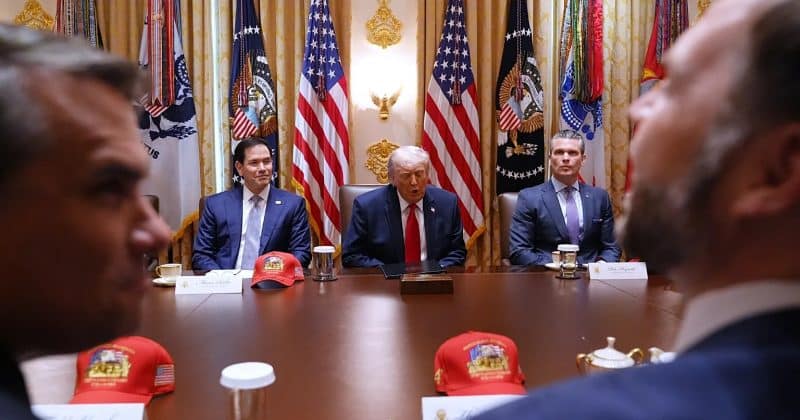
President Donald Trump has once again put Iran on notice, warning that the United States will resort to military action if diplomatic negotiations fail to produce acceptable terms.

The threat and the timeline

On May 27, the president said Iran wanted a deal but that the US was “not satisfied,” adding bluntly that the country would “have to just finish the job” if terms remained inadequate.

That language echoed earlier comments from April and May, during which Trump indicated the US was “close to finishing the job” and that further military strikes were on the table if outcomes didn’t meet expectations.

The backdrop here is a period of significant military engagement. US and Israeli airstrikes preceded a temporary ceasefire initiated in April, which opened the door for diplomatic talks. Pakistan played a notable mediating role in bringing both sides to the table.

Advertisement

Those negotiations eventually produced results. A framework agreement known as the Islamabad Memorandum was signed around June 17-18, effectively ending hostilities and reopening the Strait of Hormuz for maritime operations. The strait handles roughly a fifth of global petroleum trade on any given day.

The Islamabad Memorandum focused on immediate ceasefire conditions rather than resolving the deeper issue of Iran’s nuclear program.

What this means for crypto markets

Bitcoin’s price surged above $66,000 in mid-June, driven in large part by optimism around the ceasefire and the framework agreement.

When tensions escalated earlier in the spring, crypto markets wobbled alongside traditional risk assets. Energy supply concerns, tied directly to the potential closure of the Strait of Hormuz, rippled through commodities and dragged sentiment lower across the board.

The $1 billion seizure nobody’s talking about

The US Treasury reported seizing approximately $1 billion in digital assets linked to Iranian crypto activities in May as part of its sanctions regime.

The seizure reflects a broader effort to disrupt Iran’s ability to use cryptocurrency as a sanctions-evasion tool. The seizure demonstrates that blockchain’s transparency can work in regulators’ favor, making illicit flows traceable in ways that cash never was.

The Strait of Hormuz is open for now, but any breakdown in the fragile peace framework could send oil prices, and by extension inflation expectations, sharply higher.

Disclosure: This article was edited by Editorial Team. For more information on how we create and review content, see our Editorial Policy.

Trump warns US will finish the job if no deal with Iran is reached, and crypto markets are paying attention

Trump warns US will finish the job if no deal with Iran is reached, and crypto markets are paying attention

The latest escalation in US-Iran tensions carries direct implications for Bitcoin, risk assets, and a billion dollars in seized digital assets

President Donald Trump has once again put Iran on notice, warning that the United States will resort to military action if diplomatic negotiations fail to produce acceptable terms.

The threat and the timeline

On May 27, the president said Iran wanted a deal but that the US was “not satisfied,” adding bluntly that the country would “have to just finish the job” if terms remained inadequate.

That language echoed earlier comments from April and May, during which Trump indicated the US was “close to finishing the job” and that further military strikes were on the table if outcomes didn’t meet expectations.

The backdrop here is a period of significant military engagement. US and Israeli airstrikes preceded a temporary ceasefire initiated in April, which opened the door for diplomatic talks. Pakistan played a notable mediating role in bringing both sides to the table.

Advertisement

Those negotiations eventually produced results. A framework agreement known as the Islamabad Memorandum was signed around June 17-18, effectively ending hostilities and reopening the Strait of Hormuz for maritime operations. The strait handles roughly a fifth of global petroleum trade on any given day.

The Islamabad Memorandum focused on immediate ceasefire conditions rather than resolving the deeper issue of Iran’s nuclear program.

What this means for crypto markets

Bitcoin’s price surged above $66,000 in mid-June, driven in large part by optimism around the ceasefire and the framework agreement.

When tensions escalated earlier in the spring, crypto markets wobbled alongside traditional risk assets. Energy supply concerns, tied directly to the potential closure of the Strait of Hormuz, rippled through commodities and dragged sentiment lower across the board.

The $1 billion seizure nobody’s talking about

The US Treasury reported seizing approximately $1 billion in digital assets linked to Iranian crypto activities in May as part of its sanctions regime.

The seizure reflects a broader effort to disrupt Iran’s ability to use cryptocurrency as a sanctions-evasion tool. The seizure demonstrates that blockchain’s transparency can work in regulators’ favor, making illicit flows traceable in ways that cash never was.

The Strait of Hormuz is open for now, but any breakdown in the fragile peace framework could send oil prices, and by extension inflation expectations, sharply higher.

Disclosure: This article was edited by Editorial Team. For more information on how we create and review content, see our Editorial Policy.