
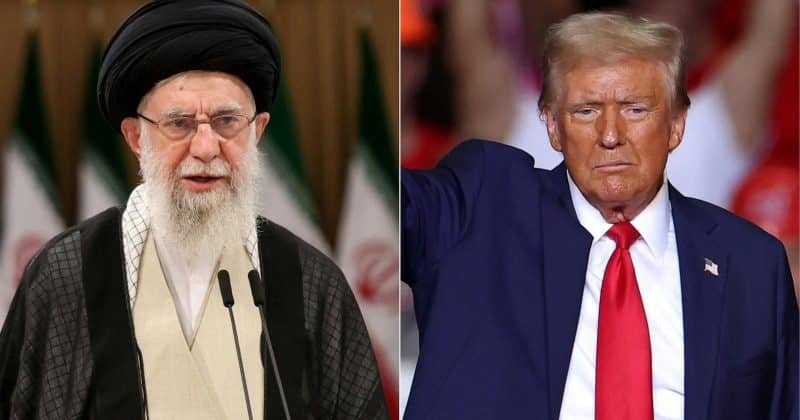
Trump urges Iranians to reclaim their nation after Khamenei’s death as Bitcoin whipsaws on geopolitical shock
Joint US-Israeli airstrikes killed Iran's supreme leader, sending Bitcoin tumbling to $63K before a sharp recovery as markets digested the most significant Middle East escalation in decades
Iran’s Supreme Leader Ayatollah Ali Khamenei is dead, killed in joint US and Israeli airstrikes on February 28, 2026. President Donald Trump confirmed the strike and immediately turned his message toward the Iranian people, calling the moment “the single greatest chance for the Iranian people to take back their Country.”
No uprising materialized. The streets remained largely quiet, save for initial reports of limited celebrations in Tehran. Bitcoin, meanwhile, did what Bitcoin does during geopolitical earthquakes: it panicked, then recovered.
The strike and its immediate fallout
The airstrikes didn’t just target Khamenei. Other military and leadership figures were also hit, representing a dramatic escalation in US-Iran tensions that have simmered, boiled, and occasionally exploded for more than four decades.
Trump described Khamenei as “one of the most evil people in history” and framed the operation as a liberation moment for ordinary Iranians. He urged citizens to “seize control of your destiny.”
Bitcoin’s $4,000 round trip
Crypto markets reacted to the news with the subtlety of a fire alarm. Bitcoin dropped toward $63,000 as traders processed what the assassination of a head of state meant for global stability. The selloff was sharp but short-lived, with prices rebounding to the $67,000 to $68,000 range as the initial shock faded.
Macro, rates, and crypto—what moved markets and what matters next.
Daily. Free. Join 34,000+ readers across crypto, finance, and policy.
Iran’s $7.78 billion crypto question
The geopolitical story intersects with the crypto world in a less obvious but arguably more important way: Iran’s digital asset ecosystem. As of 2025, that ecosystem was valued at over $7.78 billion, making Iran one of the most significant crypto markets operating under heavy international sanctions.
Platforms like Nobitex have served as key on-ramps for Iranian users, while networks including Tron and BNB Chain have been actively utilized for transactions. The appeal is straightforward. When your national currency is under constant pressure from sanctions and inflation, permissionless digital money becomes less of a speculative toy and more of a financial lifeline.
Iran’s reliance on digital assets for sanctions evasion has been well documented and regularly cited by regulators in Washington as evidence that crypto enables illicit finance. Treasury’s Office of Foreign Assets Control has already targeted Iranian crypto operations in recent years.