
Nexo Earn with Nexo
Trump says Israel not involved in US strikes on Iran, crypto markets brace for impact

Trump says Israel not involved in US strikes on Iran, crypto markets brace for impact

The president's comments come as US military operations against Iranian targets intensify and digital asset markets show acute sensitivity to the conflict's trajectory.

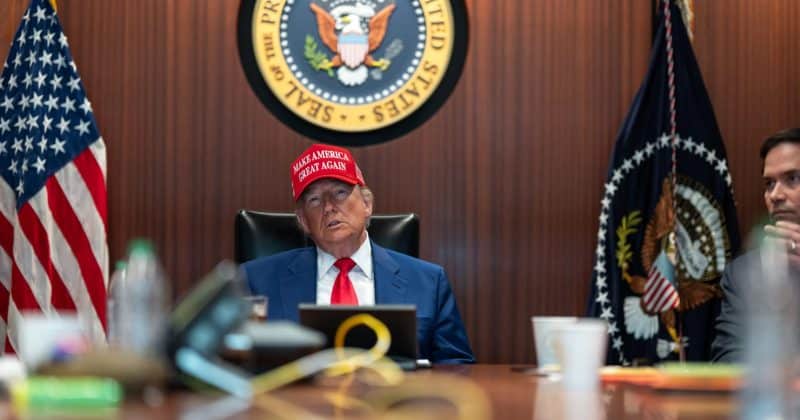
President Donald Trump stated that Israel is not involved in the current US strikes on Iran, distancing the military operation from any perception of coordinated action with America’s closest Middle Eastern ally.

The declaration, reported by Fox News, lands at a moment when every geopolitical tremor sends shockwaves through crypto markets.

What’s happening on the ground

US Central Command executed airstrikes targeting Iranian air defense systems on June 10, 2026, following an incident involving the downing of a US helicopter. Trump described the military response as “very strong.”

Advertisement

Trump has been consistent in framing the conflict as a unilateral American decision. In April 2026, he stated plainly: “Israel never talked me into the war with Iran.” His rationale centers on two pillars: the October 7, 2023 terrorist attacks and concerns over Iran’s potential nuclear capabilities.

Oil prices have climbed over 3% amid the escalating tensions between Iran and Israel in June 2026. Asian equities took a hit too, with the South Korean KOSPI experiencing sharp declines during the same period.

Crypto’s war reflex

Over $350 million in crypto liquidations occurred during one recent escalation alone. Bitcoin fell 1.8% following notable strike announcements earlier in 2026. Ethereum followed a similar trajectory.

Bitcoin surged above $71,000 in March 2026 after a five-day strike postponement was announced to allow for negotiations.

What this means for investors

For crypto traders, the playbook has been relatively straightforward during this cycle of tensions. Strike announcements and escalations correlate with sharp drawdowns and massive liquidations. Ceasefire talks and negotiation windows correlate with aggressive rallies. The March surge past $71,000 on a mere postponement of strikes demonstrates just how much upside can materialize when the shooting stops, even temporarily.

The practical takeaway is about position sizing and leverage. The traders who got wiped out in that $350 million liquidation wave weren’t necessarily wrong about the long-term direction of crypto. They were wrong about how much risk they could carry through a period of genuine geopolitical uncertainty. Running heavy leverage when a US president is describing military operations as “very strong” is, to put it diplomatically, a bold strategy.

Disclosure: This article was edited by Editorial Team. For more information on how we create and review content, see our Editorial Policy.

Trump says Israel not involved in US strikes on Iran, crypto markets brace for impact

Trump says Israel not involved in US strikes on Iran, crypto markets brace for impact

The president's comments come as US military operations against Iranian targets intensify and digital asset markets show acute sensitivity to the conflict's trajectory.

President Donald Trump stated that Israel is not involved in the current US strikes on Iran, distancing the military operation from any perception of coordinated action with America’s closest Middle Eastern ally.

The declaration, reported by Fox News, lands at a moment when every geopolitical tremor sends shockwaves through crypto markets.

What’s happening on the ground

US Central Command executed airstrikes targeting Iranian air defense systems on June 10, 2026, following an incident involving the downing of a US helicopter. Trump described the military response as “very strong.”

Advertisement

Trump has been consistent in framing the conflict as a unilateral American decision. In April 2026, he stated plainly: “Israel never talked me into the war with Iran.” His rationale centers on two pillars: the October 7, 2023 terrorist attacks and concerns over Iran’s potential nuclear capabilities.

Oil prices have climbed over 3% amid the escalating tensions between Iran and Israel in June 2026. Asian equities took a hit too, with the South Korean KOSPI experiencing sharp declines during the same period.

Crypto’s war reflex

Over $350 million in crypto liquidations occurred during one recent escalation alone. Bitcoin fell 1.8% following notable strike announcements earlier in 2026. Ethereum followed a similar trajectory.

Bitcoin surged above $71,000 in March 2026 after a five-day strike postponement was announced to allow for negotiations.

What this means for investors

For crypto traders, the playbook has been relatively straightforward during this cycle of tensions. Strike announcements and escalations correlate with sharp drawdowns and massive liquidations. Ceasefire talks and negotiation windows correlate with aggressive rallies. The March surge past $71,000 on a mere postponement of strikes demonstrates just how much upside can materialize when the shooting stops, even temporarily.

The practical takeaway is about position sizing and leverage. The traders who got wiped out in that $350 million liquidation wave weren’t necessarily wrong about the long-term direction of crypto. They were wrong about how much risk they could carry through a period of genuine geopolitical uncertainty. Running heavy leverage when a US president is describing military operations as “very strong” is, to put it diplomatically, a bold strategy.

Disclosure: This article was edited by Editorial Team. For more information on how we create and review content, see our Editorial Policy.