
Nexo Earn with Nexo
Trump nominates Brian Johnson as CFPB permanent director, awaits Senate confirmation

Trump nominates Brian Johnson as CFPB permanent director, awaits Senate confirmation

The former CFPB deputy director who launched the agency's fintech innovation office could reshape digital asset oversight if confirmed by the Senate.

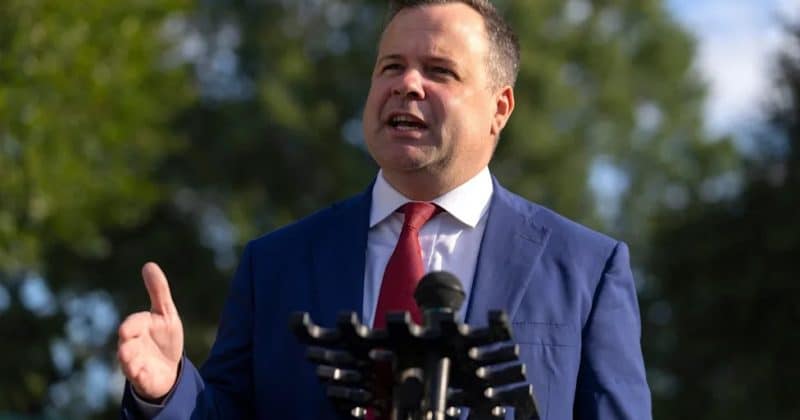
President Donald Trump has nominated Brian Johnson to serve as the permanent director of the Consumer Financial Protection Bureau, tapping a former agency insider who spent years in the private sector working with banks and fintech firms. The nomination, announced on June 10, sets the stage for a Senate confirmation process that could determine how aggressively, or gently, the federal government regulates consumer-facing crypto and digital payment products.

Johnson would replace acting Director Russ Vought if confirmed, and would serve a five-year term at the helm of an agency that has become a flashpoint in Washington’s broader debate over financial regulation.

A familiar face with a deregulatory track record

Johnson isn’t exactly a stranger to the CFPB. He served as the agency’s deputy director from 2018 to 2020, a period during which he oversaw rulemaking, supervision, and enforcement. More relevant to the crypto world: he spearheaded the creation of the CFPB’s Office of Innovation in 2018, a division specifically designed to promote fintech products, including those built on cryptocurrency and blockchain technology.

Advertisement

After leaving the CFPB in 2020, Johnson moved to the private sector. He joined Patomak Global Partners in 2022 as a managing director focused on banking regulation. He then took a role at Capital One as vice president and compliance officer for the credit card giant’s US card services division.

He has publicly advocated for changes that would limit the CFPB’s funding autonomy, a structural feature that has long irked conservatives who argue the agency operates with too little congressional oversight. He has also criticized the bureau’s enforcement practices, suggesting they have at times overstepped.

What this means for crypto regulation

The CFPB doesn’t regulate crypto the way the SEC or CFTC does. It doesn’t approve tokens or classify digital assets as securities. But it plays a critical role in how consumer-facing financial products work, and that increasingly includes digital wallets, stablecoins used for payments, and crypto-linked debit cards.

What investors should actually watch

Senate confirmation is far from guaranteed, even with a Republican majority. The CFPB remains a politically charged institution, created under the Dodd-Frank Act after the 2008 financial crisis. Johnson’s record of advocating for reduced agency independence and softer enforcement will almost certainly draw opposition.

For traders and market participants, the more immediate signal is directional. A confirmed Johnson would represent another institutional tailwind for crypto adoption in consumer finance. Companies developing stablecoin payment rails, crypto rewards cards, and blockchain-based lending products would face a less adversarial regulatory environment at the federal level.

Institutional investors watching the nomination should pay attention to the timeline. A five-year term would give Johnson influence well beyond any single administration, potentially locking in a deregulatory posture at the CFPB through at least 2031.

Disclosure: This article was edited by Editorial Team. For more information on how we create and review content, see our Editorial Policy.

Trump nominates Brian Johnson as CFPB permanent director, awaits Senate confirmation

Trump nominates Brian Johnson as CFPB permanent director, awaits Senate confirmation

The former CFPB deputy director who launched the agency's fintech innovation office could reshape digital asset oversight if confirmed by the Senate.

President Donald Trump has nominated Brian Johnson to serve as the permanent director of the Consumer Financial Protection Bureau, tapping a former agency insider who spent years in the private sector working with banks and fintech firms. The nomination, announced on June 10, sets the stage for a Senate confirmation process that could determine how aggressively, or gently, the federal government regulates consumer-facing crypto and digital payment products.

Johnson would replace acting Director Russ Vought if confirmed, and would serve a five-year term at the helm of an agency that has become a flashpoint in Washington’s broader debate over financial regulation.

A familiar face with a deregulatory track record

Johnson isn’t exactly a stranger to the CFPB. He served as the agency’s deputy director from 2018 to 2020, a period during which he oversaw rulemaking, supervision, and enforcement. More relevant to the crypto world: he spearheaded the creation of the CFPB’s Office of Innovation in 2018, a division specifically designed to promote fintech products, including those built on cryptocurrency and blockchain technology.

Advertisement

After leaving the CFPB in 2020, Johnson moved to the private sector. He joined Patomak Global Partners in 2022 as a managing director focused on banking regulation. He then took a role at Capital One as vice president and compliance officer for the credit card giant’s US card services division.

He has publicly advocated for changes that would limit the CFPB’s funding autonomy, a structural feature that has long irked conservatives who argue the agency operates with too little congressional oversight. He has also criticized the bureau’s enforcement practices, suggesting they have at times overstepped.

What this means for crypto regulation

The CFPB doesn’t regulate crypto the way the SEC or CFTC does. It doesn’t approve tokens or classify digital assets as securities. But it plays a critical role in how consumer-facing financial products work, and that increasingly includes digital wallets, stablecoins used for payments, and crypto-linked debit cards.

What investors should actually watch

Senate confirmation is far from guaranteed, even with a Republican majority. The CFPB remains a politically charged institution, created under the Dodd-Frank Act after the 2008 financial crisis. Johnson’s record of advocating for reduced agency independence and softer enforcement will almost certainly draw opposition.

For traders and market participants, the more immediate signal is directional. A confirmed Johnson would represent another institutional tailwind for crypto adoption in consumer finance. Companies developing stablecoin payment rails, crypto rewards cards, and blockchain-based lending products would face a less adversarial regulatory environment at the federal level.

Institutional investors watching the nomination should pay attention to the timeline. A five-year term would give Johnson influence well beyond any single administration, potentially locking in a deregulatory posture at the CFPB through at least 2031.

Disclosure: This article was edited by Editorial Team. For more information on how we create and review content, see our Editorial Policy.