
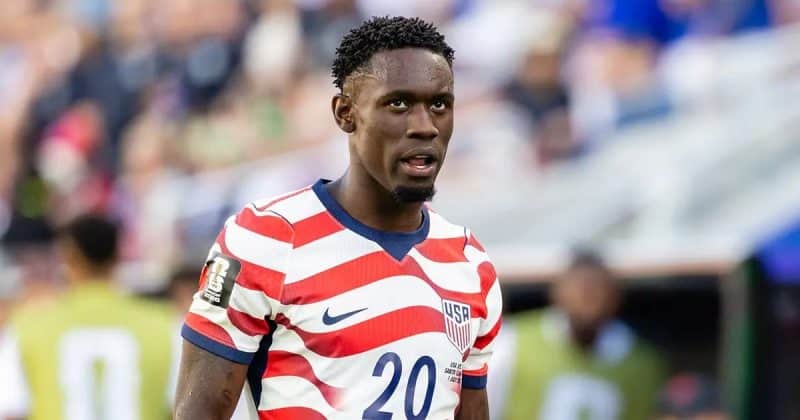
Donald Trump intervenes to reinstate US striker Folarin Balogun for World Cup match
The president personally called FIFA's chief to overturn a red card suspension, marking the first such reversal since 1962
The leader of the free world apparently has time to work the refs. President Donald Trump personally contacted FIFA President Gianni Infantino to get US striker Folarin Balogun’s one-match World Cup suspension overturned, and it worked.
FIFA’s disciplinary committee announced on July 5 that it would suspend Balogun’s automatic ban, clearing the team’s leading scorer to play in the round-of-16 match against Belgium on July 6. It’s the first time FIFA has annulled a World Cup red-card suspension since 1962.
What happened on the pitch
Balogun picked up a red card during the US team’s 2-0 victory over Bosnia and Herzegovina on July 2. The foul triggered an automatic one-match suspension, which would have sidelined the striker for arguably the most important game of the tournament cycle for US soccer.
Balogun entered the knockout stage as the US team’s top scorer with three goals. Trump moved fast. Shortly after the match, the president called Infantino directly to request a review of the suspension. Within days, FIFA reversed course.
Trump took to social media to celebrate, calling the original suspension a “great injustice” that had been corrected.
The news moving money, markets, and the world—before your day starts.
Daily. Free. Join 34,000+ readers across crypto, finance, and policy.
The backlash is already brewing
Belgium’s football federation was, to put it mildly, not thrilled. The federation indicated it is exploring options for a formal appeal against FIFA’s ruling.
Critics immediately described the decision as politically influenced and lacking transparency. The 1962 precedent is worth understanding. That was the last time FIFA overturned a World Cup red-card suspension, meaning the governing body maintained this particular line through every controversy, every questionable call, every tournament for more than six decades. A phone call from the White House reversed it.
For FIFA, the calculus likely involved more than just sporting fairness. The 2026 World Cup is being hosted across the United States, Canada, and Mexico, with the US serving as the primary venue country. Keeping the host nation’s star player on the pitch for a marquee knockout game has obvious commercial and audience implications.