
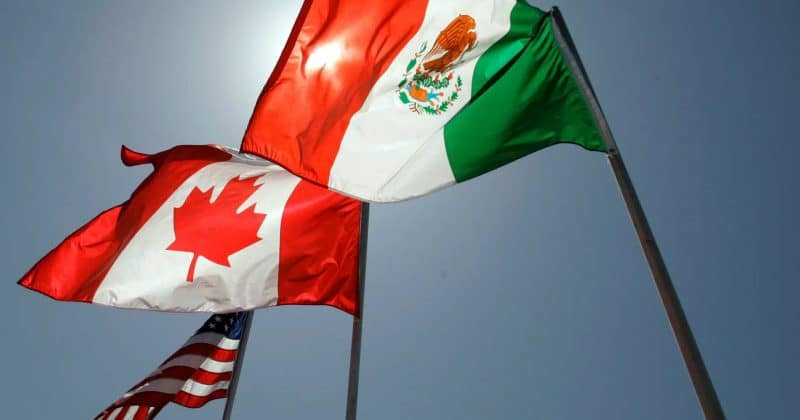
Trump administration rejects long-term renewal of USMCA, raising trade bloc concerns

Trump administration rejects long-term renewal of USMCA, raising trade bloc concerns

The decision puts $1.6 trillion in annual North American trade on an annual review clock, injecting uncertainty into supply chains and cross-border markets

The Trump administration just turned what was supposed to be a routine handshake into a decade-long staring contest. On July 1, US Trade Representative Jamieson Greer announced that the United States would not agree to renew the USMCA trade agreement in its current form, rejecting a long-term extension during the deal’s mandated six-year review.

The move doesn’t kill the trade pact outright. But it replaces the stability of automatic renewal with something far less comfortable: annual reviews stretching over the next ten years, with the agreement set to remain in force until at least 2036 unless someone pulls the plug or the three nations hammer out a renegotiated deal.

What actually happened, and why it matters

The USMCA, which entered force on July 1, 2020, was built with a mandatory review at the six-year mark. All three countries, the US, Canada, and Mexico, were expected to agree to a straightforward renewal. Both Ottawa and Mexico City had signaled willingness to do exactly that.

Advertisement

“The United States did not agree to renew the USMCA in its current form.”

The administration’s rationale centers on persistent US trade deficits and what officials describe as insufficient protections for domestic manufacturing. There’s also a pointed concern about Chinese goods being transshipped through Mexico to enter the US market under preferential terms, essentially using the trade bloc as a backdoor.

The USMCA was originally negotiated by the first Trump administration as a replacement for NAFTA, sold as a better deal for American workers and manufacturers. Refusing to renew your own agreement sends a very specific signal: even deals you built yourself aren’t safe if the numbers don’t look right.

The ripple effects across industries and markets

Annual reviews introduce a layer of uncertainty that boardrooms genuinely hate. Companies making multi-year investment decisions, building factories, expanding production lines, signing supplier contracts, now have to factor in the possibility that trade terms could shift on a yearly basis. That’s not a theoretical risk. It’s the kind of thing that delays capital expenditure decisions and reshuffles supply chain strategies.

Canadian and Mexican markets face their own version of this headache. Both economies are deeply intertwined with the US, and the prospect of prolonged renegotiation creates asymmetric risk. The US can absorb disruption more easily than its smaller partners, which gives Washington considerable leverage at the negotiating table.

What crypto investors should actually watch

The USMCA decision doesn’t mention Bitcoin, stablecoins, or blockchain anywhere. When cross-border trade frameworks wobble, currencies react. The Mexican peso and Canadian dollar are both sensitive to USMCA dynamics, and currency volatility in major economies tends to ripple into risk asset pricing, including crypto.

Cross-border payment infrastructure is another angle. Companies doing business across North American borders may increasingly look at stablecoin-based settlement as a hedge against trade rule uncertainty, particularly if tariff structures become harder to predict on an annual review cycle.

Disclosure: This article was edited by Editorial Team. For more information on how we create and review content, see our Editorial Policy.

Trump administration rejects long-term renewal of USMCA, raising trade bloc concerns

Trump administration rejects long-term renewal of USMCA, raising trade bloc concerns

The decision puts $1.6 trillion in annual North American trade on an annual review clock, injecting uncertainty into supply chains and cross-border markets

The Trump administration just turned what was supposed to be a routine handshake into a decade-long staring contest. On July 1, US Trade Representative Jamieson Greer announced that the United States would not agree to renew the USMCA trade agreement in its current form, rejecting a long-term extension during the deal’s mandated six-year review.

The move doesn’t kill the trade pact outright. But it replaces the stability of automatic renewal with something far less comfortable: annual reviews stretching over the next ten years, with the agreement set to remain in force until at least 2036 unless someone pulls the plug or the three nations hammer out a renegotiated deal.

What actually happened, and why it matters

The USMCA, which entered force on July 1, 2020, was built with a mandatory review at the six-year mark. All three countries, the US, Canada, and Mexico, were expected to agree to a straightforward renewal. Both Ottawa and Mexico City had signaled willingness to do exactly that.

Advertisement

“The United States did not agree to renew the USMCA in its current form.”

The administration’s rationale centers on persistent US trade deficits and what officials describe as insufficient protections for domestic manufacturing. There’s also a pointed concern about Chinese goods being transshipped through Mexico to enter the US market under preferential terms, essentially using the trade bloc as a backdoor.

The USMCA was originally negotiated by the first Trump administration as a replacement for NAFTA, sold as a better deal for American workers and manufacturers. Refusing to renew your own agreement sends a very specific signal: even deals you built yourself aren’t safe if the numbers don’t look right.

The ripple effects across industries and markets

Annual reviews introduce a layer of uncertainty that boardrooms genuinely hate. Companies making multi-year investment decisions, building factories, expanding production lines, signing supplier contracts, now have to factor in the possibility that trade terms could shift on a yearly basis. That’s not a theoretical risk. It’s the kind of thing that delays capital expenditure decisions and reshuffles supply chain strategies.

Canadian and Mexican markets face their own version of this headache. Both economies are deeply intertwined with the US, and the prospect of prolonged renegotiation creates asymmetric risk. The US can absorb disruption more easily than its smaller partners, which gives Washington considerable leverage at the negotiating table.

What crypto investors should actually watch

The USMCA decision doesn’t mention Bitcoin, stablecoins, or blockchain anywhere. When cross-border trade frameworks wobble, currencies react. The Mexican peso and Canadian dollar are both sensitive to USMCA dynamics, and currency volatility in major economies tends to ripple into risk asset pricing, including crypto.

Cross-border payment infrastructure is another angle. Companies doing business across North American borders may increasingly look at stablecoin-based settlement as a hedge against trade rule uncertainty, particularly if tariff structures become harder to predict on an annual review cycle.

Disclosure: This article was edited by Editorial Team. For more information on how we create and review content, see our Editorial Policy.