
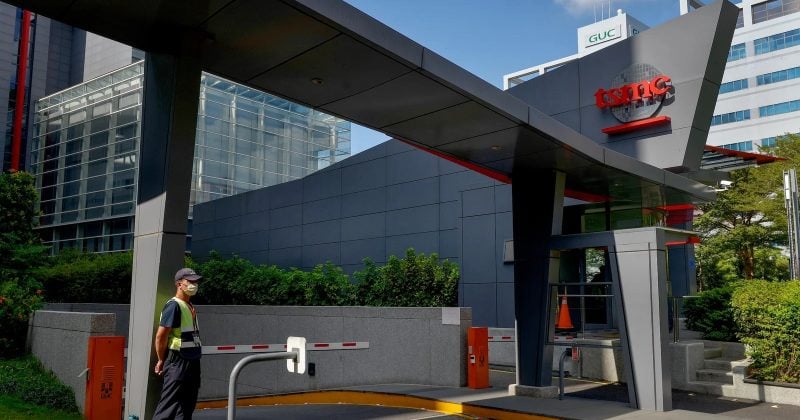
TSMC posts 30% revenue surge as AI chip demand shows no signs of slowing
The world's largest contract chipmaker reported May 2026 revenue of NT$416.98 billion, continuing a growth streak that carries indirect implications for crypto mining and blockchain infrastructure.
TSMC just reminded everyone why it sits at the center of the global tech economy. The Taiwanese chipmaking giant reported May 2026 consolidated net revenue of approximately NT$416.98 billion, roughly $13.2 billion, marking a 30.1% increase compared to the same month last year.
Month-over-month, revenue ticked up 1.5%.
The numbers behind the streak
For the first five months of 2026, TSMC’s cumulative revenue hit NT$1.96 trillion. That’s a 30% jump year-over-year compared to the same January-through-May stretch in 2025.
The figures, disclosed on June 10, 2026, land ahead of two key dates on the calendar. TSMC’s June 2026 monthly sales report is scheduled for July 10, and the company’s Q2 2026 earnings report is expected on July 16.
Analysts had been anticipating roughly 35% quarterly growth for the company, and the monthly revenue figures suggest TSMC is tracking close to those expectations. The growth engine here is no mystery: artificial intelligence infrastructure spending continues to accelerate, and TSMC fabricates the advanced chips that power it.
TSMC remains the world’s largest contract chipmaker by a wide margin. Its 2026 capital expenditure plans sit in the range of $52 billion to $56 billion.
AI, tech, and the markets they move—in one daily briefing.
Daily. Free. Join 34,000+ readers across crypto, finance, and policy.
Why crypto investors should pay attention
Every major proof-of-work mining operation depends on application-specific integrated circuits, better known as ASICs, that are fabricated by companies like TSMC. When TSMC is investing tens of billions in expanding production capacity, it means more silicon is available for every downstream use case, including mining hardware.
TSMC’s growth is being driven primarily by AI chip demand from hyperscale data center operators. These are the same companies building the computing infrastructure that increasingly intersects with blockchain technology, whether through AI-powered trading systems, decentralized compute networks, or the growing convergence of AI and Web3 applications.
What this means for investors
The sustained 30% year-over-year growth rate tells a clear story about demand for advanced semiconductors.
For crypto-specific investors, projects building decentralized GPU and compute marketplaces, such as Render and Akash, are essentially betting that the surplus computing capacity created by this semiconductor boom will find its way into decentralized networks. If TSMC’s capex plans materialize as expected, there will be significantly more hardware in circulation by late 2026 and into 2027.
TSMC’s dominance means the global tech supply chain has a single point of concentration in Taiwan. Geopolitical tensions in the region remain a background risk that could disrupt everything from iPhone production to Bitcoin mining hardware availability. The company has been diversifying with new fabrication plants in Arizona and Japan, but the majority of its cutting-edge production still happens on the island.
For traders watching the July 16 earnings call, the numbers to focus on will be TSMC’s forward guidance and any commentary on capacity utilization rates.