
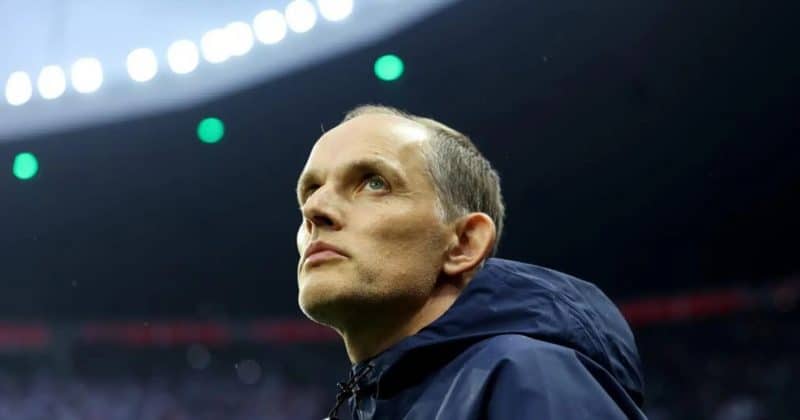
Thomas Tuchel’s tactical gambit with John Stones signals broader trend of football’s positional flexibility era

Thomas Tuchel’s tactical gambit with John Stones signals broader trend of football’s positional flexibility era

England's World Cup quarterfinal plans highlight how modern football's blurring of traditional positions mirrors a wider shift in how we think about asset versatility

Thomas Tuchel is preparing to deploy defender John Stones in an unconventional role for England’s 2026 World Cup quarterfinal against Norway.

The tactical setup

England advanced to the quarterfinals with a 3-2 victory over Mexico on July 4, 2026, setting up a clash with Norway in Miami around July 11. Tuchel faces a squad hit by injuries to players like Jordan Henderson and Reece James.

His solution: take John Stones, a center-back by trade who spent a decade at Manchester City, and slot him into midfield or at right-back.

Advertisement

Stones left Manchester City as a free agent, which means he enters this tournament without the match fitness that comes from regular club appearances. Tuchel has publicly labeled him a “key player” and “proven winner” regardless, suggesting the manager values experience and tactical intelligence over raw minutes played.

The move also carries a compelling subplot. At center-back or in midfield, Stones would be directly involved in containing Erling Haaland, Norway’s generational striker and his former teammate at Manchester City. Few defenders on the planet know Haaland’s tendencies better.

Why positional flexibility is the meta

Tuchel’s approach with Stones isn’t novel in isolation. Pep Guardiola famously used Stones as an inverted fullback at Manchester City, having him drift into midfield during build-up play.

What this means for the bigger picture

England’s resilience in the Mexico match, coming through a 3-2 thriller, established them as serious contenders. Tuchel’s willingness to experiment with Stones’ positioning reflects a high-conviction bet: the upside is significant if it works, because it solves multiple tactical problems with one move, while the downside is equally real if Stones can’t handle the physical demands of midfield after limited club action.

Tuchel appears to be betting on intangibles: Stones’ mentality, his understanding of Haaland’s movement patterns, and his comfort operating in Guardiola-influenced positional systems.

The viral moment of Stones pranking Tuchel with a fake injury during post-match celebrations signals something about squad chemistry, with the incident captured on video and widely shared on social media.

Disclosure: This article was edited by Editorial Team. For more information on how we create and review content, see our Editorial Policy.

Thomas Tuchel’s tactical gambit with John Stones signals broader trend of football’s positional flexibility era

Thomas Tuchel’s tactical gambit with John Stones signals broader trend of football’s positional flexibility era

England's World Cup quarterfinal plans highlight how modern football's blurring of traditional positions mirrors a wider shift in how we think about asset versatility

Thomas Tuchel is preparing to deploy defender John Stones in an unconventional role for England’s 2026 World Cup quarterfinal against Norway.

The tactical setup

England advanced to the quarterfinals with a 3-2 victory over Mexico on July 4, 2026, setting up a clash with Norway in Miami around July 11. Tuchel faces a squad hit by injuries to players like Jordan Henderson and Reece James.

His solution: take John Stones, a center-back by trade who spent a decade at Manchester City, and slot him into midfield or at right-back.

Advertisement

Stones left Manchester City as a free agent, which means he enters this tournament without the match fitness that comes from regular club appearances. Tuchel has publicly labeled him a “key player” and “proven winner” regardless, suggesting the manager values experience and tactical intelligence over raw minutes played.

The move also carries a compelling subplot. At center-back or in midfield, Stones would be directly involved in containing Erling Haaland, Norway’s generational striker and his former teammate at Manchester City. Few defenders on the planet know Haaland’s tendencies better.

Why positional flexibility is the meta

Tuchel’s approach with Stones isn’t novel in isolation. Pep Guardiola famously used Stones as an inverted fullback at Manchester City, having him drift into midfield during build-up play.

What this means for the bigger picture

England’s resilience in the Mexico match, coming through a 3-2 thriller, established them as serious contenders. Tuchel’s willingness to experiment with Stones’ positioning reflects a high-conviction bet: the upside is significant if it works, because it solves multiple tactical problems with one move, while the downside is equally real if Stones can’t handle the physical demands of midfield after limited club action.

Tuchel appears to be betting on intangibles: Stones’ mentality, his understanding of Haaland’s movement patterns, and his comfort operating in Guardiola-influenced positional systems.

The viral moment of Stones pranking Tuchel with a fake injury during post-match celebrations signals something about squad chemistry, with the incident captured on video and widely shared on social media.

Disclosure: This article was edited by Editorial Team. For more information on how we create and review content, see our Editorial Policy.