
United Kingdom prepares to test hypersonic space plane for faster flights

United Kingdom prepares to test hypersonic space plane for faster flights

The ESA-backed Invictus project aims to build a Mach 5 reusable test vehicle by 2031, potentially slashing London-to-Sydney travel to three hours

London to Sydney currently takes about 22 hours, assuming you don’t get stuck in Heathrow security. The UK is backing a project that could cut that to three.

The Invictus program, a European Space Agency initiative launched in July 2025, is developing a hypersonic test vehicle capable of reaching Mach 5, which translates to speeds exceeding 3,800 mph. Led by UK-based Frazer-Nash Consultancy, the project has a target of achieving a working flight test vehicle by early 2031. Two potential UK test sites have already been shortlisted: Spaceport Cornwall and Machrihanish in Scotland.

From the ashes of Reaction Engines

Here’s the thing about Invictus: it’s essentially a resurrection story. The project builds directly on pre-cooler engine technology pioneered by Reaction Engines Ltd, a British company that entered administration in late 2024. Five former Reaction Engines engineers have joined Frazer-Nash to work on Invictus, bringing with them expertise that took years to develop and can’t be replicated from a textbook.

The technology lineage runs deep. Reaction Engines spent years developing the SABRE engine, a hybrid air-breathing rocket engine designed for a concept vehicle called Skylon. That work itself traced back to HOTOL, a horizontal takeoff and landing spaceplane concept from 1982. Invictus represents the latest chapter in a research thread that spans more than four decades of British aerospace ambition.

Advertisement

The pre-cooler technology at the heart of all these projects solves a fundamental problem of hypersonic flight. At Mach 5, incoming air heats up to temperatures that would melt conventional jet engines. The pre-cooler chills that air in a fraction of a second before it enters the engine, making sustained hypersonic flight within the atmosphere theoretically possible.

What Invictus actually looks like

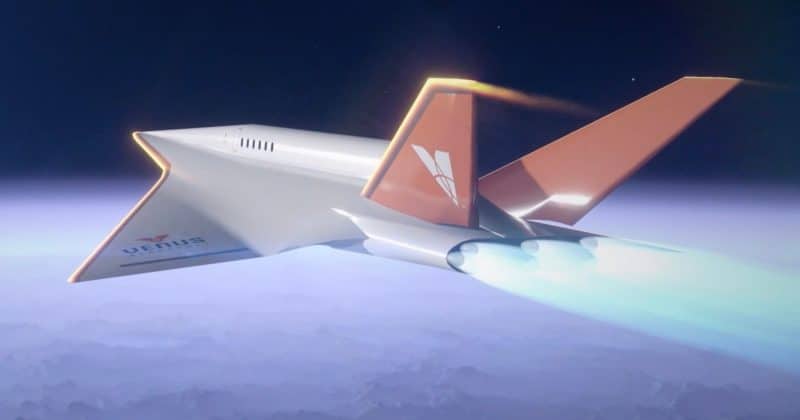
The Invictus vehicle concept is designed for horizontal takeoff and landing, meaning it would operate more like a traditional aircraft than a rocket. Reusability is central to the project’s goals, and runway-based operations are far cheaper than vertical launches.

The program runs on a budget of roughly €7 million, approximately $8 million. By aerospace standards, that’s modest. For context, a single F-35 fighter jet costs north of $80 million.

Backing comes from the UK Space Agency, and the project sits within ESA’s broader framework for developing reusable space access vehicles. The November 2025 shortlisting of Spaceport Cornwall and Machrihanish as potential test sites marked a concrete step forward. Both locations offer the geographic advantages needed for hypersonic testing, including coastal positioning that provides safe overflight corridors away from population centers.

The three-hour flight question

The headline number, London to Sydney in three hours, deserves some context. At Mach 5, covering roughly 10,500 miles in that timeframe is mathematically plausible. But the Invictus project is building a test vehicle, not a passenger aircraft.

Look at the history of supersonic passenger travel for a reality check. Concorde first flew in 1969 and entered commercial service in 1976. It was retired in 2003, partly because the economics never worked at scale. Hypersonic passenger travel would require solving every problem Concorde faced, plus entirely new challenges around thermal management, materials science, and passenger safety at five times the speed of sound.

That said, the underlying technology has applications well beyond passenger aviation. Reusable hypersonic vehicles could dramatically reduce the cost of launching payloads into orbit, serve military reconnaissance and rapid-response roles, and enable point-to-point cargo delivery at speeds that would reshape global logistics.

The 2031 timeline for a test vehicle gives Invictus roughly five years of development runway. Whether that schedule holds will depend on engineering milestones that haven’t been reached yet, regulatory approvals for hypersonic testing over UK airspace, and sustained funding from both ESA and the UK Space Agency.

Disclosure: This article was edited by Editorial Team. For more information on how we create and review content, see our Editorial Policy.

United Kingdom prepares to test hypersonic space plane for faster flights

United Kingdom prepares to test hypersonic space plane for faster flights

The ESA-backed Invictus project aims to build a Mach 5 reusable test vehicle by 2031, potentially slashing London-to-Sydney travel to three hours

London to Sydney currently takes about 22 hours, assuming you don’t get stuck in Heathrow security. The UK is backing a project that could cut that to three.

The Invictus program, a European Space Agency initiative launched in July 2025, is developing a hypersonic test vehicle capable of reaching Mach 5, which translates to speeds exceeding 3,800 mph. Led by UK-based Frazer-Nash Consultancy, the project has a target of achieving a working flight test vehicle by early 2031. Two potential UK test sites have already been shortlisted: Spaceport Cornwall and Machrihanish in Scotland.

From the ashes of Reaction Engines

Here’s the thing about Invictus: it’s essentially a resurrection story. The project builds directly on pre-cooler engine technology pioneered by Reaction Engines Ltd, a British company that entered administration in late 2024. Five former Reaction Engines engineers have joined Frazer-Nash to work on Invictus, bringing with them expertise that took years to develop and can’t be replicated from a textbook.

The technology lineage runs deep. Reaction Engines spent years developing the SABRE engine, a hybrid air-breathing rocket engine designed for a concept vehicle called Skylon. That work itself traced back to HOTOL, a horizontal takeoff and landing spaceplane concept from 1982. Invictus represents the latest chapter in a research thread that spans more than four decades of British aerospace ambition.

Advertisement

The pre-cooler technology at the heart of all these projects solves a fundamental problem of hypersonic flight. At Mach 5, incoming air heats up to temperatures that would melt conventional jet engines. The pre-cooler chills that air in a fraction of a second before it enters the engine, making sustained hypersonic flight within the atmosphere theoretically possible.

What Invictus actually looks like

The Invictus vehicle concept is designed for horizontal takeoff and landing, meaning it would operate more like a traditional aircraft than a rocket. Reusability is central to the project’s goals, and runway-based operations are far cheaper than vertical launches.

The program runs on a budget of roughly €7 million, approximately $8 million. By aerospace standards, that’s modest. For context, a single F-35 fighter jet costs north of $80 million.

Backing comes from the UK Space Agency, and the project sits within ESA’s broader framework for developing reusable space access vehicles. The November 2025 shortlisting of Spaceport Cornwall and Machrihanish as potential test sites marked a concrete step forward. Both locations offer the geographic advantages needed for hypersonic testing, including coastal positioning that provides safe overflight corridors away from population centers.

The three-hour flight question

The headline number, London to Sydney in three hours, deserves some context. At Mach 5, covering roughly 10,500 miles in that timeframe is mathematically plausible. But the Invictus project is building a test vehicle, not a passenger aircraft.

Look at the history of supersonic passenger travel for a reality check. Concorde first flew in 1969 and entered commercial service in 1976. It was retired in 2003, partly because the economics never worked at scale. Hypersonic passenger travel would require solving every problem Concorde faced, plus entirely new challenges around thermal management, materials science, and passenger safety at five times the speed of sound.

That said, the underlying technology has applications well beyond passenger aviation. Reusable hypersonic vehicles could dramatically reduce the cost of launching payloads into orbit, serve military reconnaissance and rapid-response roles, and enable point-to-point cargo delivery at speeds that would reshape global logistics.

The 2031 timeline for a test vehicle gives Invictus roughly five years of development runway. Whether that schedule holds will depend on engineering milestones that haven’t been reached yet, regulatory approvals for hypersonic testing over UK airspace, and sustained funding from both ESA and the UK Space Agency.

Disclosure: This article was edited by Editorial Team. For more information on how we create and review content, see our Editorial Policy.