
UK surveillance laws face US scrutiny over Apple backdoor demand
House Judiciary Committee investigation into secret UK encryption order raises alarm bells for privacy-focused crypto infrastructure
The United States Congress is investigating the UK’s use of secret Technical Capability Notices (TCNs) under the Investigatory Powers Act, which effectively compel American tech companies to weaken encryption or build backdoors into their products. House Judiciary Committee Chairman Jim Jordan and Foreign Affairs Committee Chairman Brian Mast are leading the investigation.
What the UK demanded from Apple
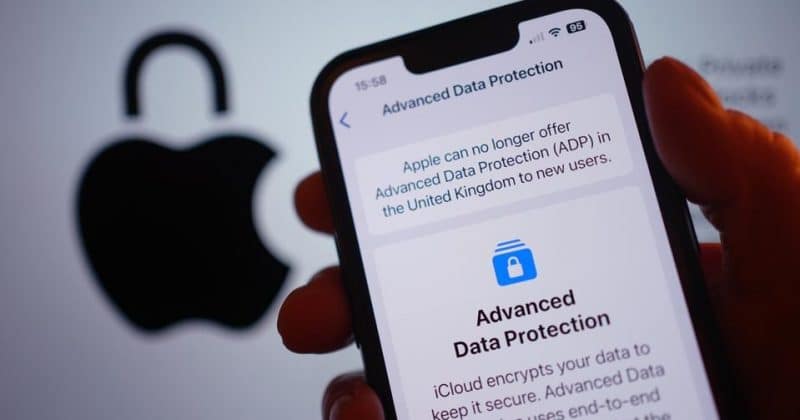
In February 2025, the UK Home Office issued a TCN to Apple demanding access to end-to-end encrypted iCloud backups globally. Not just for UK users. Globally. The target was Apple’s Advanced Data Protection (ADP) feature, which encrypts iCloud data so thoroughly that even Apple itself cannot access it.
The Investigatory Powers Act 2016 gives UK authorities the power to issue these notices with stringent secrecy directives. Recipients cannot publicly disclose that they’ve received one, creating what amounts to a government-imposed gag order on some of the world’s largest technology companies.
Apple’s response was notable for what it did rather than what it said. The company withdrew its Advanced Data Protection feature for UK users entirely. Rather than build a backdoor that could be exploited by anyone who found it, Apple chose to remove the security feature altogether for an entire country’s worth of customers. The company is reportedly appealing parts of the TCN.
US lawmakers sent letters in February 2026 requesting a UK briefing by March 11, 2026, about the TCN, pressing for transparency in how data-sharing agreements under the CLOUD Act are being administered. The CLOUD Act, passed in 2018, was designed to create a framework for bilateral data-sharing between the US and allied governments.
More than 100 civil society groups signed a letter in February 2025 urging the UK government to rescind its TCN request, citing global security concerns.
Macro, rates, and crypto—what moved markets and what matters next.
Daily. Free. Join 34,000+ readers across crypto, finance, and policy.
Why crypto should care about encryption backdoors
The entire cryptocurrency ecosystem rests on cryptographic foundations. Private keys, wallet security, encrypted communications between exchanges and users, zero-knowledge proofs: all of it depends on the mathematical guarantee that encryption works as advertised, with no hidden doors.
If a precedent is established where governments can secretly compel companies to weaken encryption standards, the implications cascade through every layer of digital asset infrastructure. Crypto exchanges rely on strong encryption to protect user funds and personal data. DeFi protocols assume that the underlying cryptographic primitives are sound. Hardware wallet manufacturers build their entire value proposition on the idea that your keys are truly yours.
The UK’s demand targeted Apple’s consumer cloud storage, but the legal mechanism — a secret government order to weaken encryption with no public accountability — is the kind of precedent that extends naturally to any company handling encrypted data, including crypto platforms operating in or serving customers in the UK.
What this means for investors
Projects like Monero, Zcash, and other privacy coins already operate under varying degrees of regulatory pressure. An expansion of surveillance powers into encryption infrastructure itself represents a different category of threat — not about transaction monitoring or KYC requirements, but about whether the underlying technology can be trusted at all.
For mainstream crypto exchanges and custodial services, companies like Coinbase and Kraken already comply with extensive regulatory requirements. Being compelled to secretly weaken the encryption protecting customer assets would create a tension between legal compliance and fiduciary duty to users.
Investors should watch two things closely: the outcome of Apple’s appeal against the TCN, which will signal how much legal resistance companies can mount against secret encryption orders, and whether Congress takes concrete action to prevent CLOUD Act partners from issuing secret orders that affect American users.