
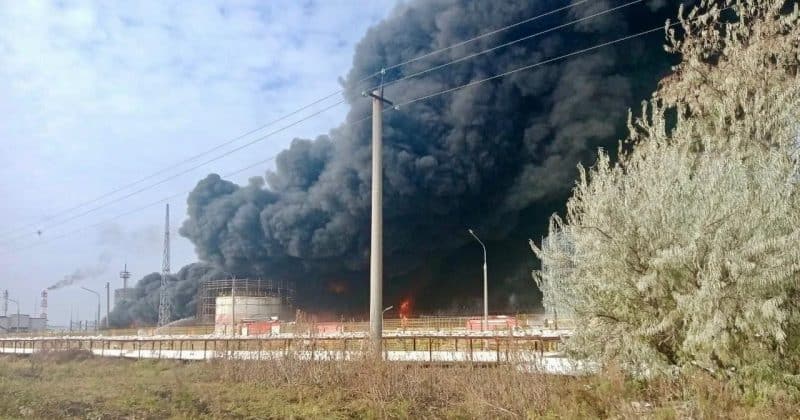
Ukrainian drone strikes on Russian Baltic ports threaten oil supply disruptions with ripple effects across risk markets
Repeated attacks on key Russian oil export terminals are forcing operational halts and could push global energy prices higher, creating indirect headwinds for crypto and other risk assets.
Ukraine has been systematically dismantling Russia’s Baltic Sea oil export infrastructure with drone strikes throughout 2026, and the campaign is starting to bite. Two more Russian ports on the Baltic coast have suffered damage, adding to a pattern of attacks that has repeatedly forced Russia’s most important energy terminals offline.
A methodical campaign against energy chokepoints
The drone strikes have targeted three critical Russian oil export hubs: Ust-Luga, Primorsk, and Vysotsk, all located near St. Petersburg along the Baltic coast.
Ust-Luga has been hit hardest. The port suffered its fifth attack in just ten days as of March 31, 2026, effectively grinding its oil loading operations to a halt.
Primorsk experienced a significant strike on May 3, 2026, causing infrastructure damage and fires that prompted alarm among Russian officials.
The most dramatic incident came on July 4, 2026, when Ukraine launched a massive swarm of over 72 drones targeting the Leningrad region. Russian authorities reported downing the drones, but not before strikes connected with the Vysotsk port and an oil terminal in St. Petersburg itself. Russian officials characterized the damage as minor with no casualties.
The news moving money, markets, and the world—before your day starts.
Daily. Free. Join 34,000+ readers across crypto, finance, and policy.
Ukrainian President Volodymyr Zelenskyy has claimed responsibility for targeting these critical oil facilities, framing the attacks as a legitimate wartime strategy to degrade Russia’s economic capacity to sustain the conflict.
Why Baltic ports matter for global oil markets
Russia’s Baltic oil terminals handle a substantial portion of the country’s total crude exports. The attacks have repeatedly forced operational halts at these facilities, and sustained damage to loading infrastructure requires months of repairs. Insurance costs for vessels operating in the region climb, and the persistent threat of future strikes makes long-term supply contracts through these ports increasingly unreliable.
The inflation pipeline to crypto markets
Rising oil prices are inherently inflationary. Energy costs feed into manufacturing, transportation, and consumer prices across every economy. When inflation runs hotter than expected, central banks face pressure to keep interest rates elevated or delay anticipated cuts.
Russia has increasingly turned to cryptocurrency for sanctions evasion and cross-border trade settlement as traditional financial channels have been restricted. Any further degradation of Russia’s conventional export revenue could paradoxically increase demand for crypto-based workarounds, though this effect is difficult to quantify and largely operates in opaque over-the-counter markets.
The 2022 energy price shock following Russia’s initial invasion of Ukraine coincided with significant drawdowns in crypto markets, though the causation was intertwined with broader monetary tightening.