
Ukraine strikes two Russian refineries, hits over a dozen fuel tankers in major energy infrastructure offensive
The escalating drone campaign has reportedly reduced Russia's refining capacity by roughly one-third, with potential ripple effects across global energy and risk-asset markets.
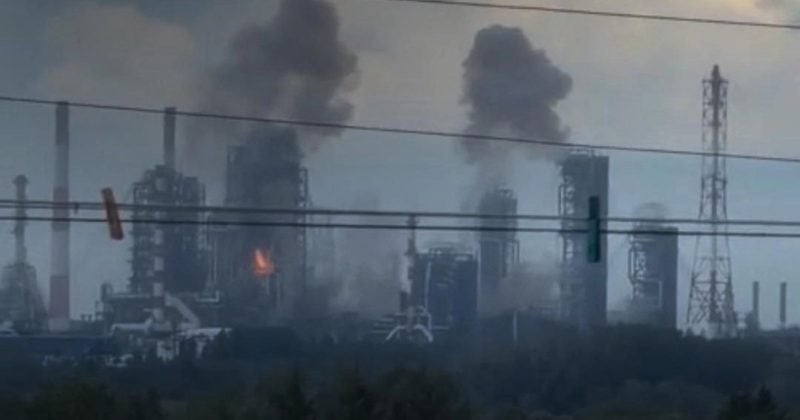
Ukraine launched a coordinated drone assault on multiple Russian oil refineries and more than a dozen fuel tankers in the Sea of Azov over July 7-8, targeting the economic engine that funds Moscow’s war machine. The strikes hit at least three major refinery complexes and, according to Ukrainian sources, damaged somewhere between nine and twelve tankers, with broader claims putting the total number of vessels targeted in recent operations as high as 35 to 36.
What got hit and why it matters
The three refinery targets were the Saratov facility operated by Rosneft, the TANECO complex, and TAIF-NK, both located in Russia’s Tatarstan region.
The attacks followed a strike on Russia’s largest refinery in Omsk on July 7, which reportedly halted processing at the site entirely. At least two fatalities were confirmed on the Russian side.
These attacks are part of a sustained Ukrainian campaign that energy analysts say has now reduced Russia’s total refining capacity by approximately one-third.
Macro, rates, and crypto—what moved markets and what matters next.
Daily. Free. Join 34,000+ readers across crypto, finance, and policy.
The Sea of Azov tanker attacks targeted vessels from Russia’s “shadow fleet,” the collection of aging tankers that Moscow uses to circumvent Western sanctions on its oil exports.
The global energy ripple effect
Russia has been dealing with escalating fuel shortages since 2025, and these latest strikes are poised to make things considerably worse. Major Russian cities are already experiencing supply disruptions, and analysts expect emergency measures and potential export restrictions as Moscow tries to manage a tightening domestic fuel market.
What this means for crypto and risk markets
The more tangible concern for crypto markets is what sustained energy disruption does to mining economics. Higher energy costs directly compress margins for proof-of-work miners, potentially affecting Bitcoin’s hashrate distribution and, in extreme scenarios, network security dynamics. European and Central Asian mining operations would be most exposed to any energy price contagion from Russian supply disruptions.