
Nexo Earn with Nexo
Ukraine strikes military plant deep inside Russia with domestically built cruise missiles

Ukraine strikes military plant deep inside Russia with domestically built cruise missiles

The Votkinsk facility, which produces Iskander ballistic missiles regularly fired at Ukrainian cities, was hit by FP-5 'Flamingo' cruise missiles roughly 870 miles from Ukrainian territory.

Ukraine struck one of Russia’s most strategically important weapons factories on February 21, landing cruise missiles on the Votkinsk Machine Building Plant in the Udmurt Republic, approximately 1,400 km (870 miles) from Ukrainian borders.

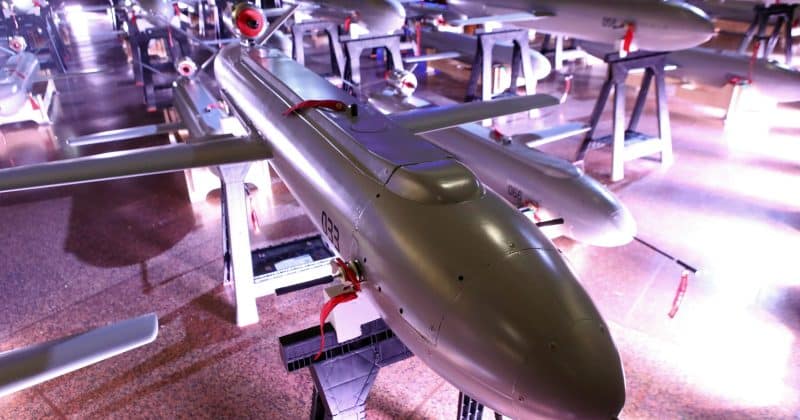
The attack used Ukraine’s domestically produced FP-5 “Flamingo” cruise missiles, according to the Ukrainian General Staff. Local Russian authorities confirmed that explosions and fires broke out at the site, injuring 11 people, with three requiring hospitalization.

Advertisement

What the Votkinsk plant actually does

The Votkinsk Machine Building Plant is a state-owned facility that sits at the heart of Russia’s missile production infrastructure. It is one of the primary manufacturing sites for the Iskander short-range ballistic missile system, which has been a workhorse of Russia’s strike campaign against Ukrainian urban areas and critical infrastructure throughout the conflict.

Initial reports from the area referenced drones, but these were later clarified to be cruise missiles, specifically the FP-5 “Flamingo” variant.

A pattern of escalating deep strikes

This operation fits into a broader 2026 strategy by Ukraine to systematically target Russia’s military production and energy infrastructure, as evidenced by other strikes on Russian military and energy facilities throughout 2026.

Ukraine’s reliance on Western-supplied long-range munitions, such as ATACMS and Storm Shadow missiles, has been a recurring political flashpoint with its allies. A Ukrainian-built cruise missile capable of reaching 1,400 km reduces that dependency considerably.

Disclosure: This article was edited by Editorial Team. For more information on how we create and review content, see our Editorial Policy.

Ukraine strikes military plant deep inside Russia with domestically built cruise missiles

Ukraine strikes military plant deep inside Russia with domestically built cruise missiles

The Votkinsk facility, which produces Iskander ballistic missiles regularly fired at Ukrainian cities, was hit by FP-5 'Flamingo' cruise missiles roughly 870 miles from Ukrainian territory.

Ukraine struck one of Russia’s most strategically important weapons factories on February 21, landing cruise missiles on the Votkinsk Machine Building Plant in the Udmurt Republic, approximately 1,400 km (870 miles) from Ukrainian borders.

The attack used Ukraine’s domestically produced FP-5 “Flamingo” cruise missiles, according to the Ukrainian General Staff. Local Russian authorities confirmed that explosions and fires broke out at the site, injuring 11 people, with three requiring hospitalization.

Advertisement

What the Votkinsk plant actually does

The Votkinsk Machine Building Plant is a state-owned facility that sits at the heart of Russia’s missile production infrastructure. It is one of the primary manufacturing sites for the Iskander short-range ballistic missile system, which has been a workhorse of Russia’s strike campaign against Ukrainian urban areas and critical infrastructure throughout the conflict.

Initial reports from the area referenced drones, but these were later clarified to be cruise missiles, specifically the FP-5 “Flamingo” variant.

A pattern of escalating deep strikes

This operation fits into a broader 2026 strategy by Ukraine to systematically target Russia’s military production and energy infrastructure, as evidenced by other strikes on Russian military and energy facilities throughout 2026.

Ukraine’s reliance on Western-supplied long-range munitions, such as ATACMS and Storm Shadow missiles, has been a recurring political flashpoint with its allies. A Ukrainian-built cruise missile capable of reaching 1,400 km reduces that dependency considerably.

Disclosure: This article was edited by Editorial Team. For more information on how we create and review content, see our Editorial Policy.