
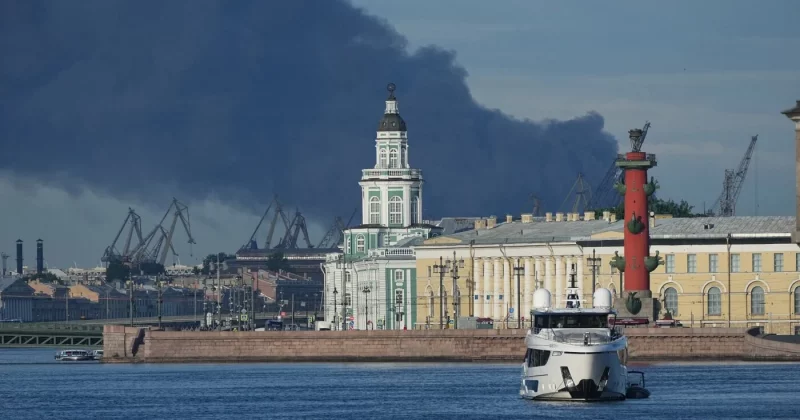
Ukrainian drones strike St Petersburg during SPIEF 2026, sending smoke plume over Russia’s flagship economic forum
Long-range drone attacks hit an oil terminal and naval base in St Petersburg as 20,000 delegates from over 130 countries gathered for Russia's premier investment showcase.
There’s a certain irony in hosting a forum designed to project economic stability while black smoke billows across the city skyline. That’s exactly what happened in St Petersburg during SPIEF 2026, as Ukrainian long-range drones struck critical energy and military infrastructure in two waves of attacks spanning the forum’s duration.
The first strike hit the Petersburg Oil Terminal on June 3, the opening day of the event. A second wave targeted military sites around the city on June 6-7, during the forum’s final days. The result was a prominent plume of dark smoke visible to approximately 20,000 attendees from over 130 countries.
What happened on the ground
The June 3 attack zeroed in on the Petersburg Oil Terminal. Russian authorities confirmed fires broke out in the Kirovsky, Krasnoselsky, and Kronstadt districts that day.
The second wave, days later, escalated things further. Targets included the Kronstadt naval base, where the naval corvette Boykiy was stationed. Satellite imagery confirmed damage to the vessel.
Russian state media largely downplayed the attacks during the forum’s proceedings. President Vladimir Putin addressed the situation during his remarks at SPIEF, announcing plans to strengthen air defense systems. Ukrainian officials framed the drone operations as a successful demonstration of their military’s ability to project force deep into Russian territory.
Why SPIEF matters as a backdrop
SPIEF isn’t just any conference. It’s Russia’s annual gathering where Moscow courts international investment and tries to signal that its economy is open for business despite years of Western sanctions. Drawing 20,000 attendees from over 130 countries, SPIEF 2026 was supposed to reinforce the narrative that Russia remains a viable partner for global commerce.
St Petersburg sits roughly 900 kilometers from the Ukrainian border. Reaching it with drones represents a meaningful operational capability, and doing so during a high-profile international event adds a psychological dimension to the military one.
What this means for markets and investors
The immediate market implications center on energy. St Petersburg is a significant petroleum hub, and a direct strike on the Petersburg Oil Terminal sends an unmistakable signal about supply vulnerability.
SPIEF exists specifically to attract foreign capital. When drone strikes disrupt the event itself, the message to potential investors is that the security situation remains volatile and unpredictable, even in cities far from the front lines.
Putin’s pledge to bolster air defenses suggests significant military spending ahead. For investors with any exposure to Russian equities, bonds, or energy-linked instruments, the inability to secure a flagship event in Russia’s second-largest city is a data point that makes the already difficult task of pricing Russian country risk even harder.