
Nexo Earn with Nexo
US Central Command investigates Apache helicopter downing near Oman

US Central Command investigates Apache helicopter downing near Oman

Both crew members were rescued after the AH-64 went down in the Strait of Hormuz, but the question of whether Iranian forces were involved remains unanswered.

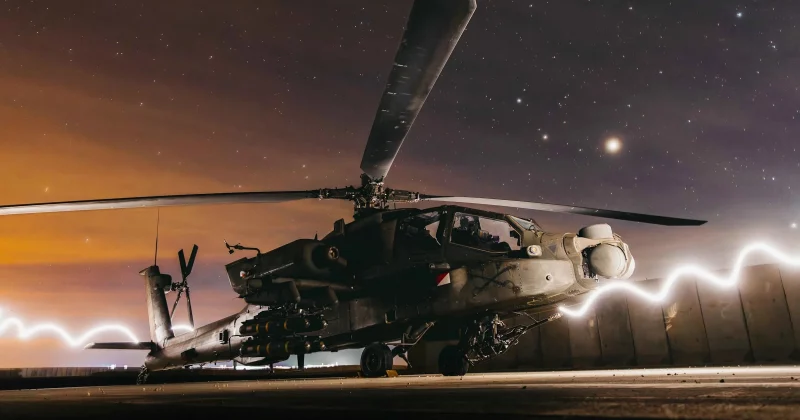
A US Army AH-64 Apache attack helicopter went down near the coast of Oman on June 8, with both crew members rescued by American forces roughly two hours later. US Central Command confirmed the incident and said an investigation is underway to determine the cause, which could range from mechanical failure to something far more consequential: hostile fire from Iran.

The crew members are reported to be in stable condition. President Trump stated publicly that the pilots are “fine” with no injuries.

Advertisement

What happened in the Strait of Hormuz

The Apache was conducting a routine patrol mission in the Strait of Hormuz region when it encountered what CENTCOM has only described as “difficulties” that led to the downing. The rescue operation involved US Navy units and, according to reports, a surface drone boat.

CENTCOM has not publicly ruled out hostile action, and the possibility that Iranian forces were involved is explicitly part of the investigation.

The regional powder keg

The US is currently enforcing an oil blockade against Iran. Simultaneously, a fragile ceasefire between Iran and Israel has been holding, with recent military exchanges between the two countries having tested that ceasefire on June 7.

The Strait of Hormuz is roughly 21 miles wide at its narrowest point, with Iranian territory on one side and Oman on the other. Every barrel of crude that moves from the Persian Gulf to global markets passes through this corridor.

What this means for markets and energy security

Investors should also watch the diplomatic track. The US and Iran are reportedly in negotiations that could ease regional tensions. A confirmed hostile action against a US aircraft would almost certainly derail those talks.

Disclosure: This article was edited by Editorial Team. For more information on how we create and review content, see our Editorial Policy.

US Central Command investigates Apache helicopter downing near Oman

US Central Command investigates Apache helicopter downing near Oman

Both crew members were rescued after the AH-64 went down in the Strait of Hormuz, but the question of whether Iranian forces were involved remains unanswered.

A US Army AH-64 Apache attack helicopter went down near the coast of Oman on June 8, with both crew members rescued by American forces roughly two hours later. US Central Command confirmed the incident and said an investigation is underway to determine the cause, which could range from mechanical failure to something far more consequential: hostile fire from Iran.

The crew members are reported to be in stable condition. President Trump stated publicly that the pilots are “fine” with no injuries.

Advertisement

What happened in the Strait of Hormuz

The Apache was conducting a routine patrol mission in the Strait of Hormuz region when it encountered what CENTCOM has only described as “difficulties” that led to the downing. The rescue operation involved US Navy units and, according to reports, a surface drone boat.

CENTCOM has not publicly ruled out hostile action, and the possibility that Iranian forces were involved is explicitly part of the investigation.

The regional powder keg

The US is currently enforcing an oil blockade against Iran. Simultaneously, a fragile ceasefire between Iran and Israel has been holding, with recent military exchanges between the two countries having tested that ceasefire on June 7.

The Strait of Hormuz is roughly 21 miles wide at its narrowest point, with Iranian territory on one side and Oman on the other. Every barrel of crude that moves from the Persian Gulf to global markets passes through this corridor.

What this means for markets and energy security

Investors should also watch the diplomatic track. The US and Iran are reportedly in negotiations that could ease regional tensions. A confirmed hostile action against a US aircraft would almost certainly derail those talks.

Disclosure: This article was edited by Editorial Team. For more information on how we create and review content, see our Editorial Policy.