
Nexo Earn with Nexo
US Constitution published on Bitcoin blockchain via Ordinals inscription

US Constitution published on Bitcoin blockchain via Ordinals inscription

Someone decided the world's most famous founding document deserved a home on the world's most immutable ledger.

The full text of the US Constitution now lives permanently on the Bitcoin blockchain. An inscription recorded in block 951,492 on May 29, 2026, embedded the entire document onto the chain using the Ordinals protocol, turning America’s foundational legal text into an immutable piece of on-chain data.

The transaction, identified by txid 261f3d9a0414c2904932183be3a51f1773087d03c664468f85c7b6f9ce8a5686, appears to have been carried out by an individual or small group rather than a company or protocol. There’s no token launch attached, no fundraise, no governance mechanism. Just the Constitution, sitting on Bitcoin forever.

How you inscribe a founding document onto Bitcoin

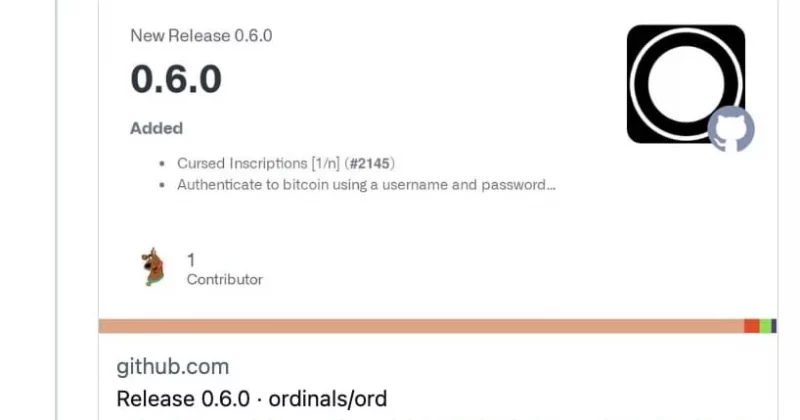
The inscription leverages the Ordinals protocol, originally introduced by Casey Rodarmor in 2022. Ordinals allow users to attach arbitrary data, text, images, even full documents, to individual satoshis, the smallest unit of Bitcoin.

The fees for this particular inscription were relatively low compared to the block’s overall value. But they still represent real costs, paid to miners who process and validate the transaction. Every byte of the Constitution that went on-chain occupied block space that could have been used for a financial transaction instead.

Advertisement

Not the first time someone tried this

This isn’t even the first time the Constitution has been inscribed on Bitcoin. In January 2025, Marathon Digital, one of the largest publicly traded Bitcoin mining companies, combined the US Constitution and the Bill of Rights with a portrait of Donald Trump in a single inscription. That effort cost approximately 1.244 BTC and was recorded in block 825,642.

Marathon’s version was a deliberate corporate statement, blending patriotic imagery with political symbolism at a time when the incoming administration was signaling pro-crypto policies. The latest inscription is a quieter affair. No corporate branding, no political portrait, no press release. Just the document itself.

The block space debate, again

Every time a large inscription hits the Bitcoin blockchain, the same argument resurfaces. On one side, proponents argue that Bitcoin’s censorship-resistant properties make it the ideal medium for preserving important documents. On the other side, critics point out that Bitcoin block space is a finite resource. Each block can hold roughly 4 megabytes of data under the current SegWit framework. When inscriptions consume significant portions of that capacity, they compete directly with financial transactions for inclusion.

Some in the Bitcoin community have gone further, characterizing large Ordinals inscriptions as spam. The argument isn’t necessarily that the Constitution is unworthy of preservation. It’s that Bitcoin was designed as a peer-to-peer electronic cash system, not a decentralized library.

The counterargument is simple: if someone is willing to pay the fee, the network should process their transaction regardless of its content. Bitcoin is permissionless by design. Filtering transactions by type would undermine the very neutrality that makes the network valuable in the first place.

What this means for investors

For investors, the immediate concern is fee dynamics. If inscription activity picks up significantly, particularly during periods of high on-chain demand, transaction fees could spike. That’s good for miners and bad for users trying to send ordinary Bitcoin payments. Monitoring Ordinals activity, alongside standard mempool congestion metrics, gives a more complete picture of network demand than transaction count alone.

The lack of widespread coverage from major crypto outlets suggests this remains a niche activity with limited immediate market impact.

Disclosure: This article was edited by Editorial Team. For more information on how we create and review content, see our Editorial Policy.

US Constitution published on Bitcoin blockchain via Ordinals inscription

US Constitution published on Bitcoin blockchain via Ordinals inscription

Someone decided the world's most famous founding document deserved a home on the world's most immutable ledger.

The full text of the US Constitution now lives permanently on the Bitcoin blockchain. An inscription recorded in block 951,492 on May 29, 2026, embedded the entire document onto the chain using the Ordinals protocol, turning America’s foundational legal text into an immutable piece of on-chain data.

The transaction, identified by txid 261f3d9a0414c2904932183be3a51f1773087d03c664468f85c7b6f9ce8a5686, appears to have been carried out by an individual or small group rather than a company or protocol. There’s no token launch attached, no fundraise, no governance mechanism. Just the Constitution, sitting on Bitcoin forever.

How you inscribe a founding document onto Bitcoin

The inscription leverages the Ordinals protocol, originally introduced by Casey Rodarmor in 2022. Ordinals allow users to attach arbitrary data, text, images, even full documents, to individual satoshis, the smallest unit of Bitcoin.

The fees for this particular inscription were relatively low compared to the block’s overall value. But they still represent real costs, paid to miners who process and validate the transaction. Every byte of the Constitution that went on-chain occupied block space that could have been used for a financial transaction instead.

Advertisement

Not the first time someone tried this

This isn’t even the first time the Constitution has been inscribed on Bitcoin. In January 2025, Marathon Digital, one of the largest publicly traded Bitcoin mining companies, combined the US Constitution and the Bill of Rights with a portrait of Donald Trump in a single inscription. That effort cost approximately 1.244 BTC and was recorded in block 825,642.

Marathon’s version was a deliberate corporate statement, blending patriotic imagery with political symbolism at a time when the incoming administration was signaling pro-crypto policies. The latest inscription is a quieter affair. No corporate branding, no political portrait, no press release. Just the document itself.

The block space debate, again

Every time a large inscription hits the Bitcoin blockchain, the same argument resurfaces. On one side, proponents argue that Bitcoin’s censorship-resistant properties make it the ideal medium for preserving important documents. On the other side, critics point out that Bitcoin block space is a finite resource. Each block can hold roughly 4 megabytes of data under the current SegWit framework. When inscriptions consume significant portions of that capacity, they compete directly with financial transactions for inclusion.

Some in the Bitcoin community have gone further, characterizing large Ordinals inscriptions as spam. The argument isn’t necessarily that the Constitution is unworthy of preservation. It’s that Bitcoin was designed as a peer-to-peer electronic cash system, not a decentralized library.

The counterargument is simple: if someone is willing to pay the fee, the network should process their transaction regardless of its content. Bitcoin is permissionless by design. Filtering transactions by type would undermine the very neutrality that makes the network valuable in the first place.

What this means for investors

For investors, the immediate concern is fee dynamics. If inscription activity picks up significantly, particularly during periods of high on-chain demand, transaction fees could spike. That’s good for miners and bad for users trying to send ordinary Bitcoin payments. Monitoring Ordinals activity, alongside standard mempool congestion metrics, gives a more complete picture of network demand than transaction count alone.

The lack of widespread coverage from major crypto outlets suggests this remains a niche activity with limited immediate market impact.

Disclosure: This article was edited by Editorial Team. For more information on how we create and review content, see our Editorial Policy.