
US consumer sentiment rises to five-month high in July as gasoline prices fall

US consumer sentiment rises to five-month high in July as gasoline prices fall

The University of Michigan index climbed to 54.4, but geopolitical risks are already threatening to erase the gains

American consumers are feeling slightly less terrible about the economy. After months of record-low sentiment readings driven by oil shocks and geopolitical chaos, it is at least a direction change worth noting.

The University of Michigan’s preliminary Consumer Sentiment Index for July 2026 came in at 54.4, up from a June final reading of 49.5. That is a 9.9% gain in a single month, and it marks the highest reading since February 2026. It also beat analyst expectations, which had been clustered around 51.0.

How we got here

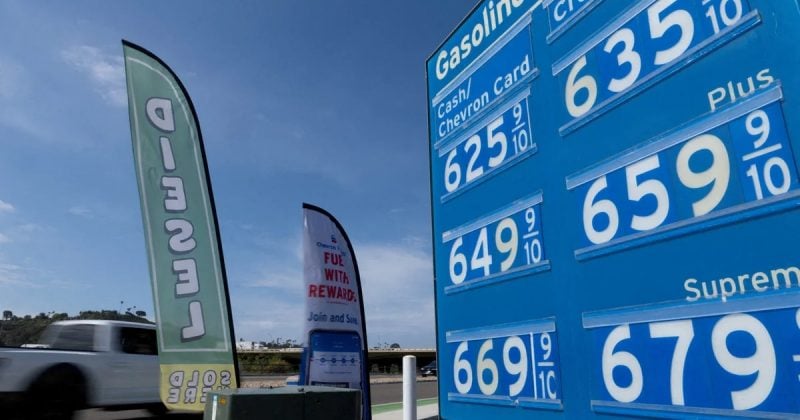
The story behind the number is largely a story about gasoline prices. When fuel gets cheaper, household budgets breathe a little easier, and that tends to show up quickly in sentiment surveys.

Advertisement

In May 2026, the index hit a record low of 44.8, driven by a surge in oil and gas prices tied to escalating tensions in the US-Iran conflict. This is now the second consecutive month of roughly 10% gains in the index.

The index at 54.4 is still dramatically lower than the 61.7 recorded in July 2025. One-year inflation expectations, meanwhile, remain elevated at approximately 4.6%.

The timing problem

The University of Michigan survey that produced the 54.4 reading was conducted between June 23 and July 13, 2026. The US resumed military strikes against Iran on July 7, right in the middle of the survey window. That means a significant portion of respondents answered their questionnaires before the latest escalation had fully registered in fuel prices or news cycles.

Gas prices, which had been falling through early summer, began rising again after mid-July.

The Conference Board’s Consumer Confidence Index offered a complementary signal in June 2026, rising to 91.2 from 90.6 in May.

What this means for markets and risk assets

Consumer sentiment functions as a leading indicator for spending behavior, and spending drives roughly two-thirds of US economic output.

The index at 54.4 remains well below historical norms. At 4.6% on a one-year basis, consumers are still expecting meaningful price pressure ahead. The survey window predates the most recent geopolitical escalation, gasoline prices are already reversing course, and the baseline remains well below historical norms.

Disclosure: This article was edited by Editorial Team. For more information on how we create and review content, see our Editorial Policy.

US consumer sentiment rises to five-month high in July as gasoline prices fall

US consumer sentiment rises to five-month high in July as gasoline prices fall

The University of Michigan index climbed to 54.4, but geopolitical risks are already threatening to erase the gains

American consumers are feeling slightly less terrible about the economy. After months of record-low sentiment readings driven by oil shocks and geopolitical chaos, it is at least a direction change worth noting.

The University of Michigan’s preliminary Consumer Sentiment Index for July 2026 came in at 54.4, up from a June final reading of 49.5. That is a 9.9% gain in a single month, and it marks the highest reading since February 2026. It also beat analyst expectations, which had been clustered around 51.0.

How we got here

The story behind the number is largely a story about gasoline prices. When fuel gets cheaper, household budgets breathe a little easier, and that tends to show up quickly in sentiment surveys.

Advertisement

In May 2026, the index hit a record low of 44.8, driven by a surge in oil and gas prices tied to escalating tensions in the US-Iran conflict. This is now the second consecutive month of roughly 10% gains in the index.

The index at 54.4 is still dramatically lower than the 61.7 recorded in July 2025. One-year inflation expectations, meanwhile, remain elevated at approximately 4.6%.

The timing problem

The University of Michigan survey that produced the 54.4 reading was conducted between June 23 and July 13, 2026. The US resumed military strikes against Iran on July 7, right in the middle of the survey window. That means a significant portion of respondents answered their questionnaires before the latest escalation had fully registered in fuel prices or news cycles.

Gas prices, which had been falling through early summer, began rising again after mid-July.

The Conference Board’s Consumer Confidence Index offered a complementary signal in June 2026, rising to 91.2 from 90.6 in May.

What this means for markets and risk assets

Consumer sentiment functions as a leading indicator for spending behavior, and spending drives roughly two-thirds of US economic output.

The index at 54.4 remains well below historical norms. At 4.6% on a one-year basis, consumers are still expecting meaningful price pressure ahead. The survey window predates the most recent geopolitical escalation, gasoline prices are already reversing course, and the baseline remains well below historical norms.

Disclosure: This article was edited by Editorial Team. For more information on how we create and review content, see our Editorial Policy.