
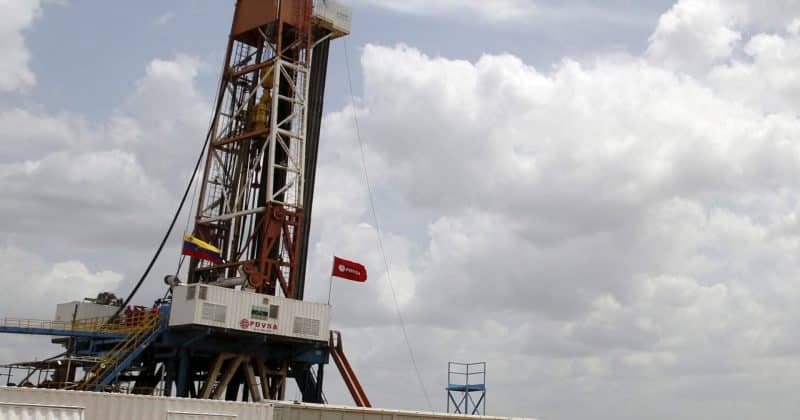
US investment groups target Venezuela’s oilfields after Trump ousts Maduro
Wall Street is racing to deploy billions into Venezuelan energy assets, with SPACs, private funds, and former oil executives all jockeying for position in a country sitting on the world's largest proven reserves.
It took less than a month after US forces captured Nicolás Maduro for Wall Street to start drawing up term sheets. US investment groups are now forming dedicated funds to acquire oilfields in Venezuela, treating the country’s energy sector like a fire sale on the planet’s largest proven oil reserves.
The Trump administration has called on US energy firms to invest at least $100 billion into Venezuela’s rebuilt infrastructure. That number, roughly equivalent to the annual GDP of Ecuador, signals the scale of what Washington envisions. And the money is already moving.
The deals taking shape
The most concrete transaction so far involves Lionheart Capital. The firm has entered a letter of intent to merge its Nasdaq-listed SPAC, Lionheart Holdings, with Keo Energy, a company that holds assets in Venezuela’s prolific Maracaibo Basin. The combined entity would carry a valuation of approximately $1 billion, effectively creating the first Venezuelan oil company to trade on the Nasdaq.
Lionheart Holdings raised $230 million in 2024. That war chest is now being aimed squarely at a basin that was once among the most productive oil regions on Earth before decades of mismanagement hollowed it out.
Then there’s Amos Global Energy Management, led by Ali Moshiri, a former Chevron executive who spent years navigating Latin American oil politics. Moshiri’s fund is targeting $2 billion through private placements, reportedly attracting strong institutional interest in the wake of Maduro’s ouster on January 3, 2026.
Macro, rates, and crypto—what moved markets and what matters next.
Daily. Free. Join 34,000+ readers across crypto, finance, and policy.
The lineup doesn’t stop there. Yorkville Advisors is raising $200 million through its own SPAC structure. And Grupo Cisneros, the Venezuelan-founded conglomerate, is launching a $1 billion fund called Intrépida that targets multiple sectors, with energy as a centerpiece.
Why Venezuela, why now
Venezuela sits on the world’s largest proven oil reserves. Under Maduro, the country’s oil output cratered. Current production hovers around 1.1 million barrels per day, a fraction of what the country once pumped. For context, Venezuela produced over 3 million barrels per day in the late 1990s. The decline came from a toxic combination of US sanctions, chronic underinvestment, corruption, and the slow-motion collapse of PDVSA, the state oil company.
The interim government that replaced Maduro has begun easing restrictions on foreign investment, opening the door for US firms to participate in a sector that was essentially off-limits for years.
What this means for investors
The Lionheart-Keo merger will be the one to watch most closely. If it successfully lists a Venezuelan oil company on Nasdaq, it establishes a template that others will follow. The $1 billion valuation, though, is largely aspirational at this stage. The actual value will depend on production ramp-up timelines, regulatory stability, and whether the interim government can maintain the kind of investment-friendly environment that makes long-term capital deployment feasible.
Moshiri’s involvement through Amos Global adds a layer of credibility that pure financial engineers can’t match. His Chevron background means he understands the operational realities of Latin American oil production, not just the spreadsheet version. Institutional investors tend to follow operators, not just promoters, which likely explains the reported strong interest in his $2 billion raise.