
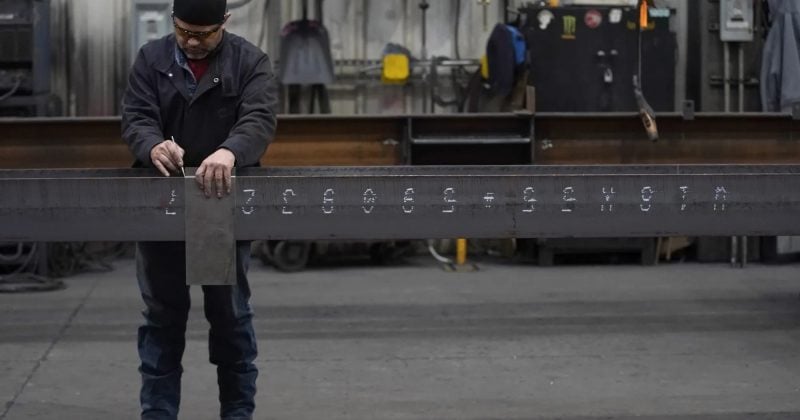
US June industrial production barely budges, technically misses already-low expectations
The Fed's latest manufacturing snapshot shows a 0.1% gain that rounds to zero, reinforcing questions about the strength of America's industrial base and what it means for risk assets.
The US industrial sector managed to grow in June, but only if you squint. The Federal Reserve reported a 0.1% month-over-month increase in industrial production for June 2026, a number so small it effectively rounds to zero, and technically missed consensus expectations of a flat 0% reading.
The reading, released on July 17, continues a deceleration trend that’s been unfolding since April. That month saw a relatively robust 0.9% surge, followed by a much softer 0.1% gain in May. June’s repeat performance at 0.1% suggests whatever momentum the industrial economy found in the spring has largely evaporated.
The numbers behind the flatline
The total industrial production index now sits at 102.6% of the 2017 average. On a year-over-year basis, that translates to 1.7% growth.
Capacity utilization sat at 76.2%, a full 3.2 percentage points below its long-run average. American factories, mines, and utilities have a lot of idle capacity sitting around. When factories aren’t using the capacity they already have, it’s hard to make the case that things are humming along nicely.
What the Fed is watching
Industrial production data is one of several inputs the Federal Reserve monitors when calibrating monetary policy. It provides a direct window into the real economy, the part where physical things actually get made.
Macro, rates, and crypto—what moved markets and what matters next.
Daily. Free. Join 34,000+ readers across crypto, finance, and policy.
Flat industrial production combined with significant slack in capacity utilization paints a picture of an economy that’s stable but hardly overheating. That’s the kind of backdrop that typically favors patience over action on the rate front.
What this means for crypto and risk assets
The cumulative signal from several months of softening industrial activity does matter for the broader macro environment in which digital assets trade. Weak economic data generally supports the case for looser monetary policy. Looser monetary policy tends to be favorable for risk assets. Crypto has spent the last several years trading as a risk asset.
The fact that crypto-native media has largely ignored this data release is itself telling. It suggests that digital asset traders aren’t currently pricing industrial production as a meaningful input.
At 76.2%, capacity utilization signals meaningful economic slack. If that number continues to drift lower, it would strengthen the case for monetary easing, which historically has been a tailwind for both traditional equities and digital assets.