
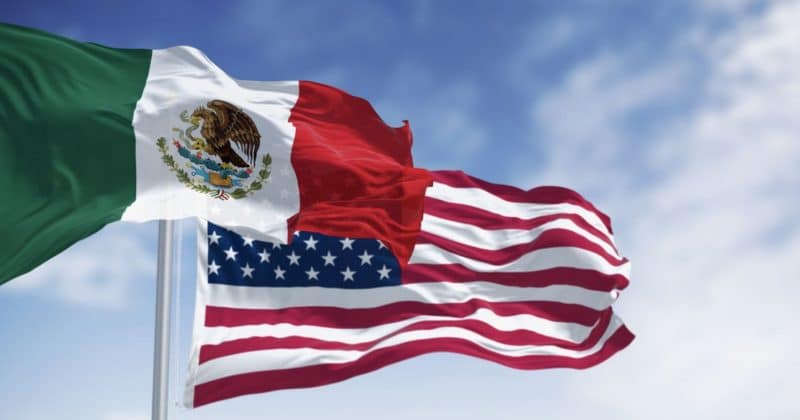
US and Mexico officials meet on agriculture and energy as Trump casts doubt on USMCA renewal
Negotiations over North America's $1.6 trillion trade framework hit turbulence as the president says he's 'not looking to renew' the deal
American and Mexican negotiators sat down in Washington on June 16 for a two-day round of trade discussions centered on agriculture and energy. The timing is not subtle. A mandatory joint review of the US-Mexico-Canada Agreement is due by July 1, and the president has already signaled he’d rather walk away than extend it.
Trump said on June 10 that he is “not looking to renew” the USMCA, arguing the US could perform better on its own without relying on imports from Canada or Mexico. That’s a remarkable stance toward a deal his own first administration negotiated as the successor to NAFTA, which took effect on July 1, 2020.
What’s actually on the table
The Washington meetings mark the second round in a series of bilateral discussions. The first took place in Mexico City last month, and a third is already scheduled for July 20, again in Mexico City.
Agriculture and energy are the headline topics, but the negotiations extend well beyond those sectors. US demands reportedly include raising the required American content for vehicles to 50% and pushing the total regional content threshold up to 82%. In English: the US wants more cars built with American parts, and more North American components overall, before a vehicle qualifies for tariff-free treatment under the agreement.
On the agriculture side, US farm groups are lobbying hard for a 16-year extension of the USMCA’s provisions. Their goal is straightforward: lock in duty-free access for American agricultural products for another decade and a half. Canada has also formally requested a 16-year renewal of the broader agreement.
The USMCA governs North American supply chains worth an estimated $1.6 trillion annually.
The news moving money, markets, and the world—before your day starts.
Daily. Free. Join 34,000+ readers across crypto, finance, and policy.
Why Trump’s skepticism matters more than usual
The USMCA’s built-in review mechanism gives Trump’s rhetoric unusual structural weight. The agreement includes a mandatory six-year joint review, and the first one arrives on July 1, 2026. If the three countries don’t agree to extend the deal, it begins a slow countdown toward expiration.
The auto content demands are particularly telling. Raising the US-specific requirement to 50% and the regional threshold to 82% would force significant restructuring of supply chains that automakers have spent years optimizing under the current rules.
What this means for investors
Agricultural commodities are the most obvious area of exposure. If duty-free access for US farm products gets disrupted, pricing dynamics for everything from corn to dairy could shift. Farm groups pushing for the 16-year extension are doing it because the alternative—reverting to pre-USMCA tariff schedules—would materially damage their export economics.
The automotive sector faces a different but equally serious calculus. Stricter content requirements would raise production costs for manufacturers who currently source components across all three countries. Companies with deeply integrated North American supply chains would bear the heaviest adjustment burden.
Currency markets are also in play. The Mexican peso has historically been sensitive to trade policy signals from Washington, with USD/MXN pairs exposed to any perception that the USMCA might not survive its review. The Canadian dollar faces similar exposure.
The July 1 review deadline and the July 20 follow-up talks in Mexico City will be the next critical waypoints.