
US military strikes Iranian missile sites as crypto markets feel the shockwaves
CENTCOM confirms self-defense strikes in southern Iran while Bitcoin whipsaws and prediction markets see half a billion in war-related trading volume.
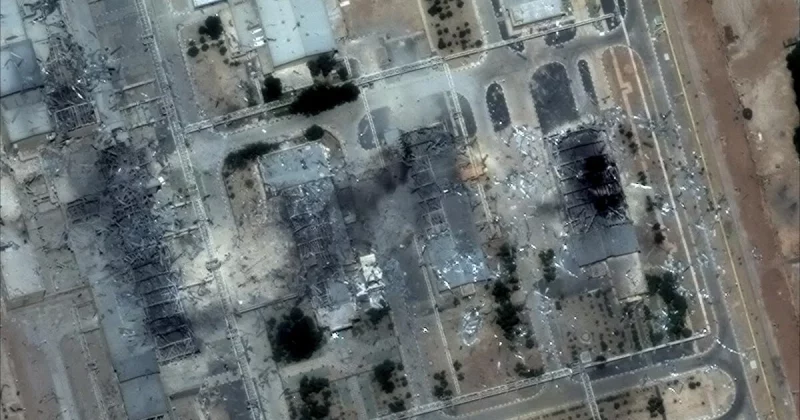
The US military struck Iranian missile launch sites and small boats in southern Iran between May 4 and May 7, with US Central Command confirming the actions were taken to protect American troops. The strikes targeted vessels attempting to lay mines in the strategically vital Strait of Hormuz, the narrow waterway through which a massive share of the world’s oil supply flows daily.
In crypto terms, the market’s reaction was swift and predictable: Bitcoin spiked above $80K on early missile reports before settling back to around $79K. Meanwhile, prediction markets turned the escalation into a trading bonanza, with Polymarket recording over $529 million in volume on US-Iran strike contracts alone.
What happened on the ground
CENTCOM described the strikes as self-defense measures amid ongoing confrontations involving missiles, drones, and small boats. US forces reportedly destroyed or damaged six to seven Iranian small boats during the May clashes, adding to a staggering toll that has been building since late February.
The engagements fall under Operation Epic Fury, the broader US military campaign that began on February 28, 2026. Since that escalation kicked off, US forces have reportedly damaged or sunk over 120 Iranian naval vessels.
Israel has also been involved in concurrent military operations targeting Iranian military assets, making this a multi-front pressure campaign against Tehran’s conventional capabilities. The mine-laying attempts by Iranian boats underscore the kind of unconventional tactics that make this waterway so dangerous, as mines are cheap, hard to detect, and can shut down commercial shipping lanes for days.
Bitcoin’s geopolitical reflex
When initial reports of the strikes surfaced, Bitcoin pushed above $80K, likely driven by a flight-to-safety narrative. Then reality set in, risk appetite contracted, and the price retreated to around $79K. That roughly $1K swing represents billions of dollars in value sloshing around in a matter of hours.
The prediction market activity is arguably more telling than the Bitcoin price itself. Over $529 million in trading volume on Polymarket’s US-Iran strike contracts suggests that a significant number of traders were positioning themselves around the likelihood of military action. When prediction markets see massive volume spikes shortly before confirmed military operations, it naturally invites scrutiny about whether some participants had access to non-public information.
What this means for investors
The Strait of Hormuz is the chokepoint through which roughly a fifth of global oil consumption passes. Sustained military operations in the area put upward pressure on energy costs, which feeds into inflation, which historically has been constructive for hard assets including Bitcoin.
The prediction market volumes are perhaps the most actionable signal in all of this. Over $529 million in war-related contracts on Polymarket tells you that a growing class of traders is actively pricing geopolitical risk in real time using crypto-native infrastructure. For crypto investors navigating this environment, the practical takeaway is straightforward: position sizing and volatility management matter more than directional conviction when missiles are flying.