
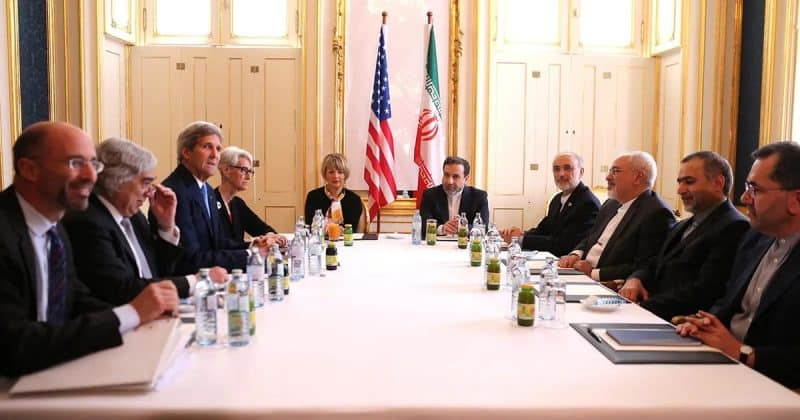
US officials feared Israel planned to kill Iran’s top negotiators mid-talks
Senior American officials secretly warned Iran after learning Israel may have targeted its foreign minister and parliament speaker for assassination during ceasefire negotiations
Senior US officials grew alarmed in early April 2026 that Israel was plotting to assassinate two of Iran’s most senior diplomats while ceasefire negotiations were actively underway, according to reporting from the Washington Post. The targets, reportedly, were Foreign Minister Abbas Araghchi and Parliament Speaker Mohammad Bagher Ghalibaf, two figures central to any diplomatic resolution of the 2026 Iran war.
What happened, and why it matters
The 2026 Iran war began on February 28, and its consequences rippled far beyond the Middle East almost immediately. The conflict threatened access to the Strait of Hormuz, through which over 20% of the world’s oil supply passes, and the US moved quickly to pursue diplomatic off-ramps.
High-level talks were held in locations including Islamabad and Qatar, with ceasefire negotiations formally beginning around April 7-8. That window, when diplomats on both sides were engaged in some of the most sensitive talks of the conflict, is precisely when US concerns about an Israeli operation peaked.
Washington did not sit on the intelligence. US officials conveyed warnings to Iran through regional intermediaries, effectively alerting Tehran that its negotiators might be in danger. The move was designed to keep the diplomatic process alive, but it also laid bare a significant fracture between the US and Israel at a moment when both governments officially shared the goal of de-escalating the conflict.
The alleged plot never materialized.
The market angle investors cannot ignore
Brent crude prices surged past $97 per barrel amid the ongoing tensions, reflecting how seriously energy traders were pricing in the risk of sustained Hormuz disruption.
Macro, rates, and crypto—what moved markets and what matters next.
Daily. Free. Join 34,000+ readers across crypto, finance, and policy.
The crypto market absorbed its own version of the shock. During prior spikes in Iran-Israel tensions, the broader digital asset market recorded losses exceeding $200 billion, as investors shifted to risk-off positioning. Bitcoin and Ethereum were noted as affected assets during those episodes.
For equity investors, oil above $97 a barrel creates upward pressure on energy-sector stocks while simultaneously squeezing margins for airlines, shipping companies, and energy-intensive manufacturers.
The US-Israel rift and what comes next
For the Trump administration, reopening the Strait of Hormuz was a core objective, both for economic reasons and for the geopolitical optics of resolving a major crisis. Eliminating Iran’s chief negotiators mid-process would have made that goal significantly harder to achieve, which is presumably why US officials intervened.
Israel’s calculus, if the reporting is accurate, appears to have weighed the elimination of senior Iranian officials more heavily than the continuity of a diplomatic process it may not have viewed as favorable to its own interests.