
Nexo Earn with Nexo
US sanctions Cuba’s state-owned energy company CUPET under EO 14404

US sanctions Cuba’s state-owned energy company CUPET under EO 14404

Washington targets the military-run conglomerate controlling up to 70% of Cuba's economy, dragging its oil monopoly into the sanctions net

The US government just pulled one of the most consequential economic levers available against Cuba’s ruling apparatus. On May 7, 2026, the Treasury Department’s Office of Foreign Assets Control (OFAC) issued its first designations under Executive Order 14404, targeting GAESA, the military-run conglomerate that functions as the economic backbone of the Cuban state.

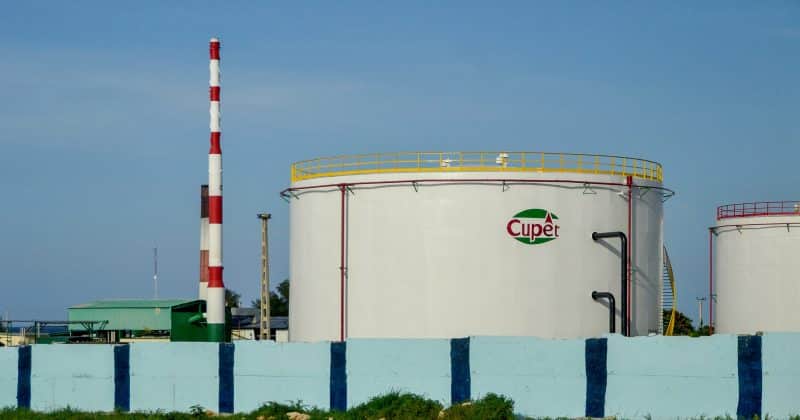
CUPET, Cuba’s state-owned oil company formally known as Unión Cuba-Petróleo, wasn’t explicitly named in the designation. But here’s the thing: it didn’t need to be. Because GAESA owns CUPET, the OFAC 50% rule kicks in automatically, meaning any entity majority-owned by a sanctioned party inherits those sanctions by default. In English: CUPET is now effectively frozen out of the international financial system without its name ever appearing on the list.

How the sanctions framework works

EO 14404 was signed by President Donald Trump on May 1, 2026. It builds on an earlier order, EO 14380, which Trump signed on January 29, 2026, declaring a national emergency regarding Cuba and introducing tariffs on countries exporting oil to the Cuban government.

Advertisement

The new order goes further. It authorizes blocking sanctions on foreign individuals and entities operating in sectors like energy, defense, metals, and financial services, specifically those providing support to Cuban authorities. Think of it as a secondary sanctions framework, similar in structure to measures the US has deployed against Russia and Iran under the International Emergency Economic Powers Act (IEEPA).

The primary target, GAESA (Grupo de Administración Empresarial S.A.), is estimated to control somewhere between 40% and 70% of the Cuban economy. Its tentacles reach into tourism, retail, real estate, and, critically, energy through its ownership of CUPET.

OFAC did offer one small concession alongside the designations. A General License 1 was issued on May 7, providing temporary guidance for certain transactions tied to GAESA. The wind-down period runs until June 5, 2026, giving counterparties roughly a month to unwind existing dealings before full enforcement kicks in.

Why energy is the pressure point

By effectively sanctioning CUPET through GAESA, Washington is targeting the Cuban regime’s ability to monetize and control energy resources. The stated rationale is to restrict the regime’s use of energy infrastructure for repression and corruption. Any foreign company, bank, or trader that facilitates significant transactions with CUPET now faces the risk of secondary sanctions from the US.

What this means for investors and global markets

For anyone operating in or adjacent to Cuban economic interests, the compliance landscape just got significantly more complicated. Foreign financial institutions that facilitate transactions with GAESA or its subsidiaries, including CUPET, now face potential secondary sanctions.

International energy traders should pay close attention to the June 5 wind-down deadline. After that date, the full weight of blocking sanctions applies, and any residual exposure to GAESA-linked entities becomes a direct compliance liability.

One notable absence in the entire sanctions package: there is zero mention of cryptocurrency, blockchain, or digital assets. The enforcement apparatus here is entirely focused on traditional financial channels, bank accounts, correspondent banking relationships, trade finance, and SWIFT-adjacent mechanisms.

Disclosure: This article was edited by Editorial Team. For more information on how we create and review content, see our Editorial Policy.

US sanctions Cuba’s state-owned energy company CUPET under EO 14404

US sanctions Cuba’s state-owned energy company CUPET under EO 14404

Washington targets the military-run conglomerate controlling up to 70% of Cuba's economy, dragging its oil monopoly into the sanctions net

The US government just pulled one of the most consequential economic levers available against Cuba’s ruling apparatus. On May 7, 2026, the Treasury Department’s Office of Foreign Assets Control (OFAC) issued its first designations under Executive Order 14404, targeting GAESA, the military-run conglomerate that functions as the economic backbone of the Cuban state.

CUPET, Cuba’s state-owned oil company formally known as Unión Cuba-Petróleo, wasn’t explicitly named in the designation. But here’s the thing: it didn’t need to be. Because GAESA owns CUPET, the OFAC 50% rule kicks in automatically, meaning any entity majority-owned by a sanctioned party inherits those sanctions by default. In English: CUPET is now effectively frozen out of the international financial system without its name ever appearing on the list.

How the sanctions framework works

EO 14404 was signed by President Donald Trump on May 1, 2026. It builds on an earlier order, EO 14380, which Trump signed on January 29, 2026, declaring a national emergency regarding Cuba and introducing tariffs on countries exporting oil to the Cuban government.

Advertisement

The new order goes further. It authorizes blocking sanctions on foreign individuals and entities operating in sectors like energy, defense, metals, and financial services, specifically those providing support to Cuban authorities. Think of it as a secondary sanctions framework, similar in structure to measures the US has deployed against Russia and Iran under the International Emergency Economic Powers Act (IEEPA).

The primary target, GAESA (Grupo de Administración Empresarial S.A.), is estimated to control somewhere between 40% and 70% of the Cuban economy. Its tentacles reach into tourism, retail, real estate, and, critically, energy through its ownership of CUPET.

OFAC did offer one small concession alongside the designations. A General License 1 was issued on May 7, providing temporary guidance for certain transactions tied to GAESA. The wind-down period runs until June 5, 2026, giving counterparties roughly a month to unwind existing dealings before full enforcement kicks in.

Why energy is the pressure point

By effectively sanctioning CUPET through GAESA, Washington is targeting the Cuban regime’s ability to monetize and control energy resources. The stated rationale is to restrict the regime’s use of energy infrastructure for repression and corruption. Any foreign company, bank, or trader that facilitates significant transactions with CUPET now faces the risk of secondary sanctions from the US.

What this means for investors and global markets

For anyone operating in or adjacent to Cuban economic interests, the compliance landscape just got significantly more complicated. Foreign financial institutions that facilitate transactions with GAESA or its subsidiaries, including CUPET, now face potential secondary sanctions.

International energy traders should pay close attention to the June 5 wind-down deadline. After that date, the full weight of blocking sanctions applies, and any residual exposure to GAESA-linked entities becomes a direct compliance liability.

One notable absence in the entire sanctions package: there is zero mention of cryptocurrency, blockchain, or digital assets. The enforcement apparatus here is entirely focused on traditional financial channels, bank accounts, correspondent banking relationships, trade finance, and SWIFT-adjacent mechanisms.

Disclosure: This article was edited by Editorial Team. For more information on how we create and review content, see our Editorial Policy.