
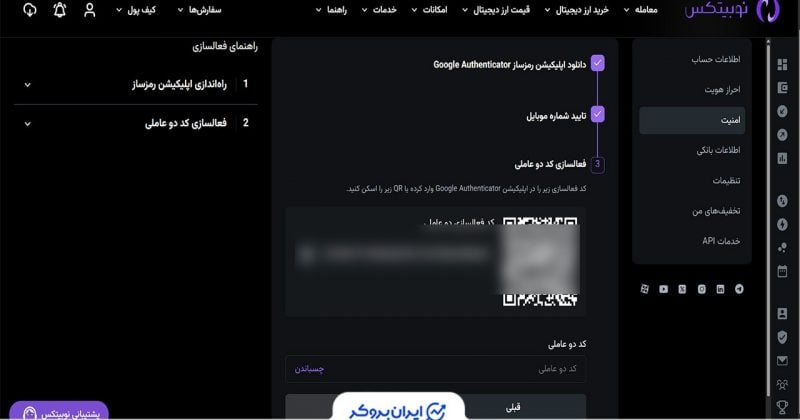
US Treasury sanctions Iran’s largest crypto exchange Nobitex and three other platforms

US Treasury sanctions Iran’s largest crypto exchange Nobitex and three other platforms

OFAC designated four Iranian digital asset exchanges in a sweeping crackdown targeting IRGC funding channels and sanctions evasion networks.

The US Treasury just went after Iran’s crypto infrastructure with a sledgehammer. The Office of Foreign Assets Control sanctioned Nobitex, Iran’s largest digital asset exchange, alongside three other platforms: Wallex, Bitpin, and Ramzinex.

Nobitex alone handled roughly 50% of Iran’s digital asset inflows in 2025. Taking it offline, at least from the Western financial system, is the equivalent of shutting down half the country’s crypto on-ramp in one move.

What happened and why it matters

OFAC issued the designations on June 2 under two executive orders. Executive Order 13224 targets entities involved in counterterrorism financial activities, while Executive Order 13902 focuses specifically on the Iranian financial sector. The sanctions hit both the platforms and various executives associated with them.

The core target here isn’t just crypto. It’s the Islamic Revolutionary Guard Corps. Washington has been methodically going after the IRGC’s financial plumbing, and these four exchanges appear to have been key nodes in that network.

Advertisement

The State Department is also dangling a $15 million reward for information that helps disrupt IRGC financial operations.

This action didn’t come out of nowhere. In April 2026, roughly $344 million in digital assets linked to Iranian networks were frozen. Tether reportedly assisted in blocking wallets associated with the IRGC during that effort. The June sanctions represent the next logical step: going after the platforms themselves rather than just individual wallets.

The enforcement playbook is evolving

Rather than playing whack-a-mole with individual wallet addresses, Treasury is now targeting the institutional layer: the exchanges where sanctioned entities convert between fiat and crypto, the platforms that serve as gateways between Iran’s domestic economy and the global digital asset market.

Iranian users and exchanges have historically adapted to sanctions pressure by turning to privacy-focused tools and alternative channels.

The involvement of private companies like Tether in enforcement actions also marks a notable shift. Stablecoin issuers are increasingly functioning as compliance chokepoints in the crypto ecosystem. When Tether freezes wallets at OFAC’s request, it demonstrates that even supposedly decentralized finance has centralized pressure points that regulators can leverage.

What this means for crypto investors and exchanges

Any platform that interacts with sanctioned entities, even unknowingly, risks finding itself on OFAC’s list. The designation of four exchanges in a single action suggests Treasury is willing to move aggressively and at scale.

The $344 million in frozen assets from April is worth sitting with for a moment. That’s a substantial sum that was moving through crypto channels linked to sanctioned Iranian networks.

The $15 million reward for IRGC financial intelligence is also worth monitoring. Bounty programs like this create incentives for blockchain analytics firms and individual tipsters to dig deeper into sanctioned networks.

Disclosure: This article was edited by Editorial Team. For more information on how we create and review content, see our Editorial Policy.

US Treasury sanctions Iran’s largest crypto exchange Nobitex and three other platforms

US Treasury sanctions Iran’s largest crypto exchange Nobitex and three other platforms

OFAC designated four Iranian digital asset exchanges in a sweeping crackdown targeting IRGC funding channels and sanctions evasion networks.

The US Treasury just went after Iran’s crypto infrastructure with a sledgehammer. The Office of Foreign Assets Control sanctioned Nobitex, Iran’s largest digital asset exchange, alongside three other platforms: Wallex, Bitpin, and Ramzinex.

Nobitex alone handled roughly 50% of Iran’s digital asset inflows in 2025. Taking it offline, at least from the Western financial system, is the equivalent of shutting down half the country’s crypto on-ramp in one move.

What happened and why it matters

OFAC issued the designations on June 2 under two executive orders. Executive Order 13224 targets entities involved in counterterrorism financial activities, while Executive Order 13902 focuses specifically on the Iranian financial sector. The sanctions hit both the platforms and various executives associated with them.

The core target here isn’t just crypto. It’s the Islamic Revolutionary Guard Corps. Washington has been methodically going after the IRGC’s financial plumbing, and these four exchanges appear to have been key nodes in that network.

Advertisement

The State Department is also dangling a $15 million reward for information that helps disrupt IRGC financial operations.

This action didn’t come out of nowhere. In April 2026, roughly $344 million in digital assets linked to Iranian networks were frozen. Tether reportedly assisted in blocking wallets associated with the IRGC during that effort. The June sanctions represent the next logical step: going after the platforms themselves rather than just individual wallets.

The enforcement playbook is evolving

Rather than playing whack-a-mole with individual wallet addresses, Treasury is now targeting the institutional layer: the exchanges where sanctioned entities convert between fiat and crypto, the platforms that serve as gateways between Iran’s domestic economy and the global digital asset market.

Iranian users and exchanges have historically adapted to sanctions pressure by turning to privacy-focused tools and alternative channels.

The involvement of private companies like Tether in enforcement actions also marks a notable shift. Stablecoin issuers are increasingly functioning as compliance chokepoints in the crypto ecosystem. When Tether freezes wallets at OFAC’s request, it demonstrates that even supposedly decentralized finance has centralized pressure points that regulators can leverage.

What this means for crypto investors and exchanges

Any platform that interacts with sanctioned entities, even unknowingly, risks finding itself on OFAC’s list. The designation of four exchanges in a single action suggests Treasury is willing to move aggressively and at scale.

The $344 million in frozen assets from April is worth sitting with for a moment. That’s a substantial sum that was moving through crypto channels linked to sanctioned Iranian networks.

The $15 million reward for IRGC financial intelligence is also worth monitoring. Bounty programs like this create incentives for blockchain analytics firms and individual tipsters to dig deeper into sanctioned networks.

Disclosure: This article was edited by Editorial Team. For more information on how we create and review content, see our Editorial Policy.