
US strike hits Iranian railway bridge on major China-Russia trade corridor, rattling risk assets
The first US infrastructure strike since April's ceasefire targets a critical link in the International North-South Transport Corridor, sending ripples through global risk markets including crypto.
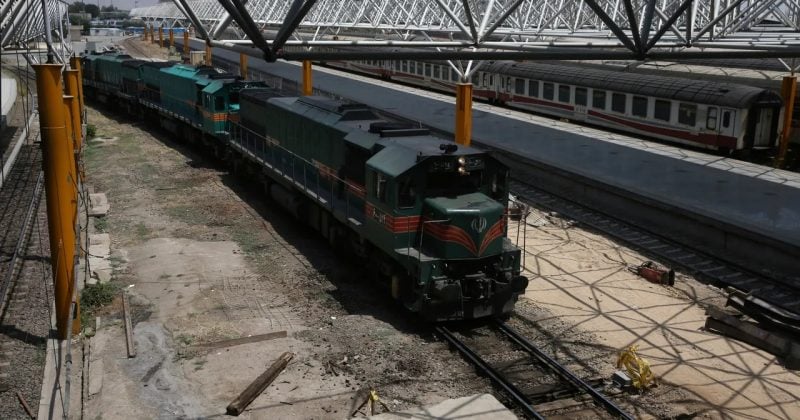
US military forces struck at least one railway bridge in northeastern Iran’s Golestan province on July 8-9, hitting a piece of infrastructure that sits at the crossroads of two of the world’s most strategically important trade corridors. The bridge near Aqqala connects Iran to China and Russia through both the International North-South Transport Corridor and China’s Belt and Road Initiative.
It’s the first reported US infrastructure strike since a ceasefire was established on April 8, 2026.
What happened and why it matters
The Aq Tekeh Khan Bridge is a critical node in a rail network that links Xi’an, China to Tehran in roughly 10 to 15 days, offering an overland alternative to maritime shipping routes that have become increasingly unreliable thanks to sanctions and regional conflict.
The strike is part of broader US military operations responding to Iranian attacks on maritime shipping in the Strait of Hormuz, a chokepoint through which roughly a fifth of the world’s oil passes daily. Iranian state media described the incident as an attack from “enemy projectiles,” though no casualties were immediately reported.
Iran’s Islamic Revolutionary Guard Corps vowed what it called a “crushing” response.
The INSTC was designed as a Russia-Iran-India corridor to move goods without relying on Western-controlled shipping lanes. China’s BRI freight services running through this infrastructure represent Beijing’s bet on overland trade resilience.
Macro, rates, and crypto—what moved markets and what matters next.
Daily. Free. Join 34,000+ readers across crypto, finance, and policy.
The crypto and macro market ripple effects
Digital asset markets reacted with volatility following the strike. When the US killed Iranian General Qasem Soleimani in early 2020, Bitcoin initially dropped before rallying as investors reconsidered it as a potential hedge. When Russia invaded Ukraine in February 2022, crypto sold off hard alongside equities before finding its footing.
Striking a trade corridor connecting Iran, China, and Russia signals a willingness to use kinetic force against the physical infrastructure of alternative economic networks that have been increasingly used to circumvent US sanctions.
What investors should actually watch
Iran’s promised “crushing” response is the key variable. If the IRGC retaliates against US assets or allies in the region, expect crude oil to spike, the dollar to strengthen, and risk assets including crypto to face sustained selling pressure.
Iran has previously threatened to close the Strait of Hormuz entirely during periods of heightened conflict. Any disruption to oil transit through the strait would send energy prices soaring and create inflationary pressure with implications for monetary policy expectations.
Traders should also monitor stablecoin flows in the coming days. During previous geopolitical events, large conversions from volatile crypto assets into USDT and USDC have served as reliable indicators of how seriously the market is pricing sustained risk.