
Valar Atomics partners with Nvidia to develop nuclear-powered data center in Utah

Valar Atomics partners with Nvidia to develop nuclear-powered data center in Utah

The startup's helium-cooled microreactor will power a 30 MW pilot facility, marking a new chapter in how AI infrastructure gets its electricity

A nuclear energy startup just teamed up with the most valuable chipmaker on the planet to build something that sounds like it belongs in a sci-fi novel: a data center powered by a microreactor in rural Utah.

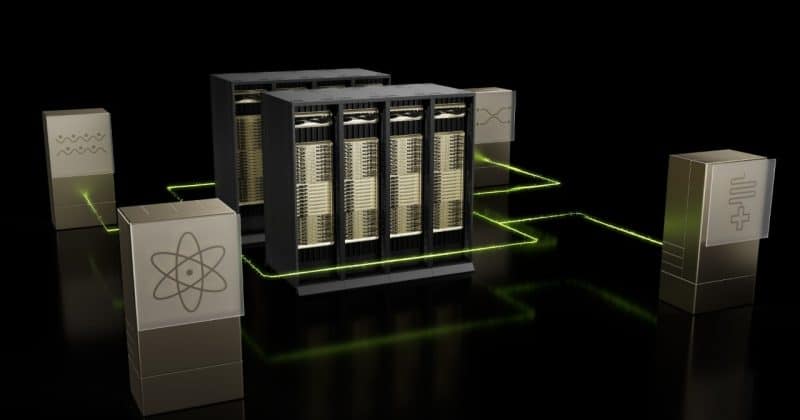
Valar Atomics, founded in 2023, is partnering with Nvidia to develop a pilot data center in Emery County, Utah, powered by the company’s Ward 250 helium-cooled microreactor. The facility targets roughly 30 megawatts of output, enough to run a meaningful chunk of AI compute without pulling a single watt from the local grid.

What actually happened

The partnership, reported by Reuters and confirmed as of July 1, 2026, pairs Valar’s nuclear tech with Nvidia’s latest Blackwell AI chip architecture. During a demonstration event in July 2026, Nvidia’s Blackwell chips were successfully powered by Valar’s reactor.

Valar’s Ward 250 microreactor hit a critical milestone on March 31, 2026, achieving what’s called zero-power fueled criticality. In English: the reactor sustained a nuclear chain reaction for the first time under controlled conditions. It became the first US Department of Energy-authorized microreactor to do so outside a national laboratory.

Advertisement

The Utah pilot facility is designed as a behind-the-meter power solution. That means the data center generates its own electricity on-site rather than depending on transmission lines and utility companies. The system also uses closed-loop cooling, which translates to near-zero water usage, a significant detail in a state where water scarcity is a real constraint.

Valar raised $450 million in funding at a $2 billion valuation earlier in 2026. The company’s broader vision involves what it calls a “gigasite model,” essentially grid-independent data center campuses that can be deployed wherever compute is needed, regardless of existing power infrastructure.

Why this matters beyond the tech

The AI boom needs absurd amounts of electricity. Training large language models, running inference at scale, and operating the GPU clusters that companies like Nvidia sell requires power densities that traditional data centers weren’t built to handle.

Grid interconnection queues have ballooned, and in some regions, new data center projects face multi-year waits just to get plugged in. That bottleneck has turned energy sourcing into the defining constraint of AI infrastructure buildout.

Nuclear offers a compelling answer. Unlike solar and wind, it generates baseload power 24/7 regardless of weather. Unlike natural gas, it produces zero carbon emissions during operation. And unlike large-scale nuclear plants that take a decade or more to build, microreactors like the Ward 250 are designed to be factory-manufactured and deployed relatively quickly.

What this means for crypto and energy markets

If Valar’s model proves viable at scale, it could reshape the economics of proof-of-work mining. Grid-independent nuclear power eliminates two of mining’s biggest cost variables: electricity prices and regulatory risk from local utilities.

For investors watching the broader energy transition, Valar’s $2 billion valuation, achieved just three years after founding, reflects how aggressively the market is pricing in nuclear’s potential role in the compute economy.

The competitive landscape is worth monitoring closely. Companies like Oklo, NuScale, and Kairos Power are all pursuing small modular reactor designs with varying approaches. Valar’s first-mover advantage on DOE authorization outside a national lab gives it a meaningful head start.

One risk that shouldn’t be overlooked: regulatory uncertainty. The DOE authorized this pilot, but scaling from a single 30 MW facility to a network of gigasites will require navigating NRC licensing, state-level permitting, and public sentiment around nuclear energy.

Disclosure: This article was edited by Editorial Team. For more information on how we create and review content, see our Editorial Policy.

Valar Atomics partners with Nvidia to develop nuclear-powered data center in Utah

Valar Atomics partners with Nvidia to develop nuclear-powered data center in Utah

The startup's helium-cooled microreactor will power a 30 MW pilot facility, marking a new chapter in how AI infrastructure gets its electricity

A nuclear energy startup just teamed up with the most valuable chipmaker on the planet to build something that sounds like it belongs in a sci-fi novel: a data center powered by a microreactor in rural Utah.

Valar Atomics, founded in 2023, is partnering with Nvidia to develop a pilot data center in Emery County, Utah, powered by the company’s Ward 250 helium-cooled microreactor. The facility targets roughly 30 megawatts of output, enough to run a meaningful chunk of AI compute without pulling a single watt from the local grid.

What actually happened

The partnership, reported by Reuters and confirmed as of July 1, 2026, pairs Valar’s nuclear tech with Nvidia’s latest Blackwell AI chip architecture. During a demonstration event in July 2026, Nvidia’s Blackwell chips were successfully powered by Valar’s reactor.

Valar’s Ward 250 microreactor hit a critical milestone on March 31, 2026, achieving what’s called zero-power fueled criticality. In English: the reactor sustained a nuclear chain reaction for the first time under controlled conditions. It became the first US Department of Energy-authorized microreactor to do so outside a national laboratory.

Advertisement

The Utah pilot facility is designed as a behind-the-meter power solution. That means the data center generates its own electricity on-site rather than depending on transmission lines and utility companies. The system also uses closed-loop cooling, which translates to near-zero water usage, a significant detail in a state where water scarcity is a real constraint.

Valar raised $450 million in funding at a $2 billion valuation earlier in 2026. The company’s broader vision involves what it calls a “gigasite model,” essentially grid-independent data center campuses that can be deployed wherever compute is needed, regardless of existing power infrastructure.

Why this matters beyond the tech

The AI boom needs absurd amounts of electricity. Training large language models, running inference at scale, and operating the GPU clusters that companies like Nvidia sell requires power densities that traditional data centers weren’t built to handle.

Grid interconnection queues have ballooned, and in some regions, new data center projects face multi-year waits just to get plugged in. That bottleneck has turned energy sourcing into the defining constraint of AI infrastructure buildout.

Nuclear offers a compelling answer. Unlike solar and wind, it generates baseload power 24/7 regardless of weather. Unlike natural gas, it produces zero carbon emissions during operation. And unlike large-scale nuclear plants that take a decade or more to build, microreactors like the Ward 250 are designed to be factory-manufactured and deployed relatively quickly.

What this means for crypto and energy markets

If Valar’s model proves viable at scale, it could reshape the economics of proof-of-work mining. Grid-independent nuclear power eliminates two of mining’s biggest cost variables: electricity prices and regulatory risk from local utilities.

For investors watching the broader energy transition, Valar’s $2 billion valuation, achieved just three years after founding, reflects how aggressively the market is pricing in nuclear’s potential role in the compute economy.

The competitive landscape is worth monitoring closely. Companies like Oklo, NuScale, and Kairos Power are all pursuing small modular reactor designs with varying approaches. Valar’s first-mover advantage on DOE authorization outside a national lab gives it a meaningful head start.

One risk that shouldn’t be overlooked: regulatory uncertainty. The DOE authorized this pilot, but scaling from a single 30 MW facility to a network of gigasites will require navigating NRC licensing, state-level permitting, and public sentiment around nuclear energy.

Disclosure: This article was edited by Editorial Team. For more information on how we create and review content, see our Editorial Policy.