
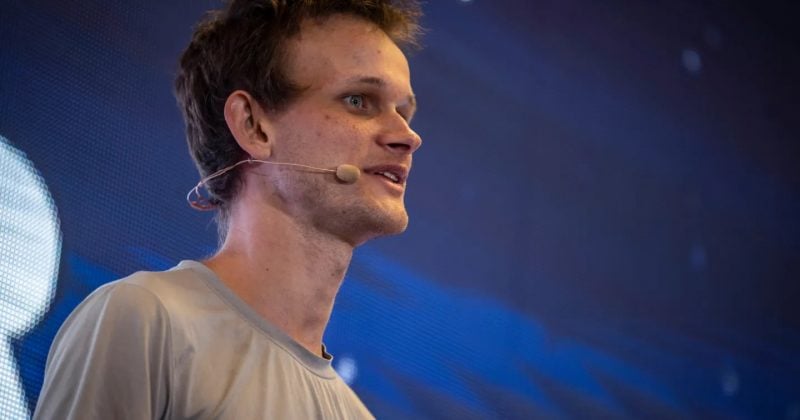
Vitalik Buterin warns Ethereum ecosystem against OpenAI’s path in EthCC speech
In a keynote marking Ethereum's 10-year anniversary, the co-founder laid out three concrete tests every crypto project should pass and called out Layer 2 upgradability as a ticking time bomb.
Vitalik Buterin took the stage at EthCC 2025 in Cannes on July 2 and delivered a message that was equal parts celebration and warning. Ethereum turns 10 this month, having launched its mainnet in July 2015, but Buterin wasn’t in a birthday-cake mood.
Instead, he told the audience that the network is at a critical “inflection point” and urged the broader crypto ecosystem to reject the centralized trajectory that has defined companies like OpenAI. “We don’t need to be like OpenAI,” Buterin said, a line that landed as both a philosophical statement and a practical directive.
The three tests Buterin wants every project to pass
The core of Buterin’s keynote wasn’t abstract hand-wraving about decentralization. He proposed three specific evaluations that any crypto project should be able to survive.
First, the “walk-away test.” If the company behind a project disappears tomorrow, can users still access their assets? If the answer is no, the project isn’t decentralized in any meaningful sense.
Second, the “insider attack test.” Can a rogue employee, a compromised key holder, or a malicious governance participant drain funds or manipulate the system?
Third, the “trusted computing base evaluation.” How much of the system’s stack do you have to blindly trust for it to work? The smaller that trusted base, the more resilient the project.
The crypto and markets news you actually need—every morning.
Daily. Free. Join 34,000+ readers across crypto, finance, and policy.
Layer 2s, fragile frontends, and the drift toward corporate control
Buterin didn’t stop at frameworks. He named specific problems he sees in the current Ethereum ecosystem, and some of them will make Layer 2 builders uncomfortable.
He criticized the instant-upgrade mechanisms built into many Layer 2 solutions. The ability for a team to push upgrades without meaningful delay or community oversight creates a single point of control that undermines the security guarantees users think they’re getting.
Fragile decentralized application frontends also caught his attention. Most users interact with dApps through web interfaces that can be altered, censored, or compromised without touching the underlying smart contracts. Buterin advocated for immutable, IPFS-hosted frontends as a way to close this vulnerability.
He also took aim at token-vote auctions, a practice where governance power is effectively sold to the highest bidder.
Privacy, Buterin argued, should be treated as a core feature rather than an optional add-on.
Why the OpenAI comparison matters
The OpenAI reference wasn’t random. OpenAI began as a nonprofit research lab dedicated to developing artificial intelligence for the benefit of humanity. It has since restructured toward a capped-profit model, partnered with Microsoft for billions in funding, and faced repeated criticism for opacity around its most powerful models. The trajectory from open idealism to closed commercialism is exactly the path Buterin fears for Ethereum.
He emphasized that diverse funding sources and open development practices are essential to preventing this outcome. Relying on a small number of large backers, whether corporate or institutional, creates dependency that can lead to centralized control.