
FIFA’s 2026 World Cup ball tracks every touch 500 times per second, and crypto is nowhere in sight

FIFA’s 2026 World Cup ball tracks every touch 500 times per second, and crypto is nowhere in sight

The Adidas Trionda's embedded sensor technology represents a major sports tech milestone that deliberately bypasses blockchain, raising questions about crypto's stalled momentum in professional athletics.

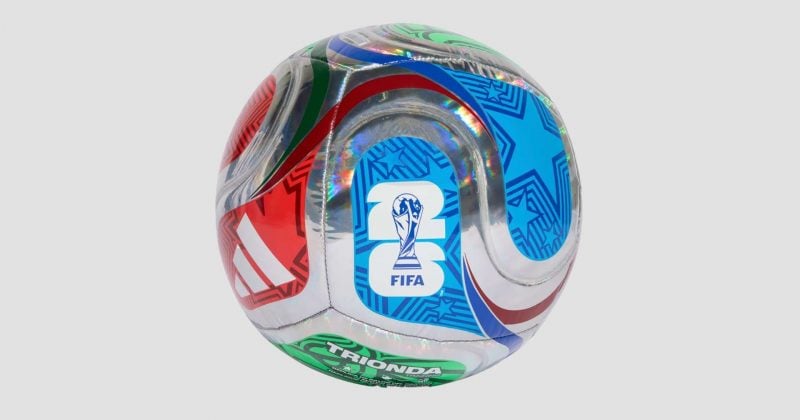
The ball knows when you touched it. More precisely, it knows exactly how you touched it, how fast it was spinning when you did, and where it was headed next. The Adidas Trionda, the official match ball for the 2026 FIFA World Cup, packs an embedded sensor that captures data 500 times per second and feeds it directly to the Video Assistant Referee system.

How the Trionda actually works

At the core of the Trionda sits a 500Hz inertial measurement unit, or IMU, motion sensor chip. In English: a tiny computer that measures movement, speed, spin, and trajectory in real time, then broadcasts that data to match officials faster than a midfielder can complain about a yellow card.

This isn’t the first time FIFA has experimented with smart ball technology. The connected ball system debuted during the 2022 Qatar World Cup, where it assisted with semi-automated offside decisions. The Trionda builds on that foundation with notable design refinements.

Advertisement

Previous iterations placed the sensor in a way that could subtly affect the ball’s weight distribution. The Trionda repositions the chip within the sidewall of one panel, a change aimed at improving balance and ensuring the ball performs like, well, a ball.

The internal rechargeable battery lasts approximately 6 hours per charge. That’s enough for a standard match with plenty of buffer, but FIFA will deploy dedicated personnel to monitor battery levels before and during games.

Real-time contact data from the ball will be used to adjudicate goals during the 2026 tournament. When a referee needs to confirm whether a player actually touched the ball, or precisely when that touch occurred relative to an offside position, the Trionda provides the answer in milliseconds rather than minutes.

The crypto-shaped hole in sports tech

The Trionda contains zero blockchain technology. No NFTs commemorating your favorite goal. No token-gated access to ball tracking data. No decentralized anything. The most advanced piece of technology at the world’s biggest sporting event is purely a performance and officiating tool, with no crypto layer bolted on top.

When FIFA had the chance to embed any technology it wanted into the most watched ball on Earth, it chose a motion sensor, not a smart contract.

Disclosure: This article was edited by Editorial Team. For more information on how we create and review content, see our Editorial Policy.

FIFA’s 2026 World Cup ball tracks every touch 500 times per second, and crypto is nowhere in sight

FIFA’s 2026 World Cup ball tracks every touch 500 times per second, and crypto is nowhere in sight

The Adidas Trionda's embedded sensor technology represents a major sports tech milestone that deliberately bypasses blockchain, raising questions about crypto's stalled momentum in professional athletics.

The ball knows when you touched it. More precisely, it knows exactly how you touched it, how fast it was spinning when you did, and where it was headed next. The Adidas Trionda, the official match ball for the 2026 FIFA World Cup, packs an embedded sensor that captures data 500 times per second and feeds it directly to the Video Assistant Referee system.

How the Trionda actually works

At the core of the Trionda sits a 500Hz inertial measurement unit, or IMU, motion sensor chip. In English: a tiny computer that measures movement, speed, spin, and trajectory in real time, then broadcasts that data to match officials faster than a midfielder can complain about a yellow card.

This isn’t the first time FIFA has experimented with smart ball technology. The connected ball system debuted during the 2022 Qatar World Cup, where it assisted with semi-automated offside decisions. The Trionda builds on that foundation with notable design refinements.

Advertisement

Previous iterations placed the sensor in a way that could subtly affect the ball’s weight distribution. The Trionda repositions the chip within the sidewall of one panel, a change aimed at improving balance and ensuring the ball performs like, well, a ball.

The internal rechargeable battery lasts approximately 6 hours per charge. That’s enough for a standard match with plenty of buffer, but FIFA will deploy dedicated personnel to monitor battery levels before and during games.

Real-time contact data from the ball will be used to adjudicate goals during the 2026 tournament. When a referee needs to confirm whether a player actually touched the ball, or precisely when that touch occurred relative to an offside position, the Trionda provides the answer in milliseconds rather than minutes.

The crypto-shaped hole in sports tech

The Trionda contains zero blockchain technology. No NFTs commemorating your favorite goal. No token-gated access to ball tracking data. No decentralized anything. The most advanced piece of technology at the world’s biggest sporting event is purely a performance and officiating tool, with no crypto layer bolted on top.

When FIFA had the chance to embed any technology it wanted into the most watched ball on Earth, it chose a motion sensor, not a smart contract.

Disclosure: This article was edited by Editorial Team. For more information on how we create and review content, see our Editorial Policy.