
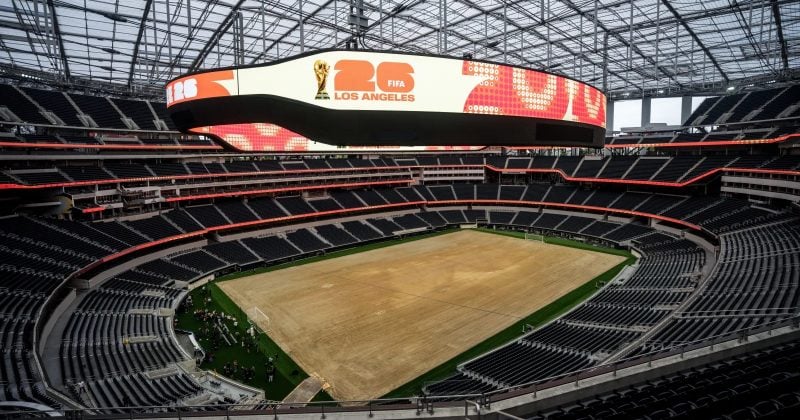
FIFA World Cup 2026 fan zones highlight how major sports events are skipping crypto sponsorships
West Harbor's World Cup activation in Los Angeles runs on $5 tickets and metro lines, not token integrations, marking a broader shift in how mega-events approach partnerships.
Los Angeles’s West Harbor waterfront just opened its doors as an official FIFA World Cup 2026 Fan Zone, and there’s something conspicuously absent from the entire operation: crypto.
No token-gated entry. No NFT ticket stubs. No exchange logos plastered across jumbotrons. Just $5 general admission, live match broadcasts, and a metro line to get you there.
What’s actually happening at West Harbor
The fan zone runs from July 14-15 and July 18-19, coinciding with the World Cup’s semifinal and final matches. That includes the France vs. Spain semifinal on July 14, which alone should draw significant crowds to the still-under-construction San Pedro waterfront development.
Gates open as early as 10:30 a.m., with tickets starting at $5 and some general admission options priced at $20. Fans get access to live broadcasts, soccer-themed activities, food vendors, and entertainment. Transit access runs through the Metro J Line.
This is one of the first major public activations for West Harbor, a project that’s also slated to host sailing events during the LA28 Olympic Games. The fan zone status was announced around January 2026, giving organizers roughly six months of lead time to plan the activation.
The news moving money, markets, and the world—before your day starts.
Daily. Free. Join 34,000+ readers across crypto, finance, and policy.
The crypto-sports sponsorship hangover
Rewind to 2021 and 2022, and it was nearly impossible to watch a major sporting event without tripping over a crypto brand. FTX had its name on the Miami Heat’s arena. Crypto.com bought naming rights to the Staples Center for a reported $700 million. Coinbase ran Super Bowl ads. The FIFA World Cup in Qatar featured significant crypto partnerships.
Then FTX collapsed. Terra imploded. A cascade of bankruptcies swept through the industry. And suddenly, sports organizations started treating crypto partnerships like a liability rather than an asset.
What this actually means for crypto markets
Sports sponsorships were, for a window of time, the single largest driver of retail crypto awareness. Arena naming rights, halftime ads, jersey patches. These weren’t vanity plays. They were calculated bets that mainstream visibility would translate into exchange signups and wallet downloads.
The FIFA World Cup 2026 is being hosted across the US, Canada, and Mexico. The fact that fan zones like West Harbor are running without any digital asset partnerships suggests that crypto companies either can’t afford the sponsorship fees at current market conditions, or that event organizers are actively choosing not to engage with them.