
World Cup hydration breaks face backlash as fans boo mid-match interruptions
FIFA's mandatory three-minute stoppages at the 2026 tournament have turned into a lightning rod for frustration over commercialization and disrupted game flow
FIFA thought it was protecting players from the heat. Fans decided they’d rather watch the game.
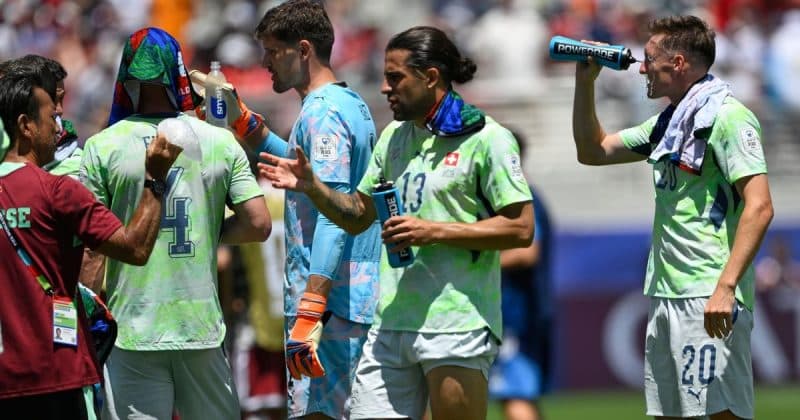
The 2026 World Cup’s mandatory hydration breaks, scheduled at the 22nd and 67th minute of every match, have been met with loud, sustained booing from spectators across the tournament’s opening fixtures. What was pitched as a player welfare measure has rapidly become the most polarizing rule change in recent World Cup history.
The breaks, the boos, and the broadcasts
FIFA announced the policy on December 7, 2025, citing rising temperatures and concerns about athlete safety across host cities in the United States, Canada, and Mexico. Each break lasts three minutes. Every match gets two, regardless of conditions.
That last part is key. Whether the thermometer reads 95 degrees in Dallas or 68 degrees in Vancouver, the clock stops the same way.
The booing started almost immediately. Group L matches around June 17 provided the first real test, with England vs. Croatia and Ghana vs. Panama both interrupted to audible crowd displeasure.
The news moving money, markets, and the world—before your day starts.
Daily. Free. Join 34,000+ readers across crypto, finance, and policy.
Multiple reports from early matches indicate that breaks have landed right after critical moments, including goals. Imagine scoring the opener in a World Cup match, the crowd erupting, momentum shifting, and then everyone just… stops. For three minutes.
US broadcasters have used the hydration breaks as windows for commercial insertion. In a sport that traditionally runs 45 uninterrupted minutes per half, this feels like a fundamental change to the viewing experience. The accusation, fair or not, is that FIFA found a way to dress up a revenue opportunity in the language of player welfare.
Do the breaks actually work?
Initial analyses suggest that three minutes is too short to provide meaningful rehydration benefits during extreme heat. The uniform application makes it worse. A blanket rule applied identically to every match regardless of actual temperature or stadium conditions undermines the health justification.
Some players and coaches have adapted by treating the breaks as tactical timeouts, using them as a chance to adjust formations and talk through what’s happening on the pitch. Opinions among players themselves are mixed. Some appreciate the rest, particularly in genuinely hot venues. Others find the interruption disruptive to their rhythm and focus.
What this means for the business of football
FIFA’s official sponsors, including crypto exchange Kraken, are navigating this carefully. When your brand is visually associated with a moment that 60,000 people are actively booing, the marketing calculus gets complicated. Sponsorship value is built on positive association. Being the logo on screen during a collectively despised interruption is not exactly what the media buyers had in mind.