
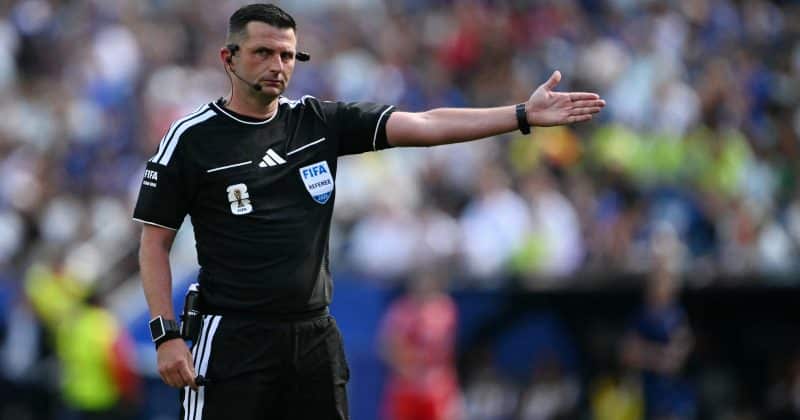
World Cup refereeing controversies spark debate as sports betting and fan token markets react

World Cup refereeing controversies spark debate as sports betting and fan token markets react

Lionel Messi's disputed goals and VAR inconsistencies at the 2026 FIFA World Cup are rippling through prediction markets and fan token ecosystems.

The 2026 FIFA World Cup has seen several officiating disputes dogging Argentina’s campaign. The latest incidents involve contested referee decisions surrounding Lionel Messi, with consequences rippling into crypto prediction markets and fan token ecosystems tied to tournament outcomes.

The drama started during Argentina’s match against Austria on June 22, 2026, when Messi scored what became a record-breaking goal. Former goalkeeper Peter Schmeichel called it a “clear and obvious mistake” by the referee, arguing that teammate Alexis Mac Allister committed a foul in the buildup that should have nullified the goal.

Things escalated further during Argentina’s match against Algeria. Messi delivered a studs-up challenge on Algerian captain Aissa Mandi and received only a standard foul, not the red card many observers felt was warranted. The Algerian Football Federation filed a formal complaint with FIFA over the decision.

Messi scored a hat-trick in that same match, pushing his tournament tally past seven goals and cementing his status as one of the competition’s top scorers.

Advertisement

Brazil’s football confederation, the CBF, publicly questioned referee standards amid the growing chorus of complaints about VAR inconsistencies across Argentina’s matches.

Why crypto markets care about disputed goals

The 2026 World Cup is the first major tournament where decentralized prediction markets and blockchain-based sports betting platforms operate at genuine scale. Platforms like Polymarket and Azuro have seen massive volumes tied to World Cup outcomes, from match results to top scorer markets. When a referee reviews a goal that could be disallowed, every open position on those platforms hangs in the balance.

Fan tokens for major football clubs and national teams trade on exchanges like Chiliz. Their value correlates loosely with team performance and fan engagement. A World Cup run filled with asterisks next to results creates uncertainty that speculative markets price in quickly.

The bigger picture for sports and blockchain

FIFA explored NFT collections during the 2022 World Cup in Qatar and has continued integrating digital collectibles into its broader commercial strategy.

Most prediction platforms rely on oracle systems that pull results from official sources. When the official result is itself controversial, the oracle imports the controversy. If Messi’s goal against Austria had been disallowed after review, every “Argentina to win” position on every prediction market would have needed repricing in real time.

Brazil’s CBF raising concerns about referee standards adds a dimension that prediction markets must absorb. If FIFA responds to formal complaints by adjusting officiating assignments or review protocols mid-tournament, markets that have priced Argentina as favorites based on their current trajectory would need to recalibrate.

What crypto investors should watch

Fan token holders face a specific calculus. Messi’s individual brilliance, including over seven goals in the tournament, provides a floor of positive sentiment. The accumulating officiating controversies create headline risk that can trigger short-term selling pressure, particularly if FIFA takes formal action in response to complaints from the Algerian federation or the CBF.

Disclosure: This article was edited by Editorial Team. For more information on how we create and review content, see our Editorial Policy.

World Cup refereeing controversies spark debate as sports betting and fan token markets react

World Cup refereeing controversies spark debate as sports betting and fan token markets react

Lionel Messi's disputed goals and VAR inconsistencies at the 2026 FIFA World Cup are rippling through prediction markets and fan token ecosystems.

The 2026 FIFA World Cup has seen several officiating disputes dogging Argentina’s campaign. The latest incidents involve contested referee decisions surrounding Lionel Messi, with consequences rippling into crypto prediction markets and fan token ecosystems tied to tournament outcomes.

The drama started during Argentina’s match against Austria on June 22, 2026, when Messi scored what became a record-breaking goal. Former goalkeeper Peter Schmeichel called it a “clear and obvious mistake” by the referee, arguing that teammate Alexis Mac Allister committed a foul in the buildup that should have nullified the goal.

Things escalated further during Argentina’s match against Algeria. Messi delivered a studs-up challenge on Algerian captain Aissa Mandi and received only a standard foul, not the red card many observers felt was warranted. The Algerian Football Federation filed a formal complaint with FIFA over the decision.

Messi scored a hat-trick in that same match, pushing his tournament tally past seven goals and cementing his status as one of the competition’s top scorers.

Advertisement

Brazil’s football confederation, the CBF, publicly questioned referee standards amid the growing chorus of complaints about VAR inconsistencies across Argentina’s matches.

Why crypto markets care about disputed goals

The 2026 World Cup is the first major tournament where decentralized prediction markets and blockchain-based sports betting platforms operate at genuine scale. Platforms like Polymarket and Azuro have seen massive volumes tied to World Cup outcomes, from match results to top scorer markets. When a referee reviews a goal that could be disallowed, every open position on those platforms hangs in the balance.

Fan tokens for major football clubs and national teams trade on exchanges like Chiliz. Their value correlates loosely with team performance and fan engagement. A World Cup run filled with asterisks next to results creates uncertainty that speculative markets price in quickly.

The bigger picture for sports and blockchain

FIFA explored NFT collections during the 2022 World Cup in Qatar and has continued integrating digital collectibles into its broader commercial strategy.

Most prediction platforms rely on oracle systems that pull results from official sources. When the official result is itself controversial, the oracle imports the controversy. If Messi’s goal against Austria had been disallowed after review, every “Argentina to win” position on every prediction market would have needed repricing in real time.

Brazil’s CBF raising concerns about referee standards adds a dimension that prediction markets must absorb. If FIFA responds to formal complaints by adjusting officiating assignments or review protocols mid-tournament, markets that have priced Argentina as favorites based on their current trajectory would need to recalibrate.

What crypto investors should watch

Fan token holders face a specific calculus. Messi’s individual brilliance, including over seven goals in the tournament, provides a floor of positive sentiment. The accumulating officiating controversies create headline risk that can trigger short-term selling pressure, particularly if FIFA takes formal action in response to complaints from the Algerian federation or the CBF.

Disclosure: This article was edited by Editorial Team. For more information on how we create and review content, see our Editorial Policy.