
World Cup red card controversy sets dangerous precedent as politics collides with sports governance
FIFA's decision to suspend Folarin Balogun's automatic ban after alleged presidential intervention raises questions that extend far beyond the pitch
For the first time since 1962, a player shown a red card at the FIFA World Cup did not serve an automatic suspension. That alone would be newsworthy. The circumstances surrounding it make it extraordinary.
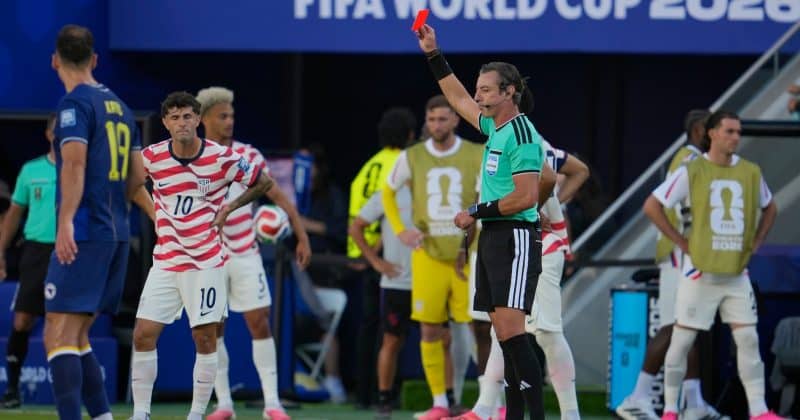
The FIFA Independent Disciplinary Committee suspended USMNT striker Folarin Balogun’s one-match ban following his red card against Bosnia and Herzegovina in the Round of 32 of the 2026 World Cup. Instead of sitting out the next game, Balogun’s punishment was converted into a one-year probationary period under Article 27 of FIFA regulations. He then played against Belgium.
What happened and why it matters
Balogun was sent off for a foul on Bosnia’s Tarik Muharemovic during the knockout stage match. Red cards in the World Cup carry automatic one-match suspensions. That has been the standard for decades, applied consistently across 189 red cards in tournament history, with all but two leading to bans before this event.
Then things got political. US President Donald Trump reportedly called FIFA President Gianni Infantino to address what he described as “an injustice” in the red card decision. What followed was the disciplinary committee’s ruling to suspend the ban entirely, replacing it with probation.
UEFA didn’t mince words about it either. The European football governing body condemned the FIFA decision, labeling it an assault on sporting integrity and claiming it violated fair competition standards.
The precedent problem
The closest historical comparison involves Cristiano Ronaldo’s red card during a 2018 World Cup qualifier. His three-match suspension was reduced to one, with the remaining matches suspended. That was considered lenient at the time. But even Ronaldo still served a match. The Balogun situation skipped that step entirely.
The news moving money, markets, and the world—before your day starts.
Daily. Free. Join 34,000+ readers across crypto, finance, and policy.
There have been 189 red cards across World Cup history. The overwhelming majority resulted in suspensions served without complaint. Players from smaller nations, players without political patrons, players whose governments didn’t pick up the phone to Zurich. They all sat out their matches. Now those federations are watching a host nation’s player walk free under a novel interpretation of a regulation that has apparently been available this entire time but never used quite like this.
Where politics meets the pitch
Trump’s involvement reportedly centered on the characterization of Balogun’s red card as unjust. The timing matters too. The US is co-hosting the 2026 World Cup alongside Canada and Mexico. FIFA has enormous financial interests tied to the tournament’s success in the American market. When the host nation’s president calls the FIFA president about a disciplinary ruling, and that ruling subsequently gets overturned in an unprecedented fashion, the inference practically draws itself.
FIFA, for its part, pointed to Article 27 as the legal basis for the decision.
What investors and stakeholders should watch
UEFA’s public condemnation signals potential fractures in global football governance. If European football’s governing body views FIFA’s decision as a violation of fair competition, that tension could manifest in future negotiations over tournament formats, revenue sharing, and regulatory frameworks.
The Balogun decision may fade from headlines once the tournament progresses. But the precedent it establishes, that automatic suspensions aren’t actually automatic, that political intervention can alter disciplinary outcomes, that Article 27 can be wielded as an escape hatch, won’t be forgotten by the 210 other FIFA member nations watching closely.