
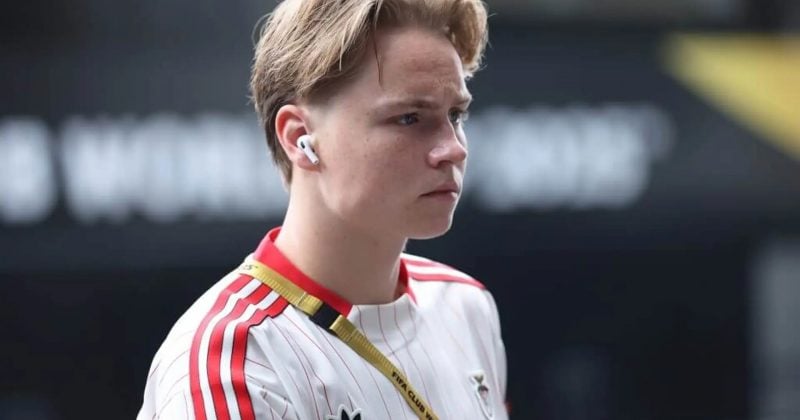
World Cup breakout star Andreas Schjelderup highlights crypto’s growing role in sports collectibles

World Cup breakout star Andreas Schjelderup highlights crypto’s growing role in sports collectibles

Norway's surprise tournament run is minting new fan interest in digital player cards and sports NFTs, even as direct crypto partnerships remain scarce

Norway’s Andreas Schjelderup just put together the kind of World Cup performance that turns unknown wingers into household names. The 22-year-old Benfica attacker racked up four combined goals and assists across matches against Brazil and England, helping Norway reach the quarter-finals for the first time in the nation’s history.

The performance that changed everything

Schjelderup’s tournament started with a bang in the Round of 16 against Brazil on July 7, 2026. He provided two assists for Erling Haaland as Norway secured a 2-1 upset victory. Four days later, in the quarter-final against England on July 11, he scored his first senior international goal and tacked on another assist.

Born in Bodø, Norway, in June 2004, Schjelderup moved from Danish club Nordsjælland to Benfica in January 2023 for a fee in the range of €10-14 million. His current market value sits at approximately €30 million as of mid-2026.

Advertisement

Under coach StÃ¥le Solbakken, Norway’s 26-man squad was selected in May 2026 with modest expectations. Advancing beyond the first knockout stage was already unprecedented. Schjelderup’s creative dribbling and vision transformed him from a squad rotation option into a pivotal figure in the team’s historic campaign.

The digital collectibles angle

Platforms like Sorare and Panini Prizm, which offer NFT-based trading cards tied to real player performances, sit at the intersection of sports fandom and blockchain technology. Sorare operates a fantasy football game built on Ethereum where users buy, sell, and trade officially licensed digital player cards. Panini Prizm has expanded its traditional trading card business into NFT territory for World Cup cycles.

What makes this interesting from a market perspective is the gap between opportunity and execution. Despite the clear demand signal, there are no reported direct crypto partnerships or blockchain sponsorships involving Schjelderup or the Norwegian national team. The approach appears conservative, favoring traditional sponsorship models over digital asset tie-ins.

Why crypto still struggles with sports moments

The 2022 World Cup saw FIFA partner with Crypto.com and Algorand. Fan token platforms like Socios rode a wave of club partnerships. Then the bear market arrived, and many of those deals quietly wound down or lost their luster.

Sorare and Panini Prizm exist, and they’re capturing some of this value. But a substantial market for direct investment or sponsorship deals linking emerging players to specific crypto projects remains largely unrealized. The infrastructure exists in pockets, not as a comprehensive ecosystem.

Disclosure: This article was edited by Editorial Team. For more information on how we create and review content, see our Editorial Policy.

World Cup breakout star Andreas Schjelderup highlights crypto’s growing role in sports collectibles

World Cup breakout star Andreas Schjelderup highlights crypto’s growing role in sports collectibles

Norway's surprise tournament run is minting new fan interest in digital player cards and sports NFTs, even as direct crypto partnerships remain scarce

Norway’s Andreas Schjelderup just put together the kind of World Cup performance that turns unknown wingers into household names. The 22-year-old Benfica attacker racked up four combined goals and assists across matches against Brazil and England, helping Norway reach the quarter-finals for the first time in the nation’s history.

The performance that changed everything

Schjelderup’s tournament started with a bang in the Round of 16 against Brazil on July 7, 2026. He provided two assists for Erling Haaland as Norway secured a 2-1 upset victory. Four days later, in the quarter-final against England on July 11, he scored his first senior international goal and tacked on another assist.

Born in Bodø, Norway, in June 2004, Schjelderup moved from Danish club Nordsjælland to Benfica in January 2023 for a fee in the range of €10-14 million. His current market value sits at approximately €30 million as of mid-2026.

Advertisement

Under coach StÃ¥le Solbakken, Norway’s 26-man squad was selected in May 2026 with modest expectations. Advancing beyond the first knockout stage was already unprecedented. Schjelderup’s creative dribbling and vision transformed him from a squad rotation option into a pivotal figure in the team’s historic campaign.

The digital collectibles angle

Platforms like Sorare and Panini Prizm, which offer NFT-based trading cards tied to real player performances, sit at the intersection of sports fandom and blockchain technology. Sorare operates a fantasy football game built on Ethereum where users buy, sell, and trade officially licensed digital player cards. Panini Prizm has expanded its traditional trading card business into NFT territory for World Cup cycles.

What makes this interesting from a market perspective is the gap between opportunity and execution. Despite the clear demand signal, there are no reported direct crypto partnerships or blockchain sponsorships involving Schjelderup or the Norwegian national team. The approach appears conservative, favoring traditional sponsorship models over digital asset tie-ins.

Why crypto still struggles with sports moments

The 2022 World Cup saw FIFA partner with Crypto.com and Algorand. Fan token platforms like Socios rode a wave of club partnerships. Then the bear market arrived, and many of those deals quietly wound down or lost their luster.

Sorare and Panini Prizm exist, and they’re capturing some of this value. But a substantial market for direct investment or sponsorship deals linking emerging players to specific crypto projects remains largely unrealized. The infrastructure exists in pockets, not as a comprehensive ecosystem.

Disclosure: This article was edited by Editorial Team. For more information on how we create and review content, see our Editorial Policy.