
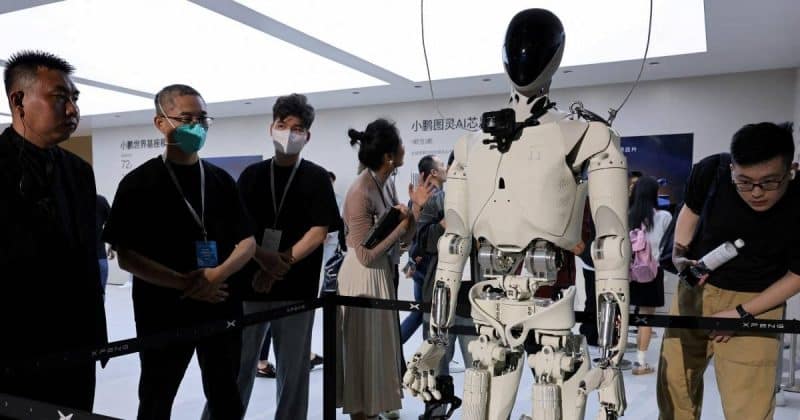
Xpeng CEO takes personal command of robot unit as humanoid mass production nears
He Xiaopeng will directly lead the robotics division, with the IRON humanoid robot targeted for mass production by Q4 2026 and retail deployment in 2027.
When the CEO of a major company decides to personally run a new division, it usually means one of two things: either that division is in trouble, or it’s about to become the most important thing the company does. For Xpeng, it’s the latter.
He Xiaopeng, the founder and CEO of Chinese EV maker Xpeng, announced on June 10 that he will directly lead the company’s robotics business unit, effective immediately. The move is designed to accelerate the path to commercial production of Xpeng’s IRON humanoid robot, which is targeted for mass production in Q4 2026, with initial deployments in Xpeng retail stores beginning in 2027.
From electric vehicles to humanoid robots
Xpeng has been quietly building out its robotics ambitions for a while now. Back in February 2026, the company announced a dedicated full-chain humanoid robot mass-production facility in Guangzhou. That facility is the manufacturing backbone for the IRON robot program, and He Xiaopeng’s decision to personally oversee the unit signals that this isn’t some side project buried in R&D.
The IRON robots themselves are no small engineering feat. The next-generation models stand approximately 1.72 to 1.78 meters tall and weigh around 70 kg, making them roughly human-sized. They feature up to 82 degrees of freedom in body movement and 22 degrees of freedom per hand. Powering all of this is a trio of Turing AI chips handling computation.
The retail deployment angle is particularly interesting. Xpeng plans to station these humanoid robots in its own showrooms first, essentially using its existing customer-facing locations as a live testing ground. Instead of trying to sell robots to third parties before proving they work, Xpeng gets to iterate in a controlled environment where it owns the entire customer experience.
The news moving money, markets, and the world—before your day starts.
Daily. Free. Join 34,000+ readers across crypto, finance, and policy.
Why the CEO chair matters
This fits into Xpeng’s broader corporate strategy, which the company has framed around “physical AI.” That umbrella concept covers not just humanoid robots but also robotaxis and flying cars. The Guangzhou production facility is real. The Q4 production timeline is public. And now the CEO is personally accountable for hitting those milestones.
What this means for investors
For investors tracking Xpeng, the robotics pivot adds a new dimension to the company’s valuation thesis. Xpeng has historically been priced primarily as an EV company competing in the Chinese auto market. The robotics program, if it reaches commercial scale, introduces an entirely new revenue stream.
The Q4 2026 mass production target is the first concrete milestone to watch. Hitting it on schedule would validate Xpeng’s manufacturing capabilities beyond vehicles and demonstrate that the Guangzhou facility can deliver.
The 2027 retail deployment phase is the second key inflection point. Putting IRON robots into Xpeng’s own showrooms means the robots will be interacting with real customers in public settings. Success there could open doors to third-party commercial deployments.