
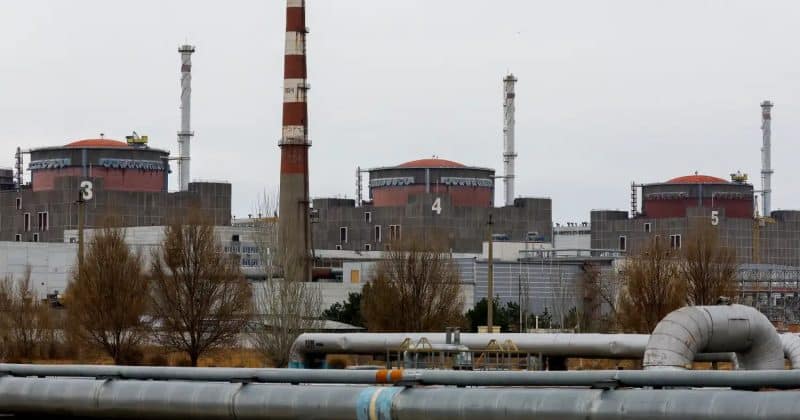
Zaporizhzhya nuclear plant reconnected to grid after IAEA-brokered ceasefire
Europe's largest nuclear facility spent 30 days without external power in its tenth complete outage since Russia seized control in 2022
Ukraine’s Zaporizhzhya Nuclear Power Plant, the largest nuclear facility in Europe, was reconnected to the national power grid on October 23 after a month-long blackout. The reconnection happened only because the International Atomic Energy Agency managed to broker a temporary ceasefire along both sides of the Dnipro River, giving repair crews a window to fix damaged infrastructure without getting shot at.
What happened and why it matters
The plant lost off-site power entirely in late September 2025, triggering what would become a 30-day outage. Repair teams needed to fix the 750 kV Dniprovska power line, the critical artery connecting the facility to Ukraine’s grid. That work required a ceasefire, which the IAEA negotiated between Russian and Ukrainian forces operating in the area.
Reconnection occurred at approximately 09:30 local time on October 23, with full site power restored by 13:00 the same day.
This was the tenth complete loss of off-site power at Zaporizhzhya since Russia took control of the plant in March 2022. Each time, the plant’s safety systems have fallen back on diesel generators. The reactors still contain nuclear fuel that requires continuous cooling. Without external power, that cooling depends entirely on backup diesel generators.
IAEA Director General Rafael Mariano Grossi acknowledged what he called constructive cooperation between Russia and Ukraine in restoring power, even as the broader conflict continues.
Macro, rates, and crypto—what moved markets and what matters next.
Daily. Free. Join 34,000+ readers across crypto, finance, and policy.
A pattern that keeps getting worse
The plant has experienced approximately 19 power outages or near-misses related to the fighting. The IAEA has negotiated at least six local ceasefires specifically for infrastructure repairs.
The IAEA has maintained a continuous presence at Zaporizhzhya since September 2022, with inspectors stationed on-site to monitor conditions.
What this means going forward
Zaporizhzhya once supplied roughly a fifth of Ukraine’s electricity. With all six reactors offline, that capacity has to come from somewhere else, putting additional strain on a grid that has already been battered by years of targeted strikes on energy infrastructure.
The 1986 Chernobyl disaster, which occurred roughly 500 kilometers to the northwest, demonstrated that radiological consequences from a nuclear incident do not respect national boundaries.
With 19 incidents already logged and no end to the conflict in sight, the question is whether the pattern of successful repair-and-reconnect can hold indefinitely, or whether one of these outages eventually outlasts the backup systems designed to prevent the worst-case scenario.