
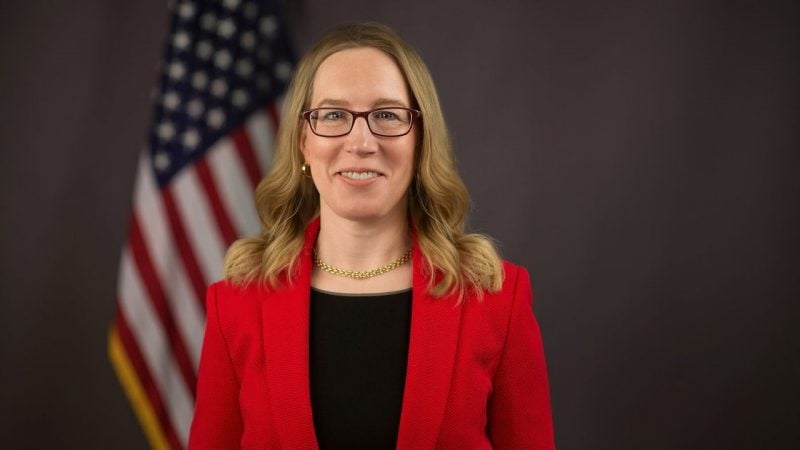
Hester Peirce argues financial privacy should be the default, not the exception

Hester Peirce argues financial privacy should be the default, not the exception

The SEC commissioner known as 'Crypto Mom' pressed for privacy as a right just weeks before her scheduled departure from the agency

SEC Commissioner Hester Peirce wants your financial life to be private by default. She is making that case with less than two weeks left at the agency.

Peirce said financial privacy should be treated as a right, and that wanting it should not make anyone look suspicious. For a regulator, that is an unusual position to hold. For Peirce, it is a familiar one.

What Peirce said at SIFMA

Peirce laid out her argument in a September 23, 2026, speech at the SIFMA Digital Assets Conference. Her central claim is that privacy is a fundamental right, not a red flag.

She took direct aim at Know Your Customer (KYC) and Anti-Money Laundering (AML) rules. These frameworks require financial firms to verify customer identities and monitor activity for signs of illicit finance. Think of the forms, ID uploads and source-of-funds questions that come with opening almost any account.

Peirce described the scale of that data gathering as excessive surveillance. She argued it does too little to protect the people whose information gets collected.

Her proposed fix leans on cryptography. Peirce called for adopting privacy-preserving tools such as zero-knowledge proofs, so personal information can move securely without sacrificing safety.

Advertisement

A zero-knowledge proof works a bit like a bouncer who confirms you are over 21 without ever reading your birthday or home address. It lets one party prove a statement is true without revealing the underlying data. In a financial setting, that could mean showing you passed a compliance check without handing over your entire file.

A familiar argument, with a deadline attached

None of this is new territory for Peirce. In remarks on August 4, 2025, she stressed protecting the public’s ability to transact privately and to self-custody assets, meaning holding your own crypto rather than leaving it with an intermediary.

She also framed that position as a guard against government overreach. In those 2025 remarks, she connected financial privacy to the Fourth Amendment, which shields Americans from unreasonable searches and seizures.

The thread running through both speeches is a question of default assumptions. Peirce has argued that a private transaction should not be presumed suspicious. In her view, the presumption of innocence should come before any presumption of guilt about someone’s finances.

Peirce’s supporters nicknamed her “Crypto Mom” for her pro-crypto stance. The label stuck because she has spent years as the SEC’s most reliable internal voice for digital asset builders and users.

That era is ending. Peirce is set to resign from the SEC on October 2, 2026. Her departure will leave the commission with two commissioners.

What her exit could mean

The most immediate effect is on the privacy debate inside the agency. Advocates for self-custody and financial privacy are losing one of their most consistent voices at the SEC.

Her views have also run against the broader direction of travel. The industry trend has generally moved toward more surveillance of financial activity, particularly around digital assets and blockchain technology. Peirce has repeatedly resisted that expansion.

There is a builder angle here too. Peirce’s push for zero-knowledge proofs points to a possible middle path: meeting regulatory demands without hoovering up every scrap of personal data.

What to watch next is fairly clear. First, how the SEC operates with two commissioners after October 2, 2026. Second, whether any remaining or incoming officials adopt Peirce’s view that privacy should be the starting point rather than a privilege earned after full disclosure.

Third, watch whether privacy-preserving technology moves from conference talking point to actual compliance infrastructure. Peirce has made the case that cryptography can let regulators verify what they need without seeing everything else. Her successors will decide whether that idea outlasts her tenure.

Disclosure: This article was edited by John Chen. For more information on how we create and review content, see our Editorial Policy.
Hester Peirce argues financial privacy should be the default, not the exception

The SEC commissioner known as 'Crypto Mom' pressed for privacy as a right just weeks before her scheduled departure from the agency

Share

Add us on Google

SEC Commissioner Hester Peirce wants your financial life to be private by default. She is making that case with less than two weeks left at the agency.

Peirce said financial privacy should be treated as a right, and that wanting it should not make anyone look suspicious. For a regulator, that is an unusual position to hold. For Peirce, it is a familiar one.

What Peirce said at SIFMA

Peirce laid out her argument in a September 23, 2026, speech at the SIFMA Digital Assets Conference. Her central claim is that privacy is a fundamental right, not a red flag.

She took direct aim at Know Your Customer (KYC) and Anti-Money Laundering (AML) rules. These frameworks require financial firms to verify customer identities and monitor activity for signs of illicit finance. Think of the forms, ID uploads and source-of-funds questions that come with opening almost any account.

Peirce described the scale of that data gathering as excessive surveillance. She argued it does too little to protect the people whose information gets collected.

Her proposed fix leans on cryptography. Peirce called for adopting privacy-preserving tools such as zero-knowledge proofs, so personal information can move securely without sacrificing safety.

Advertisement

A zero-knowledge proof works a bit like a bouncer who confirms you are over 21 without ever reading your birthday or home address. It lets one party prove a statement is true without revealing the underlying data. In a financial setting, that could mean showing you passed a compliance check without handing over your entire file.

A familiar argument, with a deadline attached

None of this is new territory for Peirce. In remarks on August 4, 2025, she stressed protecting the public’s ability to transact privately and to self-custody assets, meaning holding your own crypto rather than leaving it with an intermediary.

She also framed that position as a guard against government overreach. In those 2025 remarks, she connected financial privacy to the Fourth Amendment, which shields Americans from unreasonable searches and seizures.

The thread running through both speeches is a question of default assumptions. Peirce has argued that a private transaction should not be presumed suspicious. In her view, the presumption of innocence should come before any presumption of guilt about someone’s finances.

Peirce’s supporters nicknamed her “Crypto Mom” for her pro-crypto stance. The label stuck because she has spent years as the SEC’s most reliable internal voice for digital asset builders and users.

That era is ending. Peirce is set to resign from the SEC on October 2, 2026. Her departure will leave the commission with two commissioners.

What her exit could mean

The most immediate effect is on the privacy debate inside the agency. Advocates for self-custody and financial privacy are losing one of their most consistent voices at the SEC.

Her views have also run against the broader direction of travel. The industry trend has generally moved toward more surveillance of financial activity, particularly around digital assets and blockchain technology. Peirce has repeatedly resisted that expansion.

There is a builder angle here too. Peirce’s push for zero-knowledge proofs points to a possible middle path: meeting regulatory demands without hoovering up every scrap of personal data.

What to watch next is fairly clear. First, how the SEC operates with two commissioners after October 2, 2026. Second, whether any remaining or incoming officials adopt Peirce’s view that privacy should be the starting point rather than a privilege earned after full disclosure.

Third, watch whether privacy-preserving technology moves from conference talking point to actual compliance infrastructure. Peirce has made the case that cryptography can let regulators verify what they need without seeing everything else. Her successors will decide whether that idea outlasts her tenure.

Disclosure: This article was edited by John Chen. For more information on how we create and review content, see our Editorial Policy.