
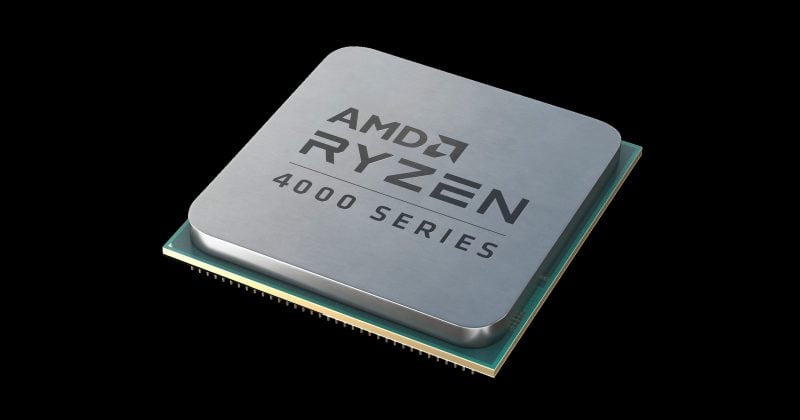
AMD surpasses Nvidia in $45B semiconductor ETF as chip sector leadership shifts
The iShares Semiconductor ETF's latest rebalancing shows AMD edging past Nvidia in weighting, while Micron closes in fast, signaling a broader reshuffling of AI-era chip dominance.
For the better part of two years, Nvidia was the undisputed king of the semiconductor trade. That crown just got a little wobbly.
As of July 16, 2026, AMD holds an 8.43% weighting in the iShares Semiconductor ETF (SOXX), sitting just below Nvidia’s 8.53%. Micron Technology is right behind both of them at 7.63%. In a $45.06 billion fund, those fractions of a percent represent billions of dollars in capital allocation shifting from one chipmaker to another.
The numbers behind the rotation
SOXX tracks the NYSE Semiconductor Index across 30 holdings with a 0.34% expense ratio. Its top four positions as of mid-July: Nvidia at 8.53%, AMD at 8.43%, Micron at 7.63%, and Broadcom at 7.28%.
Look at the May 2026 data and the rotation becomes even more dramatic. Back then, Micron actually led the ETF at roughly 9.97-10%, with AMD around 8.88% and Nvidia at approximately 7.05%.
The ETF itself has been on a tear. SOXX delivered a year-to-date return of 76.27% through July 16, 2026.
Nvidia’s relative decline in ETF weighting doesn’t mean the company is struggling. It means its peers are catching up. AMD’s data center business has been gaining serious traction, and Micron’s memory chips have become increasingly critical as AI models get larger and more memory-hungry.
AI, tech, and the markets they move—in one daily briefing.
Daily. Free. Join 34,000+ readers across crypto, finance, and policy.
Why crypto investors should pay attention
Semiconductors are the bedrock of both AI and crypto infrastructure. Every Bitcoin miner, every GPU-powered validator, every decentralized compute network runs on chips made by these exact companies.
AMD’s rise is particularly relevant to the crypto ecosystem. The company has historically been a favorite among miners and decentralized compute protocols because its GPUs tend to offer competitive price-to-performance ratios.
Micron’s growing prominence matters too. Memory chips are a bottleneck for AI training, inference, and the kind of high-bandwidth computing that underpins decentralized AI networks.
What this means for investors
The 76.27% YTD return on SOXX suggests the semiconductor sector still has massive momentum. But the internal rotation warns against complacency. Investors who loaded up on Nvidia as a pure-play AI bet are seeing their thesis diluted, not by AI weakness, but by competitors executing well enough to capture market share in a growing market.
Broadcom’s 7.28% weighting in SOXX is worth noting here too. The company’s custom chip business, including work on application-specific integrated circuits for major tech firms, represents yet another avenue of semiconductor value creation that doesn’t flow through Nvidia’s ecosystem.
The risk to watch is valuation. A 76% gain in half a year prices in a lot of optimism. If AI spending decelerates or geopolitical tensions disrupt chip supply chains, the entire sector could give back gains quickly.