
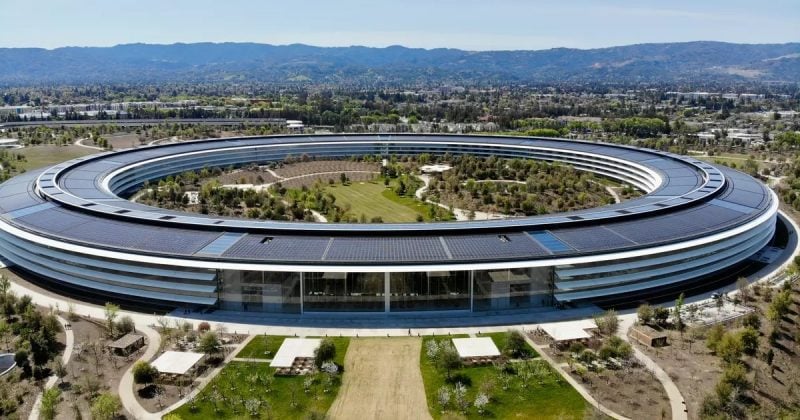
Via fracttal.com
Apple briefly crosses $5 trillion market cap as Wall Street rewards spending discipline over AI hype
The iPhone maker became only the second company to hit the milestone, and the crypto world is watching through tokenized stock proxies
Apple briefly touched a $5 trillion market capitalization on July 28, making it only the second public company in history to reach that altitude. Shares peaked at $342.89 during the session, a 1.8% intraday climb, before settling back to close around the $4.98 to $4.99 trillion range.
To put that number in perspective: $5 trillion is larger than the GDP of Japan. The milestone arrived less than a year after Apple first cleared the $4 trillion threshold in October 2025. Apple shares are up nearly 60% over the past 12 months and roughly 24-25% year-to-date. The rally has been powered by strong iPhone demand, continued growth in the company’s services segment, and a market that’s increasingly rewarding durable cash flows over capital-intensive AI bets.
Apple briefly reclaimed the title of world’s most valuable company from Nvidia during that same trading session. Nvidia remains the other member of the $5 trillion club, and the two companies represent fundamentally different investment theses: one is a bet on AI infrastructure spending continuing to accelerate, the other is a bet on consumer loyalty and services revenue compounding steadily.
The tokenized Apple trade
Apple itself holds no Bitcoin or digital assets on its balance sheet, at least not according to any regulatory filings. Tokenized versions of AAPL shares are available on several blockchain platforms, functioning as synthetic assets that mirror the stock’s price movements. When Apple hits a $5 trillion milestone, those synthetic tokens see volume spikes too.
AI, tech, and the markets they move—in one daily briefing.
Daily. Free. Join 34,000+ readers across crypto, finance, and policy.
Apple also continues to host multiple crypto wallet applications on its App Store, maintaining a pragmatic relationship with the digital asset ecosystem. The company serves as an interface layer between hundreds of millions of iPhone users and blockchain-based services, even if it doesn’t hold crypto on its own books.