
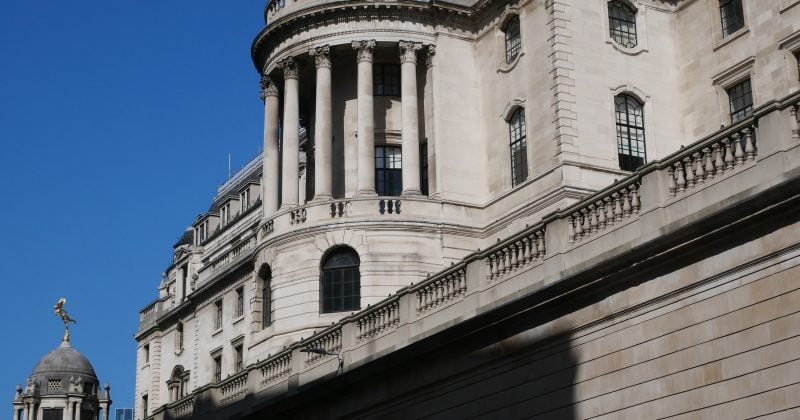
Photo: Doyle of London / Wikimedia Commons / CC BY-SA 4.0 (https://creativecommons.org/licenses/by-sa/4.0)
Bank of England holds rates at 3.75% as inflation lingers above target
The MPC voted 6-3 to keep borrowing costs steady, with three members pushing for a hike as Middle East energy shocks keep prices elevated.
The Bank of England’s Monetary Policy Committee voted to hold the Bank Rate at 3.75% on July 29, a decision that reflects the awkward middle ground central bankers find themselves in when inflation won’t cooperate but the economy isn’t exactly booming either.
The vote split 6-3, with three members pushing for a quarter-point hike to 4%.
The inflation picture
CPI inflation came in at 2.6% in June 2026. That’s above the Bank’s 2% target, and it’s been stubbornly sticky for reasons largely outside the MPC’s control.
The primary culprit is energy prices, which have been whipsawed by the ongoing conflict in the Middle East. When geopolitical risk gets priced into oil and gas markets, it flows downstream into everything from utility bills to transport costs to the price of groceries.
The committee acknowledged what it called “underlying disinflation,” which is central banker speak for: the domestic price trend is cooling, but imported energy costs keep messing up the headline number. The concern is second-round effects, where higher energy costs bleed into wage demands and broader pricing behavior, creating a self-reinforcing loop.
The Bank Rate peaked at 5.25% in 2023, and the path down has been gradual and deliberate. Holding at 3.75% represents a significant easing from that peak.
The news moving money, markets, and the world—before your day starts.
Daily. Free. Join 34,000+ readers across crypto, finance, and policy.
What changed since June
In June 2026, the MPC voted 7-2 to hold rates at the same level. The shift to a 6-3 split in July means one additional member crossed over to the hawkish camp.
The press conference, held at noon BST following the release of the July Monetary Policy Report, gave Governor Andrew Bailey and the committee a chance to frame the decision publicly.
Why crypto investors should pay attention
The Bank of England did not mention Bitcoin, stablecoins, or digital assets in any of its official materials.
But interest rate decisions shape risk appetite across every asset class. When rates hold steady or fall, capital tends to flow toward riskier assets. When they rise, liquidity tightens and speculative assets feel the squeeze first.
The next MPC meeting is scheduled for September 2026. By then, the committee will have two more months of inflation data, updated energy price forecasts, and a clearer picture of wage growth trends.