
Bank of England hawks appear isolated as committee shifts to holding rates steady

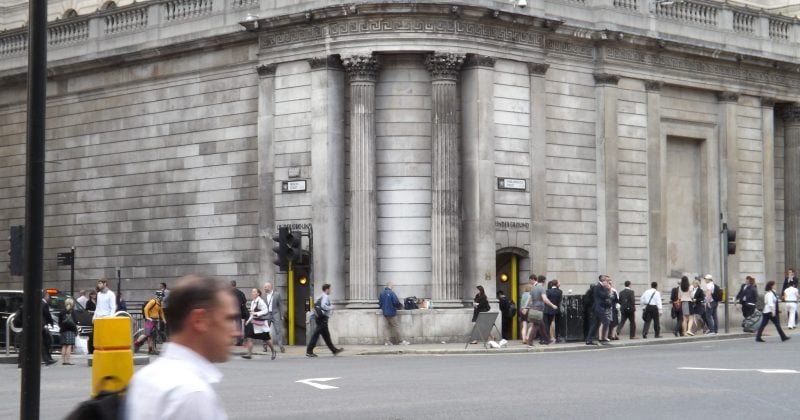
Photo: Edgepedia / Wikimedia Commons / CC BY-SA 3.0 (https://creativecommons.org/licenses/by-sa/3.0)

Bank of England hawks appear isolated as committee shifts to holding rates steady

The MPC voted 7-2 to keep rates at 3.75%, and the dovish tilt has implications for risk assets including crypto

The Bank of England’s rate-setting committee just made it clear: the hawks are outnumbered, and the gap is widening. In a 7-2 vote on June 18, the Monetary Policy Committee held the Bank Rate at 3.75%, marking the fourth consecutive meeting at that level. The two dissenters, Chief Economist Huw Pill and external member Megan Greene, wanted a quarter-point hike to 4%. They didn’t get it.

The Bank Rate peaked at 5.25% back in August 2023, and the MPC has since cut a total of 1.5 percentage points. Four straight holds at 3.75% suggest the committee is comfortable parking here for a while, even as inflation pressures from Middle East energy disruptions continue to simmer.

The hawk caucus is shrinking, not growing

Back in April 2026, Pill was the lone dissenter pushing for higher rates. Now Greene has joined him, which on paper looks like the hawkish camp doubled in size. But context matters. Catherine Mann, who has historically leaned hawkish and flagged significant inflation risks, voted with the majority to hold steady.

The driving concern for the dissenters is geopolitical. Elevated energy prices tied to Iran-related tensions in the Middle East are feeding into what economists call second-round inflation effects, where higher input costs ripple through supply chains and eventually show up in consumer prices. Pill and Greene see enough risk there to warrant action. The other seven members apparently see it as something to monitor, not something to fight with rate hikes right now.

Advertisement

What steady rates mean for crypto and risk assets

The core mechanism is straightforward. Higher interest rates make safe assets like government bonds more attractive relative to riskier investments. When rates hold steady or decline, that opportunity cost shrinks. Holding Bitcoin or other digital assets looks relatively less expensive when a savings account isn’t offering meaningfully higher yields.

The 2023-2024 tightening cycle coincided with significant pressure on digital asset prices. The subsequent easing, from 5.25% down to 3.75% in the UK’s case, has corresponded with improved conditions for risk assets broadly.

The geopolitical wildcard

The elephant in the room is energy prices. Iran-linked tensions in the Middle East have pushed energy costs higher, and the MPC explicitly flagged this as a key variable in its deliberations. Energy price shocks are particularly tricky for central banks because they simultaneously raise inflation and dampen growth, creating the classic stagflationary dilemma.

The fact that seven of nine MPC members chose to hold despite acknowledging these risks suggests they believe the inflationary impulse from energy prices will prove manageable, or at least that premature tightening would do more harm than good.

Worth noting: no cryptocurrency tokens, protocols, or blockchain-related topics came up in the MPC’s discussions. Central bank rate decisions remain firmly in the realm of traditional monetary policy. But the downstream effects are real and measurable. Liquidity conditions, risk appetite, and currency movements all flow from these decisions, and all of them touch digital asset markets.

What investors should watch next

Traders should also watch the pound. A dovish BoE relative to other central banks, particularly the Federal Reserve, can weaken sterling. Currency movements of this kind frequently correlate with shifts in crypto trading volumes on UK-facing exchanges.

The MPC’s own language is shifting toward data dependency rather than forward guidance. That means each new inflation print, employment report, and energy price reading carries outsized importance for the committee’s next decision.

Disclosure: This article was edited by Editorial Team. For more information on how we create and review content, see our Editorial Policy.

Bank of England hawks appear isolated as committee shifts to holding rates steady

Bank of England hawks appear isolated as committee shifts to holding rates steady

The MPC voted 7-2 to keep rates at 3.75%, and the dovish tilt has implications for risk assets including crypto

Photo: Edgepedia / Wikimedia Commons / CC BY-SA 3.0 (https://creativecommons.org/licenses/by-sa/3.0)

The Bank of England’s rate-setting committee just made it clear: the hawks are outnumbered, and the gap is widening. In a 7-2 vote on June 18, the Monetary Policy Committee held the Bank Rate at 3.75%, marking the fourth consecutive meeting at that level. The two dissenters, Chief Economist Huw Pill and external member Megan Greene, wanted a quarter-point hike to 4%. They didn’t get it.

The Bank Rate peaked at 5.25% back in August 2023, and the MPC has since cut a total of 1.5 percentage points. Four straight holds at 3.75% suggest the committee is comfortable parking here for a while, even as inflation pressures from Middle East energy disruptions continue to simmer.

The hawk caucus is shrinking, not growing

Back in April 2026, Pill was the lone dissenter pushing for higher rates. Now Greene has joined him, which on paper looks like the hawkish camp doubled in size. But context matters. Catherine Mann, who has historically leaned hawkish and flagged significant inflation risks, voted with the majority to hold steady.

The driving concern for the dissenters is geopolitical. Elevated energy prices tied to Iran-related tensions in the Middle East are feeding into what economists call second-round inflation effects, where higher input costs ripple through supply chains and eventually show up in consumer prices. Pill and Greene see enough risk there to warrant action. The other seven members apparently see it as something to monitor, not something to fight with rate hikes right now.

Advertisement

What steady rates mean for crypto and risk assets

The core mechanism is straightforward. Higher interest rates make safe assets like government bonds more attractive relative to riskier investments. When rates hold steady or decline, that opportunity cost shrinks. Holding Bitcoin or other digital assets looks relatively less expensive when a savings account isn’t offering meaningfully higher yields.

The 2023-2024 tightening cycle coincided with significant pressure on digital asset prices. The subsequent easing, from 5.25% down to 3.75% in the UK’s case, has corresponded with improved conditions for risk assets broadly.

The geopolitical wildcard

The elephant in the room is energy prices. Iran-linked tensions in the Middle East have pushed energy costs higher, and the MPC explicitly flagged this as a key variable in its deliberations. Energy price shocks are particularly tricky for central banks because they simultaneously raise inflation and dampen growth, creating the classic stagflationary dilemma.

The fact that seven of nine MPC members chose to hold despite acknowledging these risks suggests they believe the inflationary impulse from energy prices will prove manageable, or at least that premature tightening would do more harm than good.

Worth noting: no cryptocurrency tokens, protocols, or blockchain-related topics came up in the MPC’s discussions. Central bank rate decisions remain firmly in the realm of traditional monetary policy. But the downstream effects are real and measurable. Liquidity conditions, risk appetite, and currency movements all flow from these decisions, and all of them touch digital asset markets.

What investors should watch next

Traders should also watch the pound. A dovish BoE relative to other central banks, particularly the Federal Reserve, can weaken sterling. Currency movements of this kind frequently correlate with shifts in crypto trading volumes on UK-facing exchanges.

The MPC’s own language is shifting toward data dependency rather than forward guidance. That means each new inflation print, employment report, and energy price reading carries outsized importance for the committee’s next decision.

Disclosure: This article was edited by Editorial Team. For more information on how we create and review content, see our Editorial Policy.