
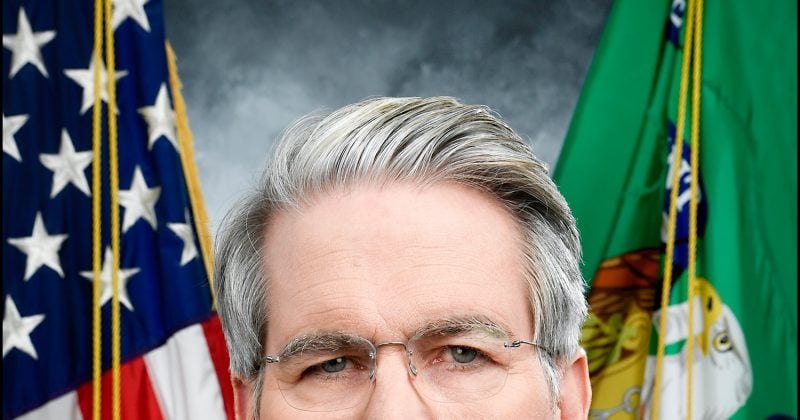
Treasury Secretary Scott Bessent reports wage growth outpaces inflation, signaling end of K-shaped economy

Via home.treasury.gov

Treasury Secretary Scott Bessent reports wage growth outpaces inflation, signaling end of K-shaped economy

Bessent points to Treasury data showing a 2% real wage gain for the bottom quartile of workers, with potential ripple effects across risk assets including crypto

Treasury Secretary Scott Bessent says wage growth is outpacing inflation, particularly for lower-income and blue-collar workers under the Trump administration. Bessent pointed to Treasury data showing a 2% real wage gain for workers in the bottom 25% of earners based on 2025 metrics. Blue-collar workers specifically saw 1.7% wage growth in the first five months of Trump’s current term.

The numbers behind the narrative

The Atlanta Fed Wage Growth Tracker shows 3.6% growth for the lowest income quartile as of June 2026. The top income quartile, meanwhile, reported a 12-month moving average of 3.9%.

Average hourly earnings rose 3.5% year-over-year through March 2026. After adjusting for inflation, that translates to a real wage increase of 0.3%.

Advertisement

Bessent used these figures to declare the end of the K-shaped economy, a term that became shorthand for a recovery where high earners surged ahead while lower-income workers treaded water.

Why crypto investors should care about paychecks

If wages keep climbing, the Federal Reserve has less incentive to cut rates. Higher wages can feed into services inflation, and rate cuts, or at least the expectation of them, have historically been rocket fuel for risk assets like Bitcoin and altcoins.

Bessent was confirmed as Treasury Secretary on January 28, 2025, succeeding Janet Yellen. His public comments have generally signaled a friendlier regulatory posture toward digital assets compared to the previous administration.

What to watch from here

Bessent is forecasting stronger economic performance and affordability improvements through 2026. A 0.3% increase after inflation is technically positive, but a modest uptick in consumer prices could erase it entirely. Geopolitical volatility, supply chain disruptions, or energy price spikes could all push inflation higher.

Bitcoin’s correlation with liquidity conditions has been well-documented over the past several cycles. A Fed that’s nervous about wage-driven inflation is a Fed that keeps conditions tighter for longer. Investors watching this space need to track the real wage data alongside Fed commentary, because the interplay between those two forces will likely determine whether 2026 ends up being a risk-on year or something more cautious.

Disclosure: This article was edited by Editorial Team. For more information on how we create and review content, see our Editorial Policy.

Treasury Secretary Scott Bessent reports wage growth outpaces inflation, signaling end of K-shaped economy

Treasury Secretary Scott Bessent reports wage growth outpaces inflation, signaling end of K-shaped economy

Bessent points to Treasury data showing a 2% real wage gain for the bottom quartile of workers, with potential ripple effects across risk assets including crypto

Via home.treasury.gov

Treasury Secretary Scott Bessent says wage growth is outpacing inflation, particularly for lower-income and blue-collar workers under the Trump administration. Bessent pointed to Treasury data showing a 2% real wage gain for workers in the bottom 25% of earners based on 2025 metrics. Blue-collar workers specifically saw 1.7% wage growth in the first five months of Trump’s current term.

The numbers behind the narrative

The Atlanta Fed Wage Growth Tracker shows 3.6% growth for the lowest income quartile as of June 2026. The top income quartile, meanwhile, reported a 12-month moving average of 3.9%.

Average hourly earnings rose 3.5% year-over-year through March 2026. After adjusting for inflation, that translates to a real wage increase of 0.3%.

Advertisement

Bessent used these figures to declare the end of the K-shaped economy, a term that became shorthand for a recovery where high earners surged ahead while lower-income workers treaded water.

Why crypto investors should care about paychecks

If wages keep climbing, the Federal Reserve has less incentive to cut rates. Higher wages can feed into services inflation, and rate cuts, or at least the expectation of them, have historically been rocket fuel for risk assets like Bitcoin and altcoins.

Bessent was confirmed as Treasury Secretary on January 28, 2025, succeeding Janet Yellen. His public comments have generally signaled a friendlier regulatory posture toward digital assets compared to the previous administration.

What to watch from here

Bessent is forecasting stronger economic performance and affordability improvements through 2026. A 0.3% increase after inflation is technically positive, but a modest uptick in consumer prices could erase it entirely. Geopolitical volatility, supply chain disruptions, or energy price spikes could all push inflation higher.

Bitcoin’s correlation with liquidity conditions has been well-documented over the past several cycles. A Fed that’s nervous about wage-driven inflation is a Fed that keeps conditions tighter for longer. Investors watching this space need to track the real wage data alongside Fed commentary, because the interplay between those two forces will likely determine whether 2026 ends up being a risk-on year or something more cautious.

Disclosure: This article was edited by Editorial Team. For more information on how we create and review content, see our Editorial Policy.