
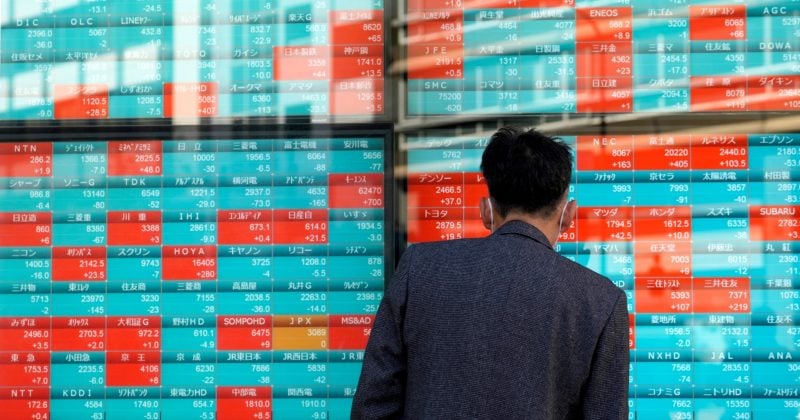
Bitcoin declines in early Asia trading as interest rate fears rise

Via asahi.com

Bitcoin declines in early Asia trading as interest rate fears rise

Rising Treasury yields and surging oil prices are squeezing risk assets, with Bitcoin slipping toward the $65,000 level as traders brace for a higher-for-longer rate environment

Bitcoin dropped in early Asian trading sessions as investors confronted a familiar nemesis: the growing likelihood that US interest rates aren’t coming down anytime soon. The world’s largest cryptocurrency traded near or below $65,000 as a cocktail of elevated Treasury yields, surging oil prices, and hawkish Federal Reserve signals sent risk appetite into retreat.

The macro squeeze tightening around Bitcoin

The numbers paint a clear picture of the pressure building on risk assets. Two-year Treasury yields climbed to 4.31%, their highest level since February 2025. The 10-year yield pushed even higher, reaching 4.66%.

Oil prices have added fuel to the fire, with crude surging to approximately $88.60 per barrel in recent weeks. Rising energy costs feed directly into inflation readings, which is precisely what the Federal Reserve watches when deciding whether to keep rates high, or push them higher still.

Advertisement

The Consumer Price Index and PCE inflation data have reinforced those concerns, with hawkish rhetoric from the Fed doing nothing to calm nerves. Market-implied odds for a rate hike ahead of the July FOMC meeting have been swinging between 14% and 37%, a range that reflects a market genuinely unsure whether the next move from the central bank will be a hold or an outright increase.

A rough few months for crypto’s flagship

Bitcoin has been on a turbulent ride through much of 2026, with the decline accelerating in June when the cryptocurrency fell below $60,000. That drop coincided with a broader tech stock sell-off, driven in part by escalating US-Iran tensions that rattled global markets.

The June plunge represented a decline of more than 50% from Bitcoin’s late-2025 peaks. While Bitcoin has recovered somewhat from those lows, trading in the low-to-mid $60,000 range, the recovery has been tentative and fragile.

Adding another layer of complexity, shifts in the yen carry trade and signals from the Bank of Japan have created cross-currents in global liquidity that ripple through crypto markets.

What this means for investors

The critical question now is whether Bitcoin can hold above $60,000 if macroeconomic conditions deteriorate further. Upcoming economic data releases will be pivotal. Q2 GDP figures and PCE inflation readings are expected to shape expectations around the Fed’s next moves.

When you can earn north of 4% on relatively safe government bonds, the appeal of holding an asset with zero yield and significant downside volatility diminishes considerably. This is showing up in trading volumes and positioning data as institutional capital rotates toward more defensive allocations.

Disclosure: This article was edited by Editorial Team. For more information on how we create and review content, see our Editorial Policy.

Bitcoin declines in early Asia trading as interest rate fears rise

Bitcoin declines in early Asia trading as interest rate fears rise

Rising Treasury yields and surging oil prices are squeezing risk assets, with Bitcoin slipping toward the $65,000 level as traders brace for a higher-for-longer rate environment

Via asahi.com

Bitcoin dropped in early Asian trading sessions as investors confronted a familiar nemesis: the growing likelihood that US interest rates aren’t coming down anytime soon. The world’s largest cryptocurrency traded near or below $65,000 as a cocktail of elevated Treasury yields, surging oil prices, and hawkish Federal Reserve signals sent risk appetite into retreat.

The macro squeeze tightening around Bitcoin

The numbers paint a clear picture of the pressure building on risk assets. Two-year Treasury yields climbed to 4.31%, their highest level since February 2025. The 10-year yield pushed even higher, reaching 4.66%.

Oil prices have added fuel to the fire, with crude surging to approximately $88.60 per barrel in recent weeks. Rising energy costs feed directly into inflation readings, which is precisely what the Federal Reserve watches when deciding whether to keep rates high, or push them higher still.

Advertisement

The Consumer Price Index and PCE inflation data have reinforced those concerns, with hawkish rhetoric from the Fed doing nothing to calm nerves. Market-implied odds for a rate hike ahead of the July FOMC meeting have been swinging between 14% and 37%, a range that reflects a market genuinely unsure whether the next move from the central bank will be a hold or an outright increase.

A rough few months for crypto’s flagship

Bitcoin has been on a turbulent ride through much of 2026, with the decline accelerating in June when the cryptocurrency fell below $60,000. That drop coincided with a broader tech stock sell-off, driven in part by escalating US-Iran tensions that rattled global markets.

The June plunge represented a decline of more than 50% from Bitcoin’s late-2025 peaks. While Bitcoin has recovered somewhat from those lows, trading in the low-to-mid $60,000 range, the recovery has been tentative and fragile.

Adding another layer of complexity, shifts in the yen carry trade and signals from the Bank of Japan have created cross-currents in global liquidity that ripple through crypto markets.

What this means for investors

The critical question now is whether Bitcoin can hold above $60,000 if macroeconomic conditions deteriorate further. Upcoming economic data releases will be pivotal. Q2 GDP figures and PCE inflation readings are expected to shape expectations around the Fed’s next moves.

When you can earn north of 4% on relatively safe government bonds, the appeal of holding an asset with zero yield and significant downside volatility diminishes considerably. This is showing up in trading volumes and positioning data as institutional capital rotates toward more defensive allocations.

Disclosure: This article was edited by Editorial Team. For more information on how we create and review content, see our Editorial Policy.