

Bitcoin jumps past $85,000 as $635M in shorts liquidated
Bitcoin built momentum above $80,000 amid short squeezes and sustained inflows into US spot Bitcoin ETFs, though ETF flows turned mixed in the last two weeks.


Bitcoin crossed $85,000 on Sept. 21, 2026, reaching an intraday high of $85,299 on Binance, a level it had not seen in eight months. The move was fueled not only by fresh buying but also by a cascade of forced short closures.
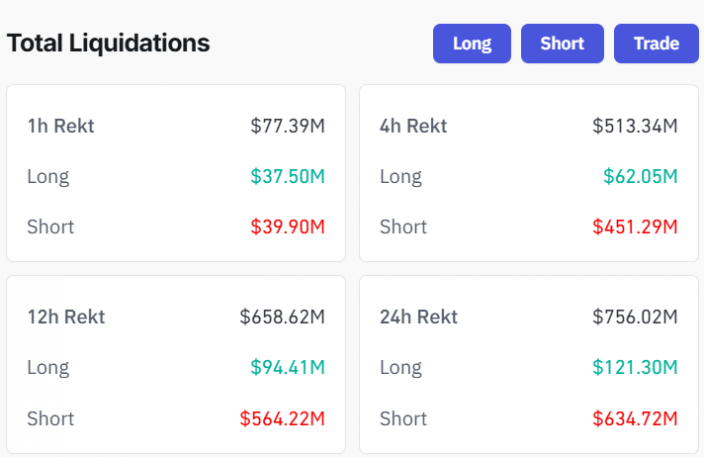
Across the crypto derivatives market, $635 million in short positions were liquidated over the past 24 hours as prices climbed, per CoinGlass.
How a short squeeze works, and why this one was so large
As Bitcoin rose, traders betting on a decline were forced to buy back their positions, adding further upward pressure and triggering another wave of liquidations. That feedback loop helped accelerate the move to $85,000.
Glassnode had identified the $83,000 to $86,000 range as a potential acceleration zone before the rally, citing a concentration of short positions that could fuel a squeeze if prices entered the range.
Bitcoin’s move into that zone followed weeks of strengthening momentum. The asset had cleared $80,000 through a combination of short squeezes and sustained inflows into US spot Bitcoin ETFs, which had provided an additional source of demand.
AI, tech, and the markets they move—in one daily briefing.
Daily. Free. Join 34,000+ readers across crypto, finance, and policy.
ETF flows were more mixed in the week leading up to the move, however, with outflows on Sept. 15 and 16 partly offset by strong inflows on Sept. 18.
What happens next depends on who’s selling
For that, market observers are focused on two groups. The first is long-term holders, defined as addresses that have held Bitcoin for extended periods without moving it. When prices surge into territory these wallets last saw during a prior peak, some portion of them tend to distribute.
The second group is institutions, specifically the buyers flowing capital through spot ETF products. If that demand remains consistent, it can absorb long-term holder supply without prices cratering. If inflows stall or reverse, the market loses its structural support precisely when it may need it most.
Macroeconomic conditions are adding another layer of uncertainty. Federal Reserve rate decisions and an evolving regulatory landscape are both live variables that can shift sentiment quickly.
Glassnode’s $83,000 to $86,000 acceleration zone could remain important on either side of the market. The concentration of short positions helped amplify the move higher, while a retreat into the same range could increase downside volatility.
Near-term indicators to watch include spot Bitcoin ETF flows, movements by long-term holders and trading volumes on major exchanges.