
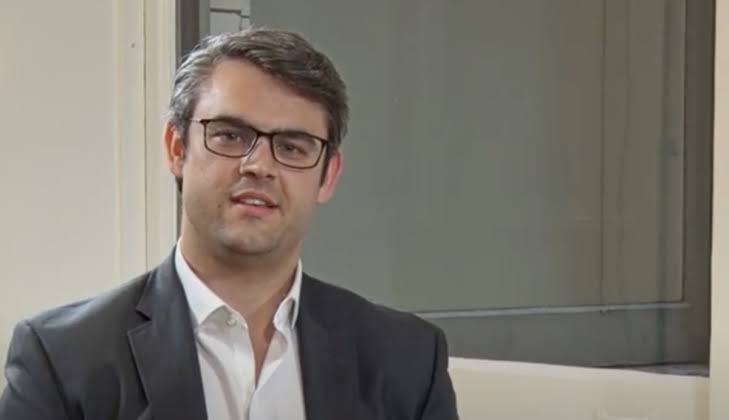
Bitwise CEO sees tokenized equities as key development over next 2-3 years

Bitwise CEO sees tokenized equities as key development over next 2-3 years

Bitwise CEO Hunter Horsley said the tokenization trend is part of a wider expansion of onchain finance, with credit, capital markets and vaults developing alongside it.

Tokenization is poised to be one of the biggest developments in financial markets over the next two to three years, according to Bitwise Asset Management CEO Hunter Horsley.

Speaking with CNBC’s Arjun Kharpal on the sidelines of TOKEN2049, Horsley said bringing equities and other capital markets onchain could transform how assets are traded and accessed, with 24/7 trading and fractional ownership among the potential benefits.

“I think everyone has an intuition that it’s transformative, almost like the electronification of equity markets back in the day,” Horsley said, adding that the industry is still working through the different reasons tokenization could matter, from providing access to markets that are difficult to reach in some jurisdictions to expanding access to alternatives through fractional ownership.

“All of them are advancing,” Horsley said. “I expect that capital markets, equities being a key one coming onchain, will be one of the most important and significant developments over the next two, three years.”

The Bitwise co-founder pointed out that tokenization is part of a much wider expansion in onchain finance, with vaults, credit and capital markets as areas where activity is moving onchain. He said the industry is developing multiple distinct applications in a way similar to the evolution of the internet.

Advertisement

Just as the internet eventually produced separate sectors such as e-commerce, enterprise technology and social networks, he said crypto is now producing different applications that are advancing their own opportunities while remaining part of the broader onchain economy.

On the overall market, Horsley said he believes the crypto winter is over. He told CNBC that the industry’s substance has grown substantially during 2026, with more institutions building in the sector, stronger usage and revenue figures across crypto platforms and greater investor access through ETFs and ETPs.

Horsley also sees the potential for a rotation of capital from AI back into crypto. He said AI has understandably become a major focus for investors globally and has pulled some liquidity away from crypto, particularly as semiconductor and other AI-related stocks have rallied sharply.

However, he said he expects some of that liquidity to return to crypto as investors reposition later this year or next year.

On Bitcoin, Horsley said the crypto asset could reach a new all-time high next year, although he would prefer a slower move that gives investors time to enter. He also expects the intersection of AI and crypto to grow, with stablecoins supporting AI payments and blockchains enabling agents to transact.

On regulation, Horsley said the CLARITY Act is not working, but has not slowed the industry, with financial institutions continuing to build despite the lack of legislative clarity, he told CNBC. He called the regulatory environment very constructive and expects crypto to become deeply integrated and widely adopted over the next two years.

Disclosure: This article was edited by Vivian Nguyen. For more information on how we create and review content, see our Editorial Policy.
Bitwise CEO sees tokenized equities as key development over next 2-3 years

Bitwise CEO Hunter Horsley said the tokenization trend is part of a wider expansion of onchain finance, with credit, capital markets and vaults developing alongside it.

Tokenization is poised to be one of the biggest developments in financial markets over the next two to three years, according to Bitwise Asset Management CEO Hunter Horsley.

Speaking with CNBC’s Arjun Kharpal on the sidelines of TOKEN2049, Horsley said bringing equities and other capital markets onchain could transform how assets are traded and accessed, with 24/7 trading and fractional ownership among the potential benefits.

“I think everyone has an intuition that it’s transformative, almost like the electronification of equity markets back in the day,” Horsley said, adding that the industry is still working through the different reasons tokenization could matter, from providing access to markets that are difficult to reach in some jurisdictions to expanding access to alternatives through fractional ownership.

“All of them are advancing,” Horsley said. “I expect that capital markets, equities being a key one coming onchain, will be one of the most important and significant developments over the next two, three years.”

The Bitwise co-founder pointed out that tokenization is part of a much wider expansion in onchain finance, with vaults, credit and capital markets as areas where activity is moving onchain. He said the industry is developing multiple distinct applications in a way similar to the evolution of the internet.

Advertisement

Just as the internet eventually produced separate sectors such as e-commerce, enterprise technology and social networks, he said crypto is now producing different applications that are advancing their own opportunities while remaining part of the broader onchain economy.

On the overall market, Horsley said he believes the crypto winter is over. He told CNBC that the industry’s substance has grown substantially during 2026, with more institutions building in the sector, stronger usage and revenue figures across crypto platforms and greater investor access through ETFs and ETPs.

Horsley also sees the potential for a rotation of capital from AI back into crypto. He said AI has understandably become a major focus for investors globally and has pulled some liquidity away from crypto, particularly as semiconductor and other AI-related stocks have rallied sharply.

However, he said he expects some of that liquidity to return to crypto as investors reposition later this year or next year.

On Bitcoin, Horsley said the crypto asset could reach a new all-time high next year, although he would prefer a slower move that gives investors time to enter. He also expects the intersection of AI and crypto to grow, with stablecoins supporting AI payments and blockchains enabling agents to transact.

On regulation, Horsley said the CLARITY Act is not working, but has not slowed the industry, with financial institutions continuing to build despite the lack of legislative clarity, he told CNBC. He called the regulatory environment very constructive and expects crypto to become deeply integrated and widely adopted over the next two years.

Disclosure: This article was edited by Vivian Nguyen. For more information on how we create and review content, see our Editorial Policy.