
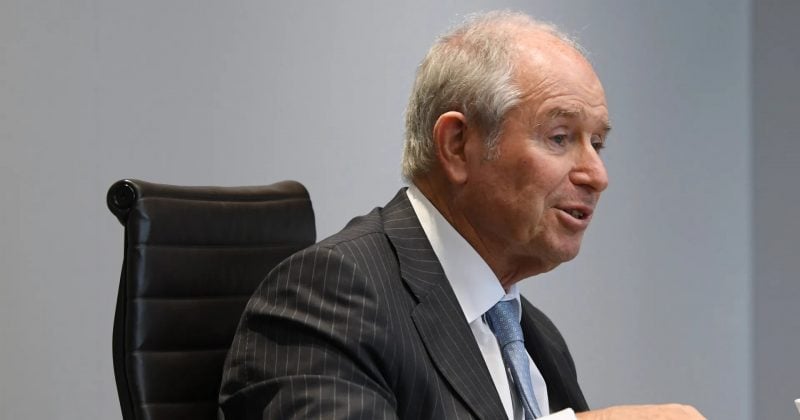
Blackstone co-CEO Jonathan Bock departs from $78 billion private credit fund

Blackstone co-CEO Jonathan Bock departs from $78 billion private credit fund

Brad Marshall will take over as sole CEO of Blackstone's private credit business, with the firm opting not to replace the co-CEO role.

Jonathan Bock, the co-CEO of Blackstone’s private credit vehicles, has resigned from the world’s largest alternative asset manager. His departure, effective July 20, leaves a leadership vacuum atop a $78 billion private credit fund that Blackstone has decided to fill by simply eliminating the co-CEO position entirely.

Brad Marshall will now serve as the sole CEO of Blackstone’s private credit business. The firm confirmed it has no plans to appoint a replacement co-CEO.

What happened and why it matters

Bock served as co-CEO of both the Blackstone Private Credit Fund, known by its ticker BCRED, and the Blackstone Secured Lending Fund (BXSL). BCRED alone manages $78 billion in assets, making it one of the largest private credit vehicles on the planet.

Advertisement

He joined Blackstone in January 2023, meaning his tenure lasted roughly two and a half years. Before that, Bock ran Barings BDC as its CEO and worked as a senior equity analyst at Wells Fargo Securities.

No public explanation has been offered for why Bock left. Blackstone’s filings are silent on the reasoning, and neither Bock nor the firm’s leadership has made any statements about his future plans.

The private credit backdrop

Bock’s exit doesn’t happen in a vacuum. The broader private credit market has been navigating a period of turbulence, with several major funds experiencing declines in net asset value and meaningful outflows.

What this means for investors

For investors in BCRED and BXSL, the immediate question is whether this leadership change signals anything deeper about the funds’ performance or strategic direction.

Brad Marshall is not an unknown quantity. He’s been deeply embedded in Blackstone’s credit operation and now inherits full authority over its direction. The decision not to appoint a new co-CEO suggests the firm wants to project stability and decisiveness rather than scramble for a replacement.

Blackstone isn’t the only player in private credit. Apollo, Ares, and Blue Owl are all competing aggressively for the same pool of institutional and retail capital.

Disclosure: This article was edited by Editorial Team. For more information on how we create and review content, see our Editorial Policy.

Blackstone co-CEO Jonathan Bock departs from $78 billion private credit fund

Blackstone co-CEO Jonathan Bock departs from $78 billion private credit fund

Brad Marshall will take over as sole CEO of Blackstone's private credit business, with the firm opting not to replace the co-CEO role.

Jonathan Bock, the co-CEO of Blackstone’s private credit vehicles, has resigned from the world’s largest alternative asset manager. His departure, effective July 20, leaves a leadership vacuum atop a $78 billion private credit fund that Blackstone has decided to fill by simply eliminating the co-CEO position entirely.

Brad Marshall will now serve as the sole CEO of Blackstone’s private credit business. The firm confirmed it has no plans to appoint a replacement co-CEO.

What happened and why it matters

Bock served as co-CEO of both the Blackstone Private Credit Fund, known by its ticker BCRED, and the Blackstone Secured Lending Fund (BXSL). BCRED alone manages $78 billion in assets, making it one of the largest private credit vehicles on the planet.

Advertisement

He joined Blackstone in January 2023, meaning his tenure lasted roughly two and a half years. Before that, Bock ran Barings BDC as its CEO and worked as a senior equity analyst at Wells Fargo Securities.

No public explanation has been offered for why Bock left. Blackstone’s filings are silent on the reasoning, and neither Bock nor the firm’s leadership has made any statements about his future plans.

The private credit backdrop

Bock’s exit doesn’t happen in a vacuum. The broader private credit market has been navigating a period of turbulence, with several major funds experiencing declines in net asset value and meaningful outflows.

What this means for investors

For investors in BCRED and BXSL, the immediate question is whether this leadership change signals anything deeper about the funds’ performance or strategic direction.

Brad Marshall is not an unknown quantity. He’s been deeply embedded in Blackstone’s credit operation and now inherits full authority over its direction. The decision not to appoint a new co-CEO suggests the firm wants to project stability and decisiveness rather than scramble for a replacement.

Blackstone isn’t the only player in private credit. Apollo, Ares, and Blue Owl are all competing aggressively for the same pool of institutional and retail capital.

Disclosure: This article was edited by Editorial Team. For more information on how we create and review content, see our Editorial Policy.