
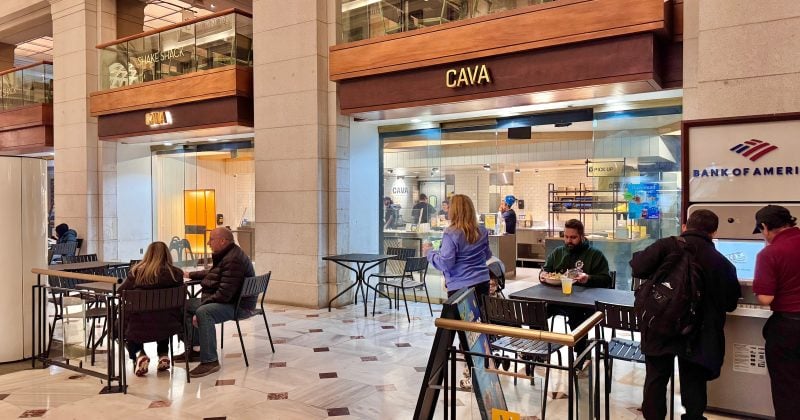
Photo: Harrison Keely / Wikimedia Commons / CC BY 4.0 (https://creativecommons.org/licenses/by/4.0)
Cava faces $2.2 billion lawsuit over insider trading allegations as stock sits at fraction of former highs
A pension fund claims Cava insiders dumped billions in shares while hiding slowing growth from investors
Cava Group, the Mediterranean fast-casual darling that went public in 2023 to widespread fanfare, is now staring down a $2.2 billion shareholder derivative lawsuit alleging that company founders and board members sold massive quantities of stock while concealing deteriorating business fundamentals. The complaint, originally filed under seal on July 22 and unsealed on July 28, paints a picture of insiders who knew the party was ending and quietly headed for the exits.
The suit was brought by the Cleveland Bakers and Teamsters Pension Fund, which claims entities tied to Belgian billionaire Eric Wittouck offloaded nearly $1.8 billion in shares, while other company insiders and directors sold approximately $500 million more. Of that insider total, roughly $330 million is linked to co-founder Ronald Shaich. All of these sales allegedly occurred between August 2024 and March 2025, a window that ended right before Cava began making what the complaint calls “corrective disclosures” about its slowing performance.
The complaint alleges that Cava’s leadership was aware the company’s growth trajectory was faltering due to broader fast-casual industry headwinds, but continued projecting strength to the market. The corrective disclosures came in February and March 2025, when the company began acknowledging that its post-IPO growth was decelerating. By then, the insiders named in the suit had already completed their selling spree.
Cava’s stock had been a Wall Street success story since its 2023 IPO. Shares climbed as high as $150 as investors bought into the thesis that the chain could become the next Chipotle of Mediterranean cuisine. As of July 28, shares closed at $64.54, less than half of their peak.
Who’s on the hook
Wittouck’s affiliates account for the lion’s share at nearly $1.8 billion. Wittouck, whose family fortune traces back to European sugar refining, was an early and significant backer of Cava. His entities’ decision to liquidate that much equity in a compressed timeframe, right before growth concerns became public, is the centerpiece of the plaintiff’s theory.
The news moving money, markets, and the world—before your day starts.
Daily. Free. Join 34,000+ readers across crypto, finance, and policy.
Shaich, who co-founded Cava after previously building and selling Panera Bread, is the most recognizable name among the individual insiders. His $330 million in alleged sales during the relevant period will likely draw the most public scrutiny, given his role as a company architect and industry figurehead.
Cava has responded by stating it intends to vigorously seek dismissal of the lawsuit. Whether the company can actually get the case tossed will depend on the specifics of what insiders knew, when they knew it, and whether trading plans were pre-established or discretionary.
What this means for investors
Shareholder derivative lawsuits are filed on behalf of the company itself, meaning the pension fund is essentially arguing that Cava was harmed by its own leadership’s conduct. If the case survives a motion to dismiss, the discovery process could expose internal communications about growth projections, board discussions about the timing of stock sales, and any gaps between what leadership told the market and what they discussed privately.